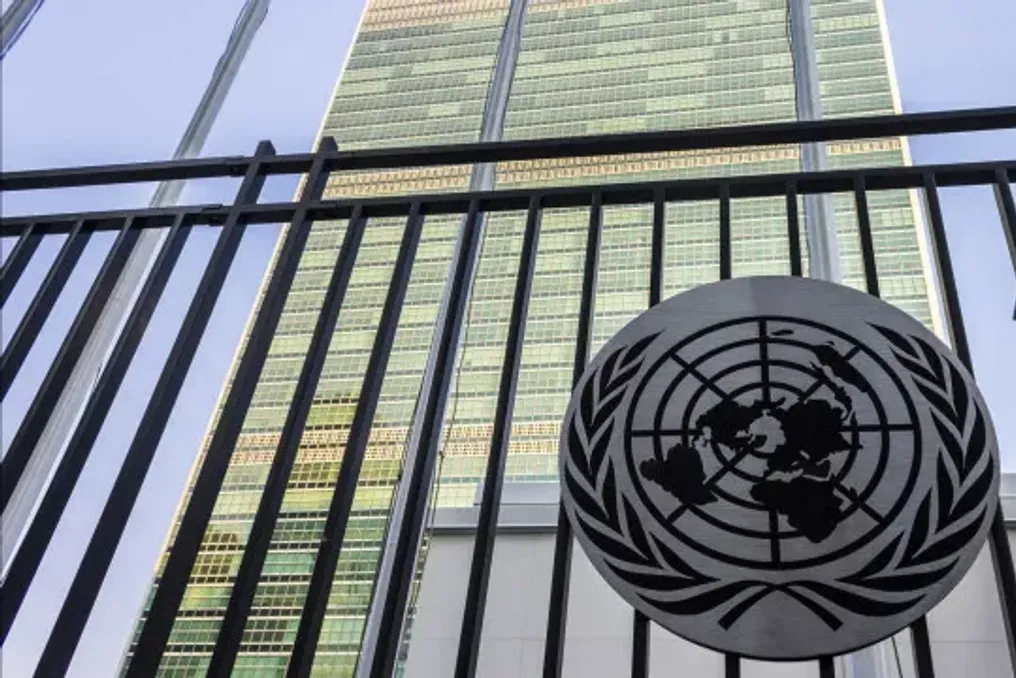
The UN Security Council held a meeting to discuss the status of Resolution 2231, which endorsed the 2015 nuclear deal between Iran and major global powers, known as the Joint Comprehensive Plan of Action (JCPOA).
Positions and Contests
The session faced opposition from China and Russia. The Russian Federation representative, supported by the Chinese delegate, contested the holding of the meeting, alleging that Resolution 2231 was no longer in force.
Anna Evstigneeva argued that since October 17, 2025, the Security Council lacked the authority to address these issues. She referred to the 'snapback' mechanism, activated the previous year by France, Germany, and the United Kingdom, which reactivated six UN Security Council resolutions concerning Iran's nuclear and ballistic missile program, restored economic sanctions, and resumed the suspension of all uranium enrichment.
UN Report on the JCPOA
The Russian diplomat accused certain member states of infringing upon the Security Council's norms for political reasons and requested a vote on the agenda, with the majority voting in favor of holding the meeting.
During the meeting, Rosemary DiCarlo, UN Under-Secretary-General for Political Affairs, presented the latest report from the Secretary-General on Resolution 2231, covering events from December 15, 2025, until June 19 last. The report indicated that the IAEA had conducted no inspections in Iranian territory, as established by the Safeguards Agreement of the Nuclear Non-Proliferation Treaty, an instrument that previously allowed the agency to monitor Tehran's compliance with the JCPOA.
DiCarlo informed that the agency also recorded a considerable deterioration in its monitoring capacity following the attacks perpetrated by the United States and Israel against Iran, initiated on February 28, 2026. She stated that there was a loss of knowledge continuity in all declared Iranian nuclear facilities.
The UN representative emphasized that this loss of continuity affected both current production and stock, specifically of heavy water and uranium ore concentrate, and that the agency assessed this knowledge could not be recovered.
Perspectives and International Reactions
DiCarlo defended the urgency of new negotiations given the resurgence of attacks between the United States and Iran. The JCPOA, signed in Vienna in July 2015, is a nuclear pact involving Iran and the P5+1 group (United States, United Kingdom, France, China, Russia, and Germany), as well as the European Union. Its purpose was to ensure that the Iranian nuclear program remained strictly peaceful, limiting uranium enrichment in exchange for the suspension of economic sanctions.
Donald Trump had withdrawn the United States from the agreement in May 2018, during his first term in the White House, and reimposed sanctions on the Iranian regime. In the day's session, Moscow condemned a supposed 'anti-Iranian' stance by the Council, asserting that Western countries were unfairly blaming Tehran for the collapse of the agreement, when in fact the pact was harmed by the US withdrawal in 2018.
Anna Evstigneeva added that the UK, France, and Germany aggravated the situation by supporting the US attacks on Iran. The Russian delegate maintained that apprehensions about the Iranian nuclear program are unfounded, observing that the IAEA never verified the transfer of nuclear material for military purposes in the country.
For its part, the Chinese representative encouraged Tehran and Washington to resume talks, to 'eliminate distractions,' to address the legitimate concerns of both sides, and to suspend sanctions against Iran as soon as possible. The Beijing representative argued that while Iran must comply with its commitments under the Nuclear Non-Proliferation Treaty, it retains the right to use nuclear energy for peaceful purposes.
The American representative present at the meeting declared that, although Washington prefers diplomacy, the United States will hold Iran accountable for violating international peace. Tammy Bruce warned: 'If you shoot at civilian targets or ships, we will respond'. Finally, Germany assured that it was ready to support the removal of sanctions linked to the nuclear program, provided that Iran implements 'concrete and verifiable measures' regarding its program and fully resumes its obligations under the Nuclear Non-Proliferation Treaty.