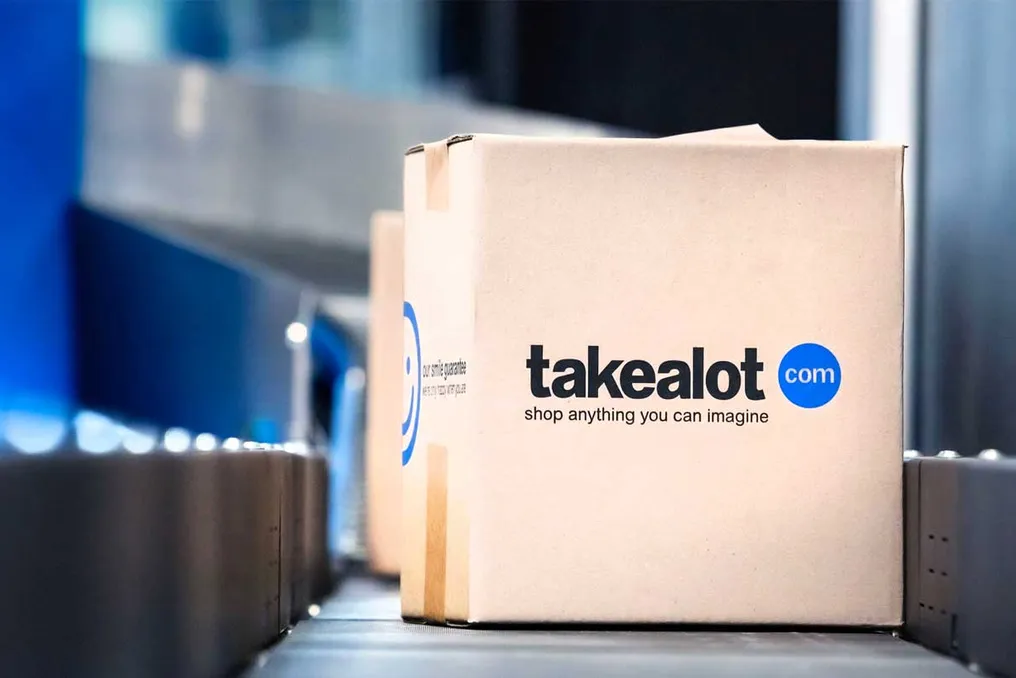
Takealot group leader, Frederick Citsman, told journalists in Johannesburg that the arrival of Amazon in South Africa is viewed not as a threat to overcome, but as the start of a new competition.
Start of a Competitive Period
According to Citsman, after the launch of Amazon Prime, the situation represents the start of the game, not its end. He expressed confidence in Takealot's position against competitors such as Shein, Temu, and now Amazon, citing local market leaders like Mercado Libre in South America. Citsman emphasized that as a local player, the company has a better understanding of the market, possesses higher quality data, and greater flexibility, which gives it optimism about its ability to compete.
South African Success
During a media event held a day after the publication of Naspers' parent company's annual results, Citsman highlighted that South African origin is the main advantage of the e-commerce group. He noted that the group achieved its first net profit in 15 years of operation, calling it a success closely linked to the country's well-being.
Market Pressure and Reaction
The company is facing pressure from many sides: Chinese players Shein and Temu have flooded the local market with inexpensive goods, and Amazon opened its store in South Africa in May 2024, launching the Prime subscription on June 3rd and holding its first Prime Day in the country last week. However, Citsman perceived this influx as confirmation rather than danger. He noted that there has been huge growth in competition over the last 18–24 months, both international and domestic, and suggested that existing players in comparable markets have retained most of their share, while Takealot has lost only a negligible amount.
He added that the growing market favors the existing player because it means more South Africans are starting to shop online, whereas most of the population does not do so today. Regarding Amazon, Citsman stated: 'We welcome competition. It makes us sharper.'
Group Financial Results
The group's revenues grew by 18%, reaching 17.7 billion rand, exceeding the $1 billion USD mark. Gross Merchandise Value (GMV) increased by more than 14%. The group reached a record adjusted operating profit (adjusted Ebit) of 171 million rand, recovering from a loss of 213.8 million rand the previous year, which was an improvement of approximately 385 million rand. Meanwhile, adjusted EBITDA grew by 60%.
CFO Tessa Ackerman noted that the main news is that 'the ecosystem is working, and the ecosystem wins.' She acknowledged that margins remain low and need improvement, but insisted on the sustainability of profits since they come from operating cash flow, not accounting adjustments. She stressed that this is not a one-off currency accounting change, but 'real, actual money.'
Platform Performance
The main platform, Takealot.com, which remains the 'parent,' became the largest source of revenue, showing a 17% revenue growth, a 15% increase in GMV, and an 18% rise in orders. Ackerman reported that the platform achieved an adjusted profit of 85 million rand, recovering from a loss of 297 million rand, supported by retail media revenue of 37%, a 1.5% increase in average margin, cost discipline, and focus on profitable orders. Over the year, the group processed more than 60 million orders, which, according to Citsman, was achieved without compromising service quality, with the Net Promoter Score remaining at 72.
Company Ecosystem Approach
The strategic core, according to Citsman, is the largest e-commerce ecosystem in Africa, covering 6.2 million active customers, the Takealot.com platform, the Mr D delivery app, and the TakealotMore subscription program. Management positions TakealotMore as a direct response to Prime, stating that for a fee of 39 or 99 rand per month, it unites numerous retailers. Citsman stated that this is the only multi-retailer subscription program in the country that does not limit the user to a single seller. In addition to Takealot.com and Mr D Food, the program includes stores such as Pick n Pay, Wellness Warehouse, Absolute Pets, and Toy Kingdom. The group reported that active membership grew by 74% year-on-year, leading to a 193.5% increase in members' GMV, and that the program saved customers nearly 700 million rand, accounting for a quarter of the total sales volume.
The Mr D app, transformed from a food delivery service into a 'hyperlocal speed hub,' increased revenue by 11.5% and GMV by 12.6%, remaining profitable. The 38% growth in grocery purchasing volumes, thanks to the partnership with Pick n Pay and 'TakealotNow' 60-minute deliveries, contributed to this. Both executives specifically highlighted Takealot Fulfilment Solutions (TFS), the logistics division that Naspers plans to scale as a separate revenue stream by the 2027 financial year. TFS revenue grew by 93.5% due to distribution work for retailers such as Superbalist and Ares Group, and Ackerman called it 'something to watch.'
Parent Company Caution
Despite all the optimism, Naspers maintains a cautious stance. Even after a strong year, the board refused to cancel the 5.9 billion rand write-down recorded on the business in 2024, stating that improvements 'do not yet justify' the write-down. When valuing the business, Naspers used discount rates from 17% to 21%, with the higher limit reflecting forecast uncertainty.
Citsman predicts that the market will only grow forward, asserting that it 'will double within the next five years,' citing India, South America, and Turkey as examples.