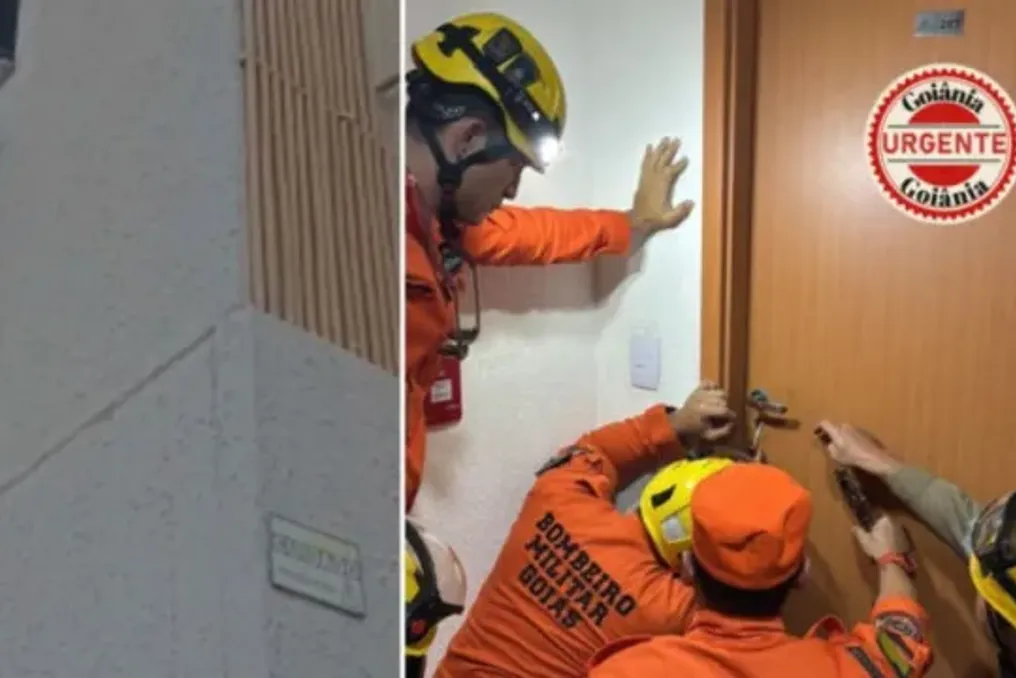
A ten-year-old boy was rescued from an apartment in Goiânia, in the Brazilian state of Goiás. The child was confined to his room, where he watched other children playing through the window but was not allowed to leave. The rescue took place on the boy's birthday.
Details of the Rescue and the Child's Condition
According to information from g1, the events occurred on Thursday, July 9th, when the Tutelary Council, an agency analogous to the CPCJ in Portugal, was called and carried out the rescue with the support of authorities. In released images, the boy spoke with one of the agents, reporting that he had no water or food, and mentioned having eaten biscuits offered by a neighbor.
The team had to use a ladder to communicate better with the child, who expressed a desire to live with his father, an issue that the Brazilian justice system is currently evaluating. The mother was detained and allegedly told authorities that she went out at night to work and locked the child, who has diabetes, in to prevent access to food, justifying that she wanted to prevent her son from overeating.
Reports and Domestic Situation
Although it is unclear who alerted the rescue teams, it was known that the situation was known by the neighbors. The doorman, Carlos Eduardo Freitas, informed g1 that the child used to scream in his room all day, and that it was sad to see him interacting with children outdoors only in the afternoon.
Another witness, Loiana Kelly Brito, stated that she witnessed the mother abusing the child and that she had notified the Tutelary Council. She also reported that another resident had called the Tutelary Council after hearing the boy screaming for help alone from the window, and this neighbor even helped feed him.
Health and Consequences of Neglect
When the apartment and the room were opened by the military, the child declared that he hoped to have a better life. He was taken to the hospital, where tests revealed that his diabetes was decompensated. A counselor, Cleiton Araújo, explained that his glucose levels had changed significantly due to the fasting period.
g1 adds that the child will need a different medication to receive insulin and was therefore transferred to another hospital. Additional details about his health condition are unknown. In addition to food deprivation, the boy used a bottle for his bodily needs and carried insulin pens, which Araújo classified as 'very dangerous'. The residence showed great disarray, with dirty clothes scattered, trash, and spoiled food.