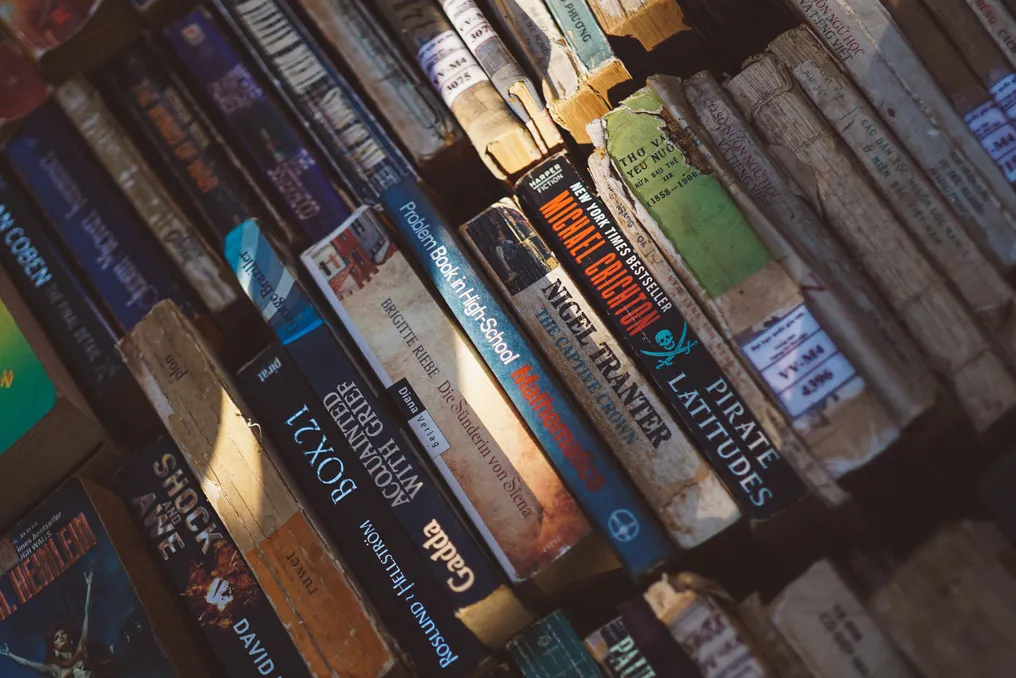
One of the most captivating experiences a novel can offer is the ability to make readers doubt what is true. Some books go beyond traditional narrative, playing with concepts of memory, perception, identity, and truth itself. They create worlds where facts become uncertain, narrators are unreliable, and reality itself seems increasingly difficult to define.
Popular
These works do not just tell stories; they invite readers into psychological labyrinths where certainty is unattainable. Even after reading the last page, they leave behind profound questions about how we construct reality and how straightforward truth truly is.
Novels That Challenge Perception
If you enjoy books that question your perception and force you to rethink what you have read, you should add the following five works to your reading list.
1. The Blind Assassin
Margaret Atwood's masterful work is a novel within a novel within a novel. The plot centers on an elderly woman, Iris Chase, who reflects on her life while simultaneously revealing a complex family history filled with secrets, betrayals, and hidden truths.
As readers move between different narratives, it becomes increasingly difficult to separate fact from fiction. Stories intersect, perspectives shift, and assumptions constantly change. The novel explores how memory can alter reality and how people often rewrite their own history to cope with pain or regret.
The book gains particular power from its suggestion that the narrative itself can be a means of controlling reality. Each new layer reveals new truths while simultaneously generating new uncertainties.
2. The Man in the Winter Garden at Saint-Malo
Few novels play with reality as boldly as this literary masterpiece by Italo Calvino. The story places the reader right in the center of the narrative. You are not just reading a book; you become one of its characters.
Every time the story begins, it suddenly switches to another unfinished narrative, creating a strange experience where readers constantly move between different fictional worlds. The boundaries between author, reader, and character gradually blur.
Calvino turns the act of reading itself into a story, forcing readers to contemplate how fiction shapes perception. The result is a novel that feels both playful and deeply philosophical, challenging conventional notions of narrative reality.
3. Kafka on the Shore
Haruki Murakami is known for blending everyday reality with surreal and fantastical elements, and 'Kafka on the Shore' may be his most compelling example. The novel follows two seemingly unrelated protagonists whose lives intertwine through mysterious events. Alongside ordinary life exist talking cats, strange prophecies, alternate realities, and symbolic encounters.
It is noteworthy that the novel never draws a clear distinction between fantasy and reality. Dreams feel real, and reality feels like a dream, leaving readers to decide what actually happened. Murakami creates a world where emotional truth matters more than factual accuracy.
4. Piranesi
At the beginning of 'Piranesi,' readers are introduced to a man living in an infinite house filled with statues, vast halls, and ocean tides. He is convinced that this mysterious place is the entire world.
As the plot develops, small details hint that reality might be far more complex than initially perceived. Memory seems unreliable, identities become ambiguous, and hidden truths slowly emerge. The genius of the novel lies in how it alters the reader's understanding of reality parallel to the protagonist's changing perspective. Every revelation forces a reevaluation of everything that came before.
By the end, readers may begin to doubt not only the fictional world but also how easily perception can shape what we consider to be true.
5. The New York Trilogy
This collection of interconnected novels begins as a detective story but quickly transforms into something much stranger. Investigations turn into philosophical puzzles, identities become blurred, and characters often encounter versions of themselves.
Paul Auster repeatedly blurs the line between author and character. Names coincide, realities shift, and seemingly simple mysteries become explorations of language, identity, and existence. These books prompt readers to consider whether reality is something fixed or something constantly shaped by stories and interpretations. Each narrative becomes a reflection of how people create meaning in a world that rarely offers clear answers. It is a fascinating literary experiment that rewards attentive and thoughtful reading.
Why We Love Fiction
These novels resonate because they reflect a truth about real life: reality is often more subjective than we realize. Memory changes over time. Perspectives differ. People experience the same events completely differently.
Fiction that distorts reality captures this complexity by refusing to provide simple answers. Instead, it prompts readers to embrace ambiguity and think more deeply about perception, identity, and truth. Such books transform reading from a passive activity into an active investigation. Readers become detectives, gathering clues and forming their own interpretations.
Final Thoughts
The most unforgettable novels are those that make readers doubt what they thought they knew. Whether through multi-layered narratives, unreliable memory, fantastical worlds, or philosophical enigmas, these books fascinatingly blur the line between fiction and reality. They remind us that stories are not just reflections of reality; they can change our understanding of it. And sometimes the most powerful fiction is that which makes us wonder where reality ends and imagination begins.