The proposal to alter the Motor Vehicle Property Tax (IPVA) has advanced in the Chamber, presenting significant changes to the collection method. Critics of the current model point out that the IPVA is questionable because it is levied on assets that have already been taxed upon acquisition and which also pay licensing and usage fees.
The way IPVA has historically been collected contributed to Brazil becoming a world center for 1.0 cars. With the advancement of downsizing over two decades, this collection method lost its original logic, which was to favor popular vehicles. With the discussion and approval of the tax reform, IPVA was included in the agenda.
Through Constitutional Amendment Proposal (PEC) 3/2026, authored by Congressman Kim Kataguiri, it is suggested that the tax stop being calculated based on market value and start considering the vehicle's weight, following the model of some European countries. The basis for this change is the impact that heavier vehicles have on road infrastructure.
Additionally, the text proposes a federal limit, establishing that the IPVA collection will not exceed 1% of the car's sale price. Currently, state governments have autonomy to define rates ranging from 1% to 4%. The PEC also grants states explicit permission to create discounts or exemptions for less polluting vehicles, paving the way to encourage electric and hybrid cars.
The PEC has been processed since the beginning of the year and was recently approved by the Committee on Constitution, Justice, and Citizenship, confirming that the text is neither unconstitutional nor violates principles of justice and citizenship. However, it still needs to pass through a special merit committee and, if approved, will be submitted to two rounds of voting in the Plenary of the Chamber and the Senate before becoming law.
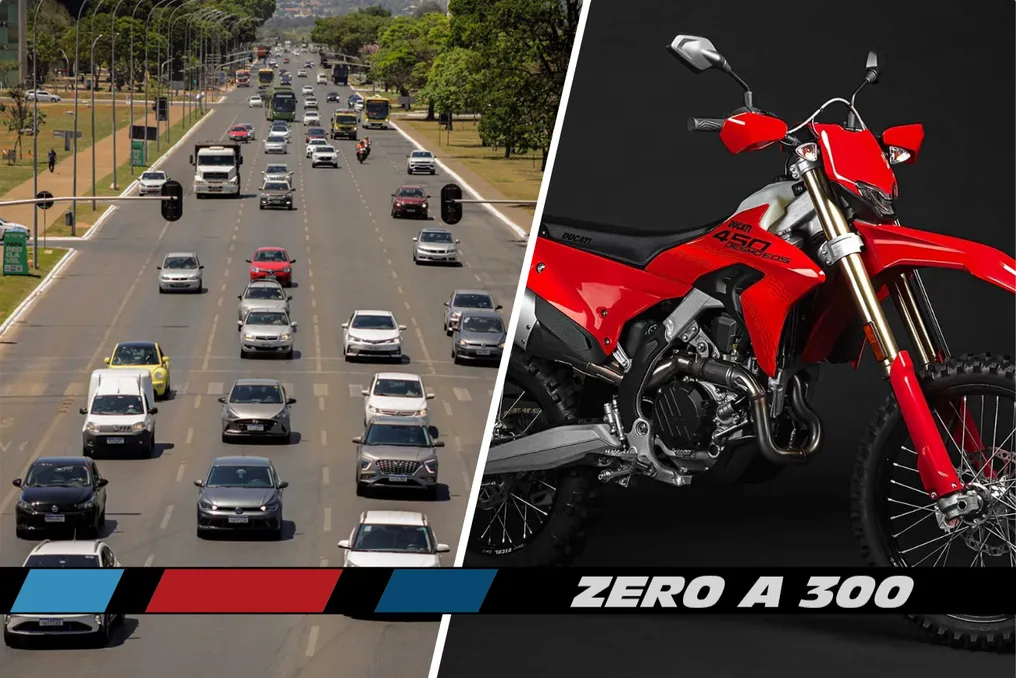
Ducati, known for its sport models and successful incursions into niches like the Diavel, presented a new segment: a genuine enduro motorcycle. The Desmo450 EDS is essentially the version adapted for public road use of the 450 MX, which was originally a motocross model and could not circulate on roads.
To be legalized, the EDS received items such as turn signals and a license plate holder, maintaining the focus on resistance over long distances off-road. The engine is a 449.6 cc single-cylinder, but it was recalibrated to offer a more progressive and linear torque delivery. This was achieved through a smaller diameter butterfly body (42mm versus 44mm), new camshafts (intake and exhaust), a piston with reduced compression ratio, and a unique crankshaft. The engine generates 42 hp at 6,750 rpm, potentially reaching 54 hp with an optional performance kit.
The motorcycle is notably light; without fuel, but with all fluids, the legalized version weighs just under 120 kg. With an Akrapovic exhaust, it reaches 110.5 kg. Much of this weight reduction is due to the aluminum chassis, which weighs only 9 kg and uses forged, extruded, and cast components. Ducati highlights that its chassis is composed of only 11 parts, compared to double what competitors use.
In terms of suspension, Ducati maintained its collaboration with Showa, offering a fully adjustable system calibrated for off-road, developed with the help of champion Antoine Meo. The front inverted fork has 49 mm tubes (with Kashima coating) and a 310 mm travel, using softer springs than those in the motocross version for better absorption of impacts from stones and roots. The rear features a 301 mm travel monoshock absorber and a progressive link, ensuring stability and maximum traction during acceleration.
The brakes were enhanced with Brembo, focusing on the precision and modulation required by enduro. The front uses a two-piston floating caliper and a 260 mm Galfer disc, while the rear employs a single-piston caliper with a 240 mm disc. A key difference is the exclusive compound pads, designed to increase rider sensitivity and prevent unwanted locking on slippery surfaces, reducing fatigue on long trips.
The Ducati Desmo450 EDS will arrive in Europe in July, priced at €12,490, which is equivalent to R$ 73,200 in direct conversion.
Other news includes the mandatory requirement for facial monitoring cameras in all new cars sold in Europe, with the United States being the next target. This requirement, part of the European Union's General Safety Regulation, uses infrared sensors to map head movements and gaze direction. If the driver looks away from the road for more than six seconds (between 20 and 50 km/h) or for more than 3.5 seconds (above 50 km/h), the vehicle issues visual and audible alerts. The European Commission justifies the measure by estimating that distraction causes up to 30% of accidents on the continent, aiming to save 25,000 lives by 2038.
In the US, the NHTSA links distraction to 16% of fatal collisions and is already discussing the adoption of the same rule next year. Despite the safety benefits, the system raises concerns about privacy and technical failures, as tests indicate false alarms due to natural head movements. Although the European Union requires a closed-circuit architecture, investigations have shown that brands like Volvo admitted to processing data on external cloud servers, raising doubts about the real security of the data.
In the gaming universe, Criterion Games, the British studio responsible for Need for Speed titles between 2010-2013 and 2020 onwards, signaled that the future of the franchise is uncertain. After migrating from EA Sports to EA Entertainment in 2023, EA Vice President Rebecka Coutaz stated that the team is fully focused on Battlefield. This leaves the release of a new NFS open, as, commercially, investing in a new title is not seen as highly profitable, given that recent games have not reached the success level of the golden age.
This caution also affects fans of rally Colin McRae and Burnout, as the executive declared that the company is not focused on the past. Finally, the Volkswagen Group announced an ambitious restructuring plan by 2030, aiming to cut up to 50% of its global portfolio. The goal is to reduce corporate complexity by 75%, eliminating redundant engines and options, and achieving a profit margin of 8% to 10%. The German giant plans to maintain production at 9 million cars annually, which, according to rumors, may lead to the closure of four factories in Germany and the dismissal of up to 100,000 employees.
Brazilian cities are beginning to implement radars equipped with Artificial Intelligence (AI) to monitor specific infractions, such as seatbelt usage and mobile phone use while driving, as speed limits have already been adjusted and no longer allow reductions without causing urban contradictions.
In São Paulo, this type of monitoring is already active on the South and East sections of the Mário Covas Ring Road. After a testing and calibration period lasting almost a month, the new high-definition cameras, equipped with AI and infrared sensors, ceased to be merely educational. Since the beginning of July, the images captured by the system have begun to support real fines issued by the Highway Military Police (PMRv).
During the testing phase, which took place between May 12 and June 9, the SPMAR concessionaire's algorithm registered the seriousness of the situation, totaling 4,879 infractions, representing a notable average of 168.2 daily violations. Of these, almost half (49%) was motivated by drivers failing to use seatbelts, and 30% referred to passengers without belts. Mobile phone use while driving accounted for 21% of the infractions, indicating these are the focus areas for AI radar surveillance.
Unlike conventional speed radars, which use inductive loops or lasers at fixed points, these cameras monitor traffic continuously, 24 hours a day. The algorithm scans the interior of vehicles and, upon identifying the absence of a belt or the driver holding a phone, freezes the image and triggers an alert. It is important to note that the application of the fine is not automatic; the material is sent to a shared center, where highway police officers conduct a human verification of each record, confirming whether the classification follows the criteria of the Brazilian Traffic Code (CTB) before issuing the notification.
The technology is not limited to the Ring Road. Since January 2026, the Anchieta-Imigrantes System has been operating with this same analytical monitoring model, supervising speed, seatbelts, and mobile phones on the descent towards the Santista Lowlands. The plan established by the concessionaires and the state government aims to progressively expand AI surveillance to the main São Paulo highways, prioritizing sections with the highest traffic volume and critical history of accidents caused by distraction.
In the automotive sector, the Dacia Striker emerges as a precursor to Renault's future coupe SUV in Brazil. Given the trend of all vehicles becoming SUVs in the Brazilian market, it is expected that the next step will be the expansion of the 'coupe SUV' niche, a segment proven to be profitable for brands like Volkswagen and Fiat. Although Renault's initial project for a mid-sized SUV above the Kardian had a coupe format, it reached the market as the Boreal, with a traditional SUV silhouette. However, plans for a model with a sloping roof were resumed with the presentation of the Dacia Striker in Europe.
Built on the RGMP (Renault Group Modular Platform), which also serves as the base for the Boreal and the Niagara pickup, the Striker is the Romanian version for the C-SUV coupe segment. It has a length of 4.62 meters, making it slightly larger than the European Bigster and the national Boreal (4.57 m). This dimensional increase is concentrated in the rear section, a design necessity to maintain the visual proportion after the roof slope and ensure a trunk capacity of 600 liters.
Internally, the Striker's architecture shares the Boreal's structure, featuring a raised center console to house the electronic parking brake, driving mode selectors, and the gear lever. When the model is localized by the French brand around 2027 in Brazil, its exterior look will shift from Dacia's rectilinear aesthetic to Renault's more fluid lines, aligning with the stylistic identity of the Niagara. The mechanical engineering of the European Striker also anticipates what Renault plans for Brazil. In Europe, the top-tier all-wheel-drive version uses an e-AWD system without mechanical connection between the axles: the 1.2-liter 140 hp turbo engine drives the front wheels, while an independent 31 hp electric motor assists the rear axle on demand in low-grip conditions or maximum acceleration. For the Brazilian market, this electronic architecture will be adapted to the 1.3 TCe Flex engine, combining light 48-volt electrification in the front with the auxiliary electric motor on the rear axle to enable 4x4 traction, with a planned launch in the country in 2027.
The Nissan Sentra has shown very low sales recently; in the first half of 2026, only 341 units were registered in Brazil. For context, the Toyota Corolla, the absolute leader among mid-size sedans, recorded 13,021 sales, while the hybrid BYD King came in second with 8,196 units. Given this performance, it is evident that the low commercial performance influenced the manufacturer's decision to end production of the model three years after the current generation was launched.
Although the Sentra is considered an attractive, well-equipped, and competent car, it used the same engine as the previous generation: a naturally aspirated 2.0L gasoline engine with direct injection, producing 151 hp and 20 kgfm of torque, coupled with an eight-speed simulated CVT gearbox. Despite this mechanical setup seeming dated in 2026, it could be a selling point for those who prefer a more traditional style. However, the successor is already under development and represents a complete break from the past. According to Autoesporte, it is the Nissan S7, an electric vehicle developed in collaboration with the Chinese company Dongfeng, which uses an electric motor on the front axle, powered by a 73 kWh battery. With 272 hp and 30.5 kgfm of torque, it can reach 100 km/h in 7 seconds, with a maximum speed limited to 160 km/h.
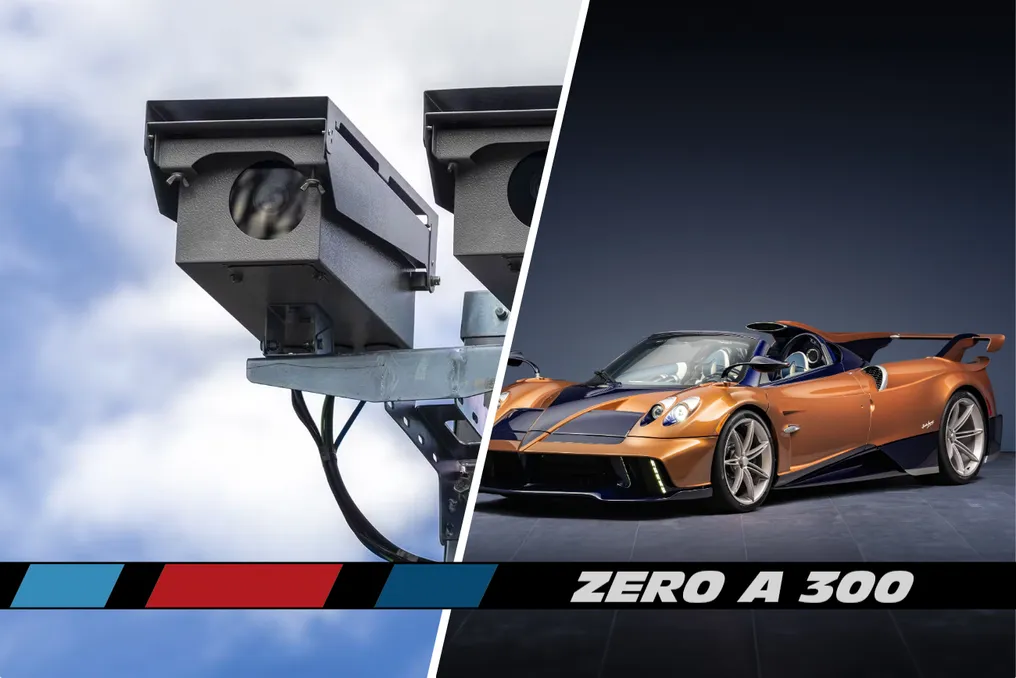
To celebrate the start of the Goodwood Festival of Speed, Pagani Automobili presented the Huayra 70 Derecho. This is the second example of a 'few-off' series (a type of limited edition with more than one unit) created by the Grandi Complicazioni division to mark the 70th anniversary of the brand's founder. Unlike the tradition of naming its cars after specific winds, the choice 'Derecho' refers directly to a severe storm system of fast and linear displacement, which Pagani compares to the constant power delivery offered by the supercar.
The 70 Derecho stands out for its high level of technical finish, which is a trademark of the company located in San Cesario sul Panaro. The body features a two-tone scheme in Pearl Orange and Inky Blue. On the underside and the central monocoque, the blue tone is completely translucent, exposing the 'fishbone' pattern of the carbon fiber weave that constitutes the structural panels. Beneath the paint, the architecture combines a central monocoque made of Carbo-Titanium HP62 G2 and Carbo-Triax HP62, with front and rear chromoly steel subframes, externally complemented by block-machined aluminum parts anodized in bright titanium, a finish replicated on the new wheels.
Under the hood is the iconic 60° Pagani V12, with 5,980 cc and two turbochargers, developed by Mercedes-AMG. In this configuration, it generates 864 hp at 6,000 rpm and 112.2 kgfm of torque, available between 2,800 and 5,900 rpm. All this power is directed exclusively to the rear wheels via a transmission with an electromechanical locking differential and managed by a seven-speed transverse manual gearbox developed by Xtrac, allowing the car to reach its maximum speed of 350 km/h (electronically limited, as is usual).
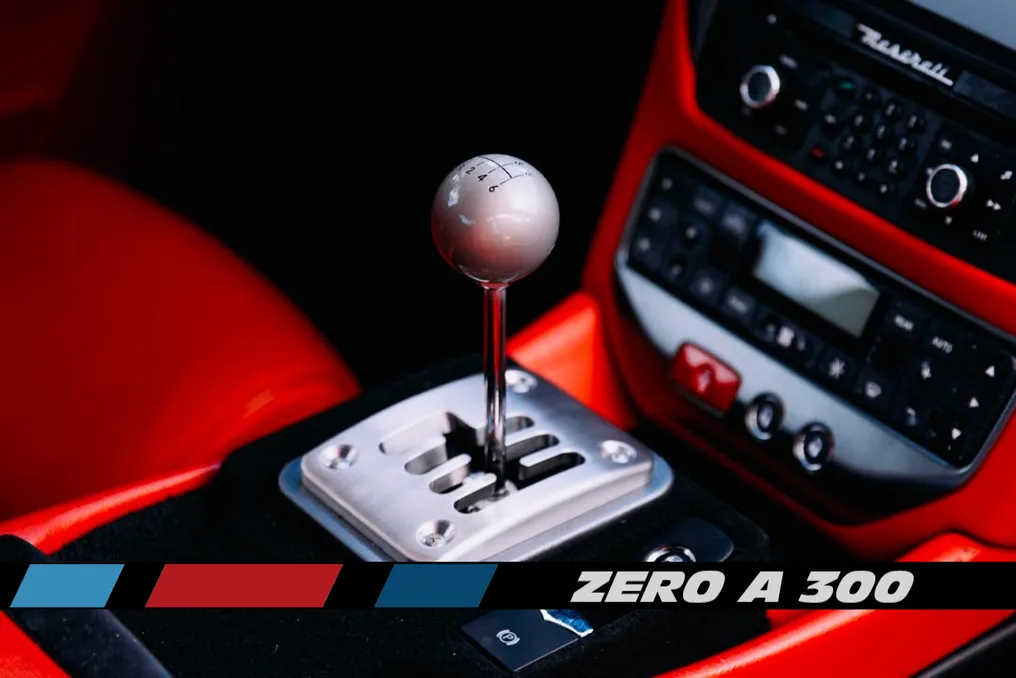
Inside, the artisanal work combines Ceramic White leather and Tricolore Blue with custom stitching. The Pearl Orange of the body appears in strategic points of interaction with the driver, such as the '12-hour' marking on the steering wheel and the gear lever. The fact that it has a lever with a grille on the center console, connected to a genuine manual transmission—and not an automatic gearbox with simulated gears—already gives the Huayra 70 Derecho a special character. The vehicle also features independent suspension using superimposed triangular arms, equipped with upper wishbones, helical springs, and adjustable and interconnected electronic dampers. Contact with the asphalt is ensured by Pirelli P Zero Trofeo R tires (265/30 R20 in the front and 355/25 R21 in the rear), while braking is handled by a Brembo CCM system with four carbon-ceramic ventilated discs, measuring 398 mm in the front and 380 mm in the rear.
The elaborate style and watchmaking precision applied to a supercar may not please everyone, but they convey an unmistakable personality. Horacio Pagani reinforced the Renaissance philosophy guiding the management of his workshop. He stated: 'Our daily commitment is to dedicate maximum attention to every detail, seeking to approach that essential harmony between form and function, intellect and craftsmanship, exactly as Leonardo da Vinci taught us. Being able to present the world premiere of the Pagani Huayra 70 Derecho at Goodwood is a privilege for us: an opportunity to share the fruits of this work with those who share our deep love for the automobile.'
Continuing the theme of V12 engines and Goodwood, the Zenvo Aurora also participated in the event. This is the latest hypercar from the Danish manufacturer, which was unveiled almost a year ago with the ambitious goal of presenting the most powerful 12-cylinder engine ever installed in a road car. Now, Goodwood served as the stage for the debut of its production version.
} , {Recent research indicates that practicing driving a vehicle with a manual transmission acts as an exercise for the brain, aiding in maintaining mental health. This finding was revealed by neuroscientists from the Institute of Development at Tohoku University, located in Japan.
The study, led by Professor Ryuta Kawashima, discovered that the physical coordination required to operate a manual gearbox directly stimulates the prefrontal cortex. This brain area is fundamental for essential cognitive functions such as focus, short-term memory, attention, and quick decision-making.
Researchers observed that the need to constantly monitor the tachometer, mentally calculate the appropriate gear for the car's speed, ease off the accelerator, and precisely synchronize the left foot and right hand constitutes low-intensity daily brain training. Thus, the brain of someone who drives a manual car daily is forced to remain active and agile, which helps reduce the natural cognitive decline associated with aging. The study also points out that this benefit does not occur when driving an automatic car, as the driver adopts a more passive cerebral posture.
Interestingly, this scientific basis emerged at a time when manual cars are in great scarcity, being mostly restricted to sports models. In Japan itself, only 1% to 2% of new cars sold leave the factory with a manual transmission. In the United States, the proportion is even smaller, fixed for decades at only 0.7% of the market, with about 24 brand-new models available. Western Europe remains the main global refuge, with countries like Spain and Italy showing adoption rates of 41% and 48%, respectively.
In parallel, the Brazilian automotive sector is receiving announcements of new features. Renault confirmed the official presentation of the Kwid restyling in India for July 3rd, signaling future changes in Brazil. The gasoline Kwid will incorporate visual elements from the E-Tech electric version, such as a split optical unit with Y-shaped LED daytime running lights on the new grille, while the main headlights will remain on the redesigned bumper with halogen lamps to control costs.
Domestically, Renault will renew the Kwid dashboard with a 10-inch multifunctional screen and wireless mirroring, using the Kardian steering wheel. However, in the national model, it is expected that the safety package will remain basic, and advanced electronic features, such as autonomous emergency braking, will likely be omitted, maintaining simplicity in entry-level configurations. The national engine will continue to be the naturally aspirated 1.0L three-cylinder SCe, coupled exclusively with the five-speed manual transmission.
MG announced that in addition to the electric MG4 Urban, it is developing new flex engines for its hybrid models intended for the Brazilian market, and there are strong indications of new SUV launches. The company will invest R$ 400 million, with R$ 60 million allocated to preparing the PACE factory in Ceará, and the remainder for R&D.
In the Japanese scenario, Honda and Nissan resumed talks about a possible collaboration, seeking to mitigate costs after Honda recorded a historic loss of US$ 46 billion last year. Reports indicate that the two companies may jointly develop a crossover and a mid-size SUV, following a resource-sharing strategy. Honda, which canceled the development of a purely electric vehicle line to contain losses, is now focusing on hybrids, such as the new generation Civic, aiming for recovery by 2030.
Finally, Lada presented its new utility vehicle, the Lada Iskra SW, which has a naturally aspirated engine, manual transmission, and stamped steel wheels. Based on the Renault Kardian platform, this updated version replaced the CVT with a six-speed manual gearbox. The entry-level version omits luxuries, offering modest performance, with 0 to 100 km/h acceleration in 12.7 seconds, but includes amenities such as an 8-inch multimedia center and heated front seats.