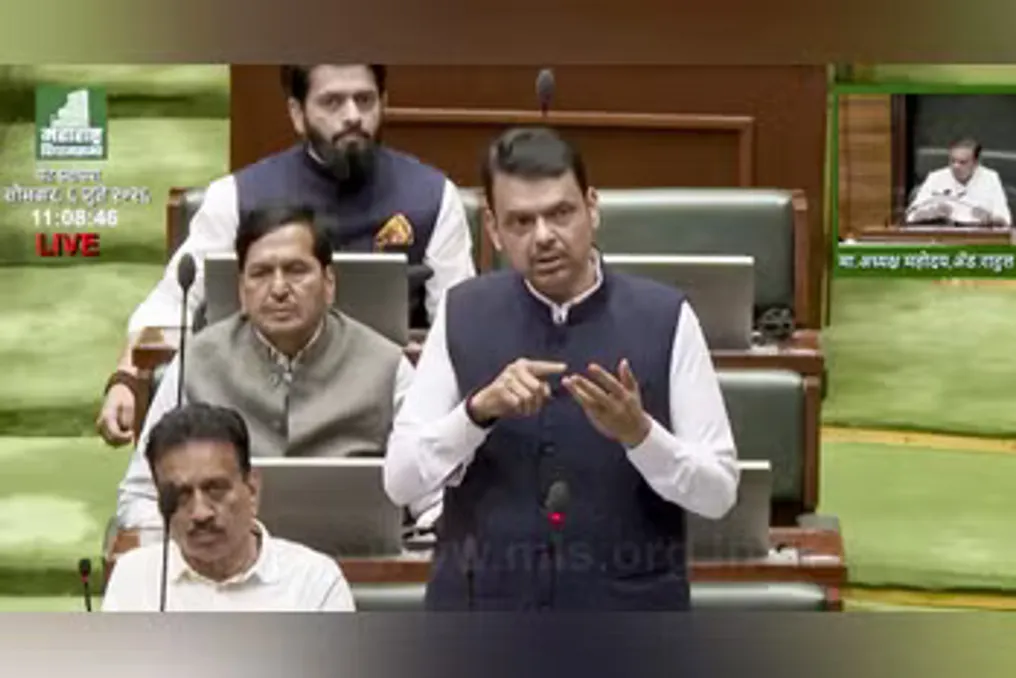
The Chief Minister of Maharashtra, Devendra Fadnavis, announced that the state government has removed the ceiling of Rs 2 lakh on overdue loans under the state's agricultural loan waiver program.
Expansion of Scheme Coverage
Speaking in the State Assembly during debates on a motion initiated by the opposition, Fadnavis stated that this change will benefit thousands of farmers who previously could not utilize the program due to exceeding the debt amount set by the limit.
Furthermore, an extension of the cut-off period was announced: the scheme, which previously covered overdue loans up to the financial year 2025-26, will now include debts accumulated until the 2026-27 financial year. According to Fadnavis, the 'Punyashlok Ahilyadevi Holkar Farm Loan Waiver Scheme' could potentially help around 56 million farmers.
Justification for Support Measures
Affirming the necessity of loan waivers, the minister, who also oversees the finance portfolio, emphasized that the goal of this measure is to help financially distressed farmers regain access to institutional credit. He noted that such waivers do not make farmers rich but help prevent them from falling into the hands of private moneylenders.
Fadnavis added that the government, led by the Bharatiya Janata Party (BJP), could have postponed the decision since elections are not scheduled until 2029, but it decided to introduce this scheme due to the financial problems faced by farmers.
Financial Support for Farmers
The minister also informed that the state annually provides farmers with an electricity subsidy worth approximately Rs 25,000 crore, and the total expenditure on subsidies by the agriculture department amounts to about Rs 95,000 crore. Responding to criticism that only Rs 12,000–13,000 crore would be disbursed and that 3.6 million farmers would remain without assistance, he stated that the program will provide support amounting to Rs 36,000 crore for 5.6 million farmers.
Changes Compared to Previous Schemes
Fadnavis recalled that the Mahatma Jyotirao Phule loan waiver scheme of 2019 limited eligibility for overdue loans to Rs 2 lakh; farmers whose debt exceeded this limit by even one rupee were not covered by the program. He also clarified that beneficiaries of the 2017 loan waiver were excluded from the Mahatma Phule 2019 scheme, and farmers covered by the national loan waiver of 2008 were also not included in the Maharashtra 2009 scheme. According to him, about 320,000 farmers benefited from the 2019 scheme, and he stressed that Maharashtra is the only state that has implemented large-scale agricultural loan waiver programs in 2017, 2020, and 2026.
Balance Between Aid and Banking Sector
Nevertheless, the minister warned that frequent loan waivers could encourage delays in repayment and negatively affect the financial health of cooperative banks. Although the government considered excluding recipients of previous waivers from future programs, it decided to strike a balance between alleviating the plight of farmers and protecting the interests of the banking system. Fadnavis reported that the government consulted with representatives of the banking sector before the final approval of the scheme. The state plans to spend Rs 20,000 crore in the first year, Rs 22,000 crore in the second year, and Rs 25,000 crore thereafter as part of overall agricultural sector support.
Additional Announcements
In response to demands from ruling coalition MPs to abolish the Rs 50,000 repayment condition, Fadnavis stated that such a change would increase the burden on the state exchequer by Rs 4,000–5,000 crore. Nevertheless, he announced that farmers included in the Mahatma Phule loan waiver scheme will also receive benefits of up to Rs 2 lakh. He characterized the extension of the cut-off period for overdue loans until the 2026-27 financial year as the first such decision made by any state government.