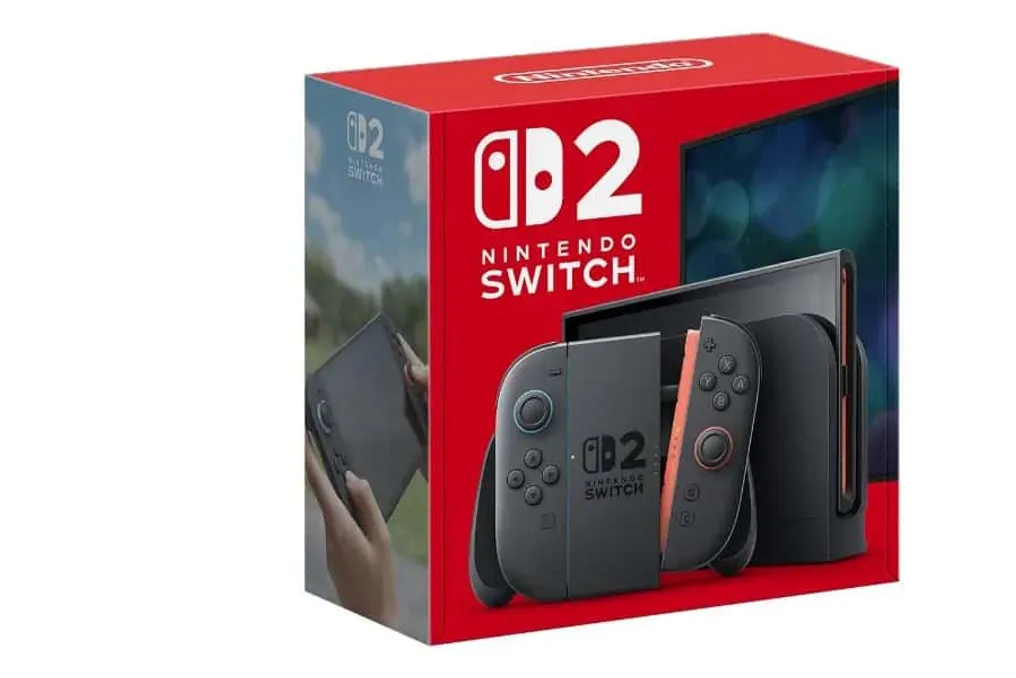
The Nintendo Switch 2 emerges as the successor to one of the best-selling consoles in history, and one year after its launch, it is possible to form a clear opinion on what the device offers and what can be expected from it in the future. Olhar Digital conducted a detailed analysis, addressing the positive points, deficiencies, and all crucial information before the purchase decision.
Design and Screen Quality
Maintaining the hybrid format of its predecessor, the Nintendo Switch 2 is physically larger and heavier. Although the build conveys a sense of greater solidity, the increase in dimensions compromises daily portability, making transport in smaller bags or backpacks difficult.
The screen has been upgraded to 8 inches, which enhances the visual experience in handheld mode, achieving Full HD resolution and a 120 Hz refresh rate. However, Nintendo opted to use an LCD panel instead of the OLED technology present in the previous Switch version. This choice results in less vibrant colors, grayish blacks, and lower contrast in very bright environments.
Performance and Internal Storage
The console incorporates an updated Nvidia processor, which provides improvements in game performance and enables image upscaling to achieve 4K resolution on television. Despite this graphical advancement, the hardware still lags behind competing home consoles and requires an efficient cooling system, generating an audible fan noise under intense stress.
The internal storage space has been increased to 256 GB, representing progress compared to the 64 GB of the original model. However, this volume still seems limited given the growing size of contemporary games. For users who acquire many digital titles, installing a MicroSD Express memory card becomes an immediate necessity, constituting a significant additional cost, as such cards are substantially more expensive than common micro SD cards.
Games and Backward Compatibility
The device has the capacity to read both physical cartridges and digital games purchased for the first Nintendo Switch, ensuring that the user's existing library remains accessible. Some older titles exhibit more stable frame rates on the new hardware, but the most noticeable visual improvement will depend on updates provided by the developers themselves.
Among the exclusive highlights, the Nintendo Switch 2 features important Nintendo titles such as Mario Kart World, Donkey Kong Bananza, Pokémon Pokopia, and Star Fox. Furthermore, games like Fire Emblem: Fortune’s Weave, Nintendo Switch Sports Resort, and The Legend of Zelda: Ocarina of Time are planned for 2026. Additionally, the console received games from other publishers, including Cyberpunk 2077, Final Fantasy VII Remake, Resident Evil Requiem, and Indiana Jones and the Great Circle, with the promise of a new Call of Duty in 2026. The indie game catalog remains rich, just like on the first console.
One point of attention is the high cost of some of these games, especially those produced by Nintendo itself, which rarely offer discounts. For example, Mario Kart World will cost R$ 439 in July 2026, and Donkey Kong Bananza will require an investment of R$ 390.
Controller Updates
The new Joy-Cons have replaced the traditional snap-on mechanism with rails, now adopting a magnetic fixing system for connection to the console. This change resolves the mechanical looseness issue that old controllers presented over time, but restricts the use of old Switch accessories or cases.
It is relevant to note that, despite these changes, the accessories from the first model remain compatible with the Switch 2, albeit with certain restrictions. The Nintendo Switch Pro Controller, for instance, cannot start the console via the built-in button, and old Joy-Cons cannot be docked, but they function normally when used separately. Nintendo introduced new vibration sensors and a dedicated button for voice chat, in addition to a feature that allows the controller to operate as a mouse. Nevertheless, the internal structure of the analog sticks has not undergone drastic modifications, maintaining consumer concerns about potential long-term wear.
Summary of Advantages and Disadvantages
The Nintendo Switch 2 represents an evolution of the first console, bringing a larger screen, controllers with unprecedented features, greater processing power for more demanding games, and compatibility with old titles that benefit from the new processor. Considering that the first Switch was released in 2017 and its successor arrived in 2025, it is suggested that this console should be kept for several years.
The disadvantages mainly lie in the 256 GB internal storage; since some released games exceed 100 GB, the space is quickly consumed. Expansion requires a Micro SD Express card, which is significantly more expensive than previous models. Furthermore, the decision to use an LCD screen instead of OLED, aiming to contain the price increase, results in a lower display quality than what is already available in the Nintendo market.
General Conclusion
The Nintendo Switch 2 offers a superior experience to the initial model, being larger and more powerful. However, this improvement comes with a high cost, particularly regarding games.