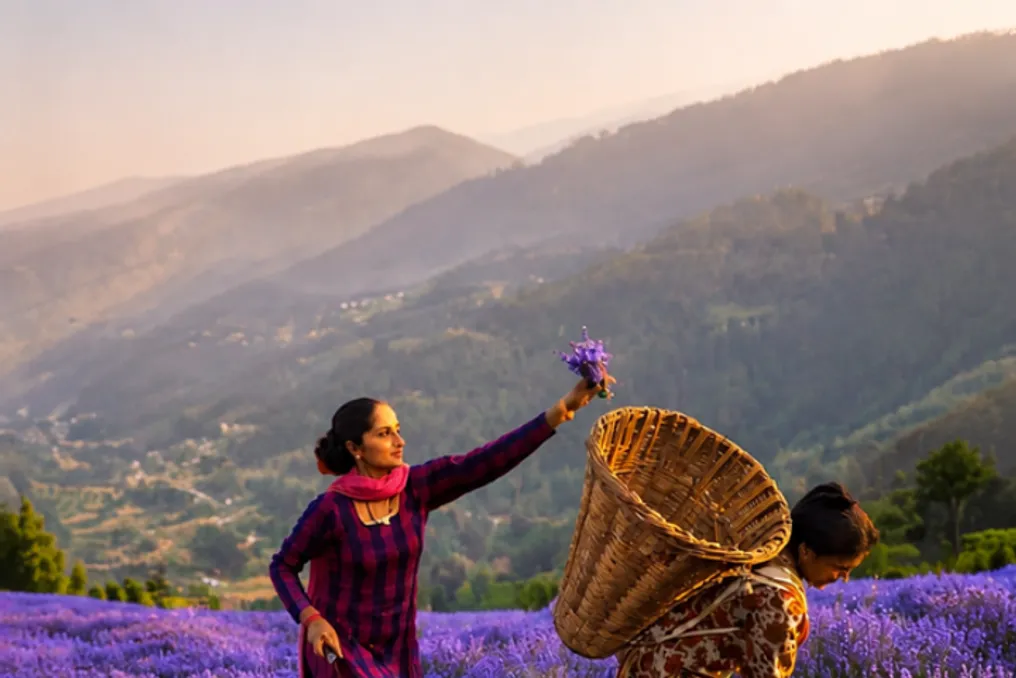
In Kashmir, where apples and saffron are traditionally associated, a new aromatic harvest—lavender—is gaining popularity. In one of the villages of Kashmir, apple orchards are gradually giving way to this crop.
In Kashmir, where apples and saffron are traditionally associated, a new aromatic harvest—lavender—is gaining popularity. In one of the villages of Kashmir, apple orchards are gradually giving way to this crop.
The reason for this shift lies in the economic benefit. A local farmer who himself switched to growing lavender noted that apple prices were declining every year. Lavender has an advantage not only in lower cultivation costs but also in resilience: it requires significantly less water and care than apple trees.
Furthermore, the strong scent of lavender deters wild animals, allowing farmers to save on fencing, preventing losses, and constant supervision. A research field station is studying lavender at high altitudes, improving its cultivation and harvesting methods. After harvesting, the purple flowers undergo steam distillation, turning into essential oil, which sells for almost 10,000 rupees per kilogram.
This high income is supported by a national mission that actively promotes aromatic agriculture, providing subsidies for planting material to farmers willing to experiment. One such farmer started with a small plot ten years ago and today cultivates extensive areas while also training newcomers. The resulting oil, like products from other farmers, feeds a growing industry, including perfumery, cosmetics, and wellness goods, which have demand for this product. Additionally, the fields have acquired a second function: tourists and influencers come here, attracted by the color, tranquility, and aroma.
The fire in Vozel no longer has active fronts. Operational groups are making efforts to prevent re-ignition.
The coffee bean, though tiny, possesses immense power. The day often begins with its aroma, and a quiet afternoon break turns into a self-care ritual. However, this magical bean is capable of doing more.
In Yunnan province, located in southwestern China, coffee is subtly transforming the lifestyles of people and also influencing the economic development of the region. It contributes to increased farmer incomes, stimulates rural development, and brings new energy to local communities.
What started as the story of a single bean has turned into a large-scale story of transformation unfolding throughout the countryside. Journalist Wang Tao from CGTN provides a more detailed look at how exactly coffee is causing these changes in Pu'er.