The South Korean semiconductor giant, SK Hynix, began its listing on the Nasdaq stock exchange in the United States this Friday (10). The company's entry into the American market occurred through an offering totaling US$ 26.5 billion (equivalent to approximately R$ 136 billion), marking the second largest recent stock sale in the country, trailing only the SpaceX IPO.
Indicator of Confidence in the AI Boom
This market move serves as an indicator to assess investor solidity and confidence in the continuous growth of the artificial intelligence (AI) sector. The company experienced a period of accelerated expansion, reaching a market value close to US$ 1 trillion (R$ 5 trillion), after its shares grew by about 630% over the last twelve months. Despite a recent retraction of 25% from its two-week peak, the offering conducted in the US was met with high demand for purchases.
Position in the Global Memory Market
In South Korea, SK Hynix holds the second position in market value, right after Samsung. The company supplies crucial, albeit discreet, components for devices from brands such as Apple and Dell. Together with Samsung and Micron, it forms a dominant trio in the global supply of conventional RAM memories.
Leadership in HBM Memories for AI
The factor that propelled the company to prominence on Wall Street is its exclusive leadership in manufacturing high bandwidth memory (HBM). These are sophisticated circuits that stack layers of chips to process data at extremely high speeds. This technology has established SK Hynix as a primary supplier to both Nvidia's and AMD's AI chip ecosystems, which rely on these memories for the operation of their Graphics Processing Units (GPUs).
Financial Projections and Future Investments
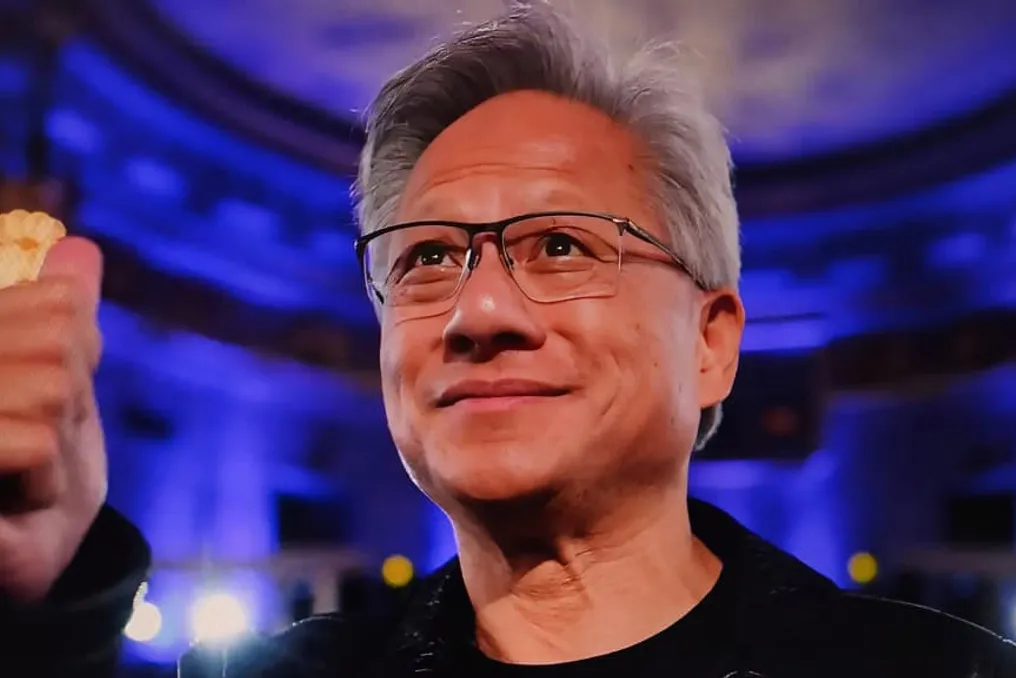
Analysts predict that SK Hynix could capture more than half of the global HBM market as early as 2026. The technical importance is so significant that Jensen Huang, CEO of Nvidia, visited Seoul to formalize a multi-year supply partnership with the manufacturer. The financial impact of this market position is reflected in the results: annual revenue nearly tripled between 2023 and 2025, reaching US$ 65 billion (R$ 333 billion). Analyst estimates point to revenue potentially doubling again in 2026, reaching about US$ 235 billion (R$ 1.2 trillion).
Factory Expansion and Strategic Acquisitions
To meet growing demand, the company plans to invest up to US$ 720 billion (R$ 3.6 trillion) in expanding its fabrication complexes in South Korea. A portion of this investment, estimated at US$ 7.8 billion (R$ 40 billion) by the end of 2027, will be dedicated to purchasing extreme ultraviolet (EUV) lithography machines from the Dutch manufacturer ASML, which are essential for etching the microscopic circuits of advanced chips.
The expansion also includes a strong structural initiative in the United States. SK Hynix is building a chip factory valued at US$ 4 billion (R$ 20 billion) in West Lafayette, Indiana, scheduled to operate in 2028, partially financed by subsidies from the US federal CHIPS Act.
Additionally, the company is expanding Solidigm, its unit focused on high-capacity data storage. This division, based in California, was acquired from Intel for US$ 9 billion (R$ 46 billion) in 2021.
Sector Risks and Stabilization Strategies
However, this ambitious expansion plan carries the risks inherent in a sector known for its extreme cycles of prosperity and decline. The company, originally founded in 1983 as Hyundai Electronics, faced serious crises of global oversupply and complex mergers until it was renamed under the control of the SK group in 2012.
Aware that previous technological peaks led to excess inventory and sharp price drops, SK Hynix and its competitors seek to alter the industry dynamic through long-term contracts, requiring customers to provide order predictability years in advance to maintain market stability.
Options Market and Liquidity in the US
US stock exchanges, including Cboe Global Markets and Nasdaq itself, are expected to list options contracts on SK Hynix shares two business days after the stock debuted in the New York market, according to Reuters. This financial instrument allows large funds to hedge their positions against currency and market fluctuations, or for speculators to bet on future price movements. In practice, the introduction of options increases floating capital, raises daily asset liquidity, and accelerates the determination of the company's true value in the American market.
The expectation of high volume in these derivatives is fueled by the intense participation of retail investors (individuals) seeking financial leverage in AI assets—an aggressive dynamic that tends to amplify quick profits but equally magnifies losses. The scenario is expected to replicate the recent SpaceX event, whose options launched in June recorded record trading volumes on the first day of listing, concentrated mainly on Nasdaq. This speculative appetite will serve as a thermometer for the market's resistance to the current billion-dollar valuations of the technology sector.