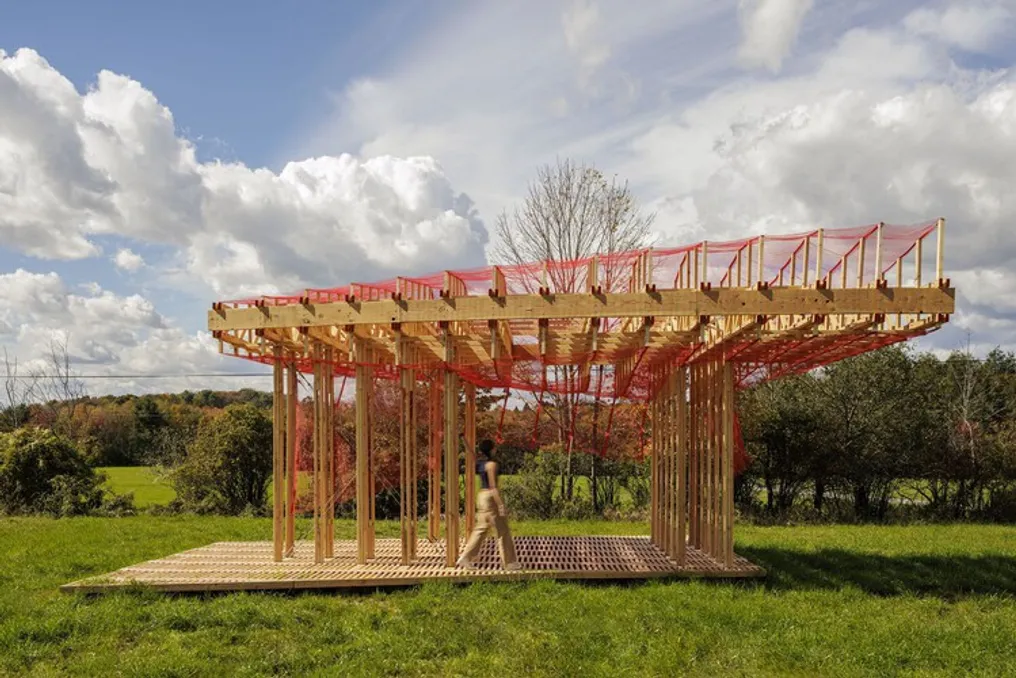
Wood is one of the oldest and most familiar materials in architecture. However, its modern application raises complex questions regarding environmental impact, resource availability, material sourcing, and cyclicity within the context of the local economy.
Technological and Environmental Aspects
Simultaneously, progress in computational design, CNC machining, and robotic manufacturing is transforming methods of designing and assembling wood. This opens new horizons for structural innovation and formal expression while reevaluating the balance between automation, labor, and efficiency.
Educational Application of Wooden Structures
Integrating these technological and ecological considerations, various university programs in design and construction (design-build) use wooden pavilions as fertile ground for architectural experiments. This allows students to test structural systems, production methodologies, and material ecology on a real scale.
Overview of Academic Projects
This article compiles examples of wooden pavilions and installations created in collaboration with students in academic settings. In various contexts, these projects demonstrate a shared interest in exploring the expressive potential of wood through low-impact digital fabrication, the use of biogenic materials, and artistic collaboration.