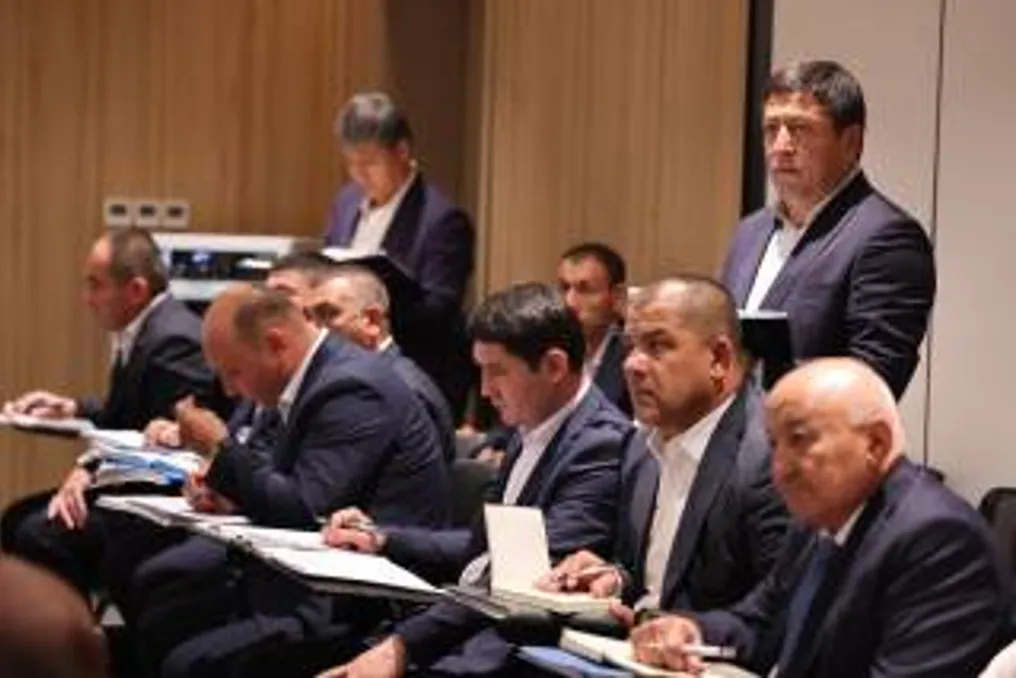
A critical and analytical review of the work carried out in the first half of the current year in the sports sector was conducted at the Ministry of Sport meeting. Responsible individuals were evaluated based on clear criteria.
A critical and analytical review of the work carried out in the first half of the current year in the sports sector was conducted at the Ministry of Sport meeting. Responsible individuals were evaluated based on clear criteria.
The meeting was attended by Minister of Sport Adham Ikromov, Head of the National Olympic Committee Oibek Qosimov, Head of the National Paralympic Committee Farrukh Ahmedov, representatives of the Sports Ministry of the Karakalpakstan Republic, regional sports departments and Tashkent city sports committees, heads of training centers for Olympic and Paralympic sports, as well as leaders of sports organizations and employees of sports schools from regional studios.
It was emphasized at the meeting the anticipation of several major competitions, including the Summer Asian and Para Asian Games to be held in Japan, the Youth Olympic Games in December, and the Asian Games for closed disciplines and martial arts to be held in Riyadh.
It was also noted that hosting the World Chess Olympiad for the first time in the country, as well as world and continental championships in sports such as swimming, wrestling, boxing, and weightlifting, will contribute to enhancing the international prestige of Uzbek sports.
During discussions, in addition to preparations for these major sporting events, a number of issues were analyzed in detail: compliance with executive discipline in the regions, development of mass sports, improvement of the selection system, and increasing the efficiency of sports schools.
Criticism was voiced regarding some regions where sports competitions at the mahalla (neighborhood) level are insufficiently organized, and it was noted that there is an absence of competitions in table tennis, volleyball, wrestling, and athletics in some mahallas.
The necessity of eliminating this passivity, effectively utilizing sports infrastructure at the mahalla level, and increasing youth coverage was stressed. A positive point is that 5.5 million young people aged 16 to 30 registered to participate in the 'Five Initiatives Olympics', with 89% of them, or 4.9 million people, participating. However, unfortunately, in 20 regions, including Okhangaron, Olmalik, Kibray, Parkent, Buka, Toylok, Urgut, Samarkand, Kattakurgon, Sherobod, Olmazor, Davlatobod, Uchqoprik, Kiziltepa, Shahrihon, and Guliston, the coverage was only 80%.
The 'Presidential Olympics' competition system, which has brought new energy to the life of the country's sports, will be expanded this year: the number of sports has been increased to 21, and the Paralympic direction will be included for the first time in a separate program, which will undoubtedly serve to expand the ranks of talented athletes.
A positive indicator was that the first stage of the 'Presidential Olympics'—the 'Hokim Olympics'—covered 324 thousand young people, which is three times higher than last year's figure.
Nevertheless, problems were identified: in some regions, competitions in major sports are not held, and in certain districts and cities, the level of participation is low, as well as insufficient involvement of private sports clubs. Priority tasks were defined at the meeting to improve management efficiency in the sports system, strengthen human resource potential, and increase the share of women in leadership positions. Following the discussion, specific assignments were given to responsible individuals on all raised issues, and corresponding decisions were made.
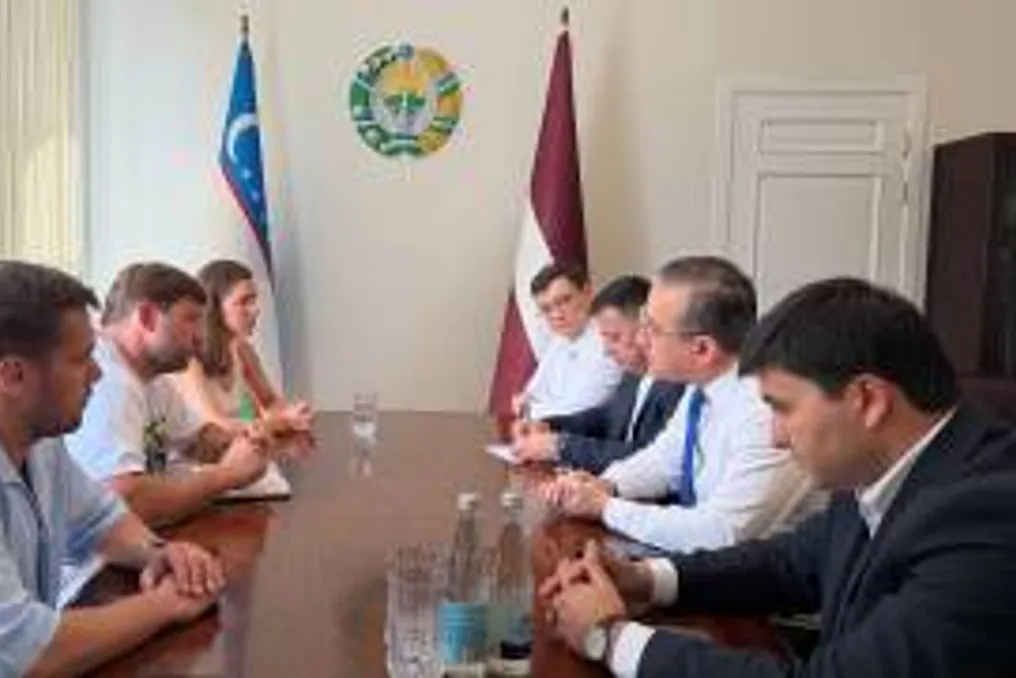
A meeting took place at our country's embassy in Latvia between the founders of 'Ghetto Games' and representatives of the Association of Uzbek Mahallas and the Youth Affairs Agency. 'Ghetto Games' is one of the largest global movements in the field of street sports.
As is known, 'Ghetto Games' is the largest youth movement in the field of street sports and culture in Eastern Europe and the Baltic region, and it was created in Latvia. This project supports sport as a tool for social change, helping young people in difficult areas find their path and develop.
During the negotiations, issues regarding the implementation of the 'Ghetto Games' project in Uzbekistan, its wide dissemination among youth in mahallas, and the development of long-term cooperation were discussed. Most importantly, a mutual agreement was reached to hold this prestigious competition in the country.
According to the responsible officials, this partnership will serve to attract thousands of young people to street sports, organize their free time meaningfully, popularize a healthy lifestyle, and provide practical support to talented youth. Furthermore, this project will be an important step in strengthening our country's position in the international street sports movement and demonstrating the potential of Uzbek youth to the world.
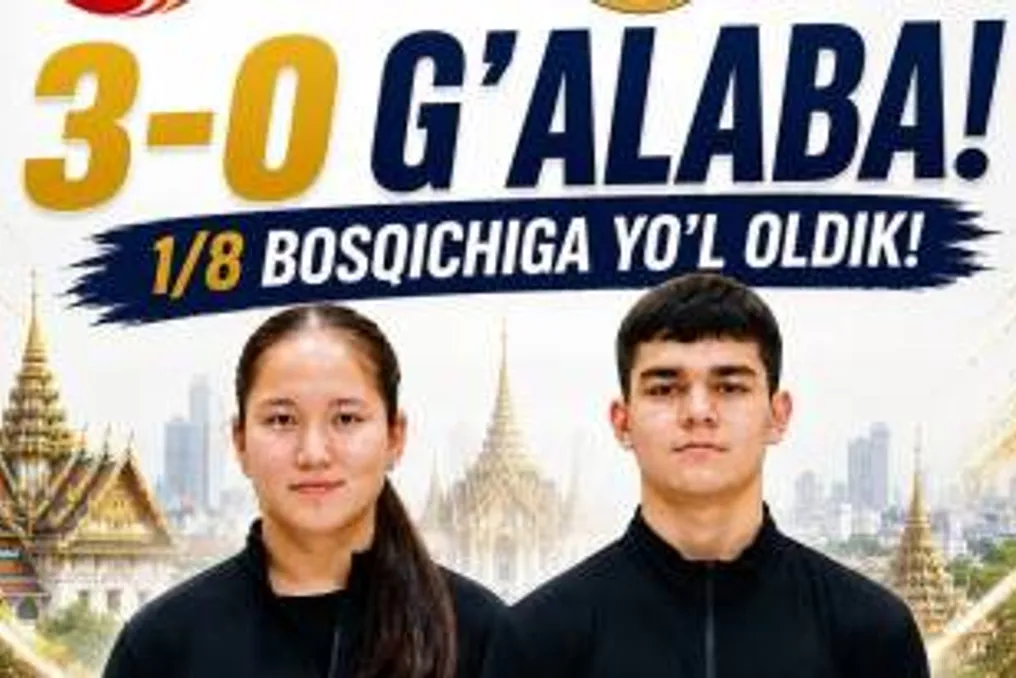
At the Asian Table Tennis Championships held in Bangkok, Thailand, in the U15 and U19 age categories, individually, team, and mixed, the Uzbekistan national team is showing both expected and unexpected results.
Various results were recorded during yesterday's games. In particular, in the U19 mixed doubles 1/32 finals, the Uzbekistan national team pair Khurshid Akhmedov / Aruzhan Kamalova defeated the Macau team with a score of 3:0. They then played against the Indian team in the 1/16 finals, losing 1:3 and ending their participation in the championship in the 1/8 finals.
Additionally, yesterday, the skillfully playing young player Adelina Hasanova defeated the Kyrgyz player Aibike Orozbekova with a score of 3:0.
The development of mass sports and the formation of a healthy lifestyle is one of the priority areas of state policy in Uzbekistan concerning youth policy. Reforms implemented under the President's initiative are elevating the student sports system to a qualitatively new stage, viewing sports activities in higher education institutions not merely as extracurricular activities, but as a key element for selecting talented athletes, fostering a healthy lifestyle, and preparing reserves for the international arena.
The results of these reforms became evident in the first half of 2026 due to the work of the Uzbekistan Student Sports Association. The first-ever holding of the "Olympiad of Young Uzbekistan," the traditional "Students' League," and the "Barkamol Avlod–2025/2026" competitions demonstrated the formation of an integrated system for developing student sports, including successful participation on the international stage and institutional changes.
During the President's open dialogue with youth on February 24 of this year, important tasks were set regarding expanding opportunities for meaningful free time, regular sports activities, and further developing mass sports. As a practical implementation of these directives, the "Olympiad of Young Uzbekistan" was organized—the first such tournament in the country's history, involving the Ministry of Higher Education, Science and Innovation, the Ministry of Sport, and the National Olympic Committee.
The grand opening of the competition took place in March 2026 at the Museum of Glory of the Olympics and Paralympics in Tashkent. The tournament was held in three stages across disciplines such as 3x3 basketball, volleyball, handball, athletics, table tennis, swimming, and football.
The first stage, consisting of qualifying matches in higher educational institutions, ran from April 1 to 30. More than 154 thousand students from 170 higher educational institutions of the republic participated, marking one of the highest coverage figures in the history of the country's student sports.
At the regional stage, which took place from May 1 to 15, nearly 10 thousand athletes from 146 higher educational institutions participated. The republican final, held in Tashkent from June 4 to 9, was organized on a high standard at facilities such as the "Olympic Village," the University of Physical Culture and Sports of Uzbekistan, Chirchik State Pedagogical University, the National Football Center, and other modern sports complexes.
A total of 2368 people participated in the final matches: 1920 athletes, 336 coaches, and 112 delegation representatives. According to the overall team score, Fergana State University took first place, winning 7 gold, 6 silver, and 5 bronze medals. Urgench State University came second with 7 gold, 3 silver, and 3 bronze medals, and Karakalpak State University placed third with 4 gold and 3 silver medals.
Among universities without a physical culture and sports major, Tashkent State Economic University was recognized as the winner. The next places were taken by the Uzbekistan State University of World Languages and the University of World Economy and Diplomacy.
The "Barkamol Avlod–2025/2026" competitions among students of vocational-technical educational institutions were also held at a high organizational level. These competitions, which lasted from November 2025 to May 2026, covered 16 sports. Throughout the season, 98,673 people participated in the first stage, 77,568 in district and city stages, and 24,856 at the regional level. 3094 athletes were sent to the republican final.
224 teams from academic lyceums, technical schools, and vocational-technical educational institutions participated in the competitions. Republican finals were held in disciplines such as judo, badminton, athletics, freestyle and Greco-Roman wrestling, weightlifting, chess, checkers, volleyball, basketball, combat sports, table tennis, streetball, street workout, football, and handball. In terms of overall team score, Tashkent City took first place, Bukhara Region second, and Khorezm Region third.
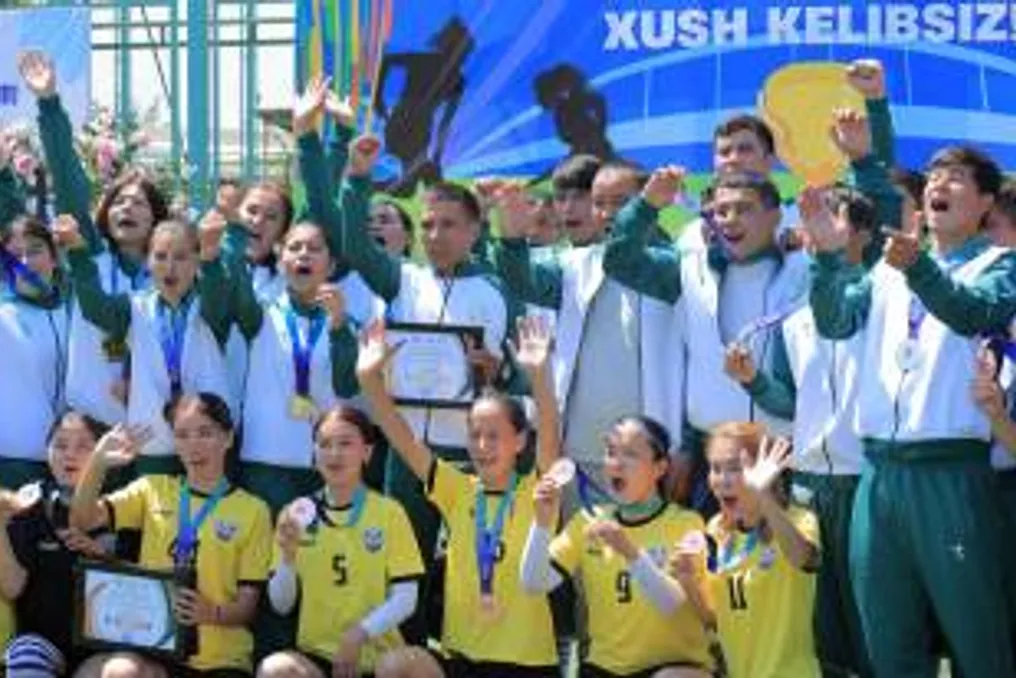
The grand closing ceremony took place on June 9 at the "Olympic Village," where winners and prize-winners were awarded diplomas, medals, commemorative gifts, and Presidential gifts.
The "Students' League" also strengthened the competitive environment among higher educational institutions. These competitions were held in badminton, basketball, volleyball, handball, athletics, wrestling, table tennis, futsal, chess, rugby-7, water polo, and field hockey. 176 teams and 3346 students participated in the republican finals, of whom 1388 were female. The final stages were held in the cities of Tashkent, Samarkand, Fergana, Andijan, and Sunyndary.
During the reporting period, the Association paid special attention to expanding international cooperation. The country's delegation participated in the international sports festival "45-Sports Fest 2026," organized by Boğaziçi University in Istanbul, Turkey, from May 14 to 17, 2026. Representatives from over 25 countries, more than 70 universities, and over 1000 athletes participated in this event.
Students from Guliston State University, Urgench State University, and the University of World Economy and Diplomacy represented the country. The futsal team from Guliston State University became the champion of the festival. Jamshidbek Tuychiev and Farrukh Azadov won gold in the men's doubles category in badminton. Jamshidbek Tuychiev also won in the mixed doubles category. Students from Uzbekistan also achieved success in table tennis, reaching the final stages.
As part of institutional reforms, a republican training seminar was held in Tashkent in March for leaders and deputy leaders of sports clubs in higher educational institutions. Issues regarding improving club activities, the quality of competition organization, and the introduction of modern management mechanisms were discussed.
Furthermore, an extraordinary conference of the Uzbekistan Student Sports Association was held, where a new charter for the organization was approved. Muzaffar Pazilov was elected Chief Secretary of the Association according to the conference resolution. Tasks were set to organize the activities of university sports clubs in accordance with the standards of the International Federation of University Sports (FISU), expand international programs, and strengthen the positions of universities in international rankings.
The results of the first half of 2026 demonstrate the stable and consistent development of student sports in the country. Thanks to the "Olympiad of Young Uzbekistan," over 154 thousand students were involved in sports life. The "Barkamol Avlod" competitions strengthened the continuous sports system, while the "Students' League" advanced the competitive environment between universities to a new level. Achievements in international competitions, improvement of sports club operations, implementation of FISU standards, and modernization of the management structure are of great importance for the development of student sports.
Today, student sports serves not only as a tool for ensuring mass participation but also as a mechanism for training highly qualified athletes, forming reserves for national teams, and enhancing the country's prestige on the world stage. This is a vivid testament to the practical effectiveness of state policy towards youth in New Uzbekistan.