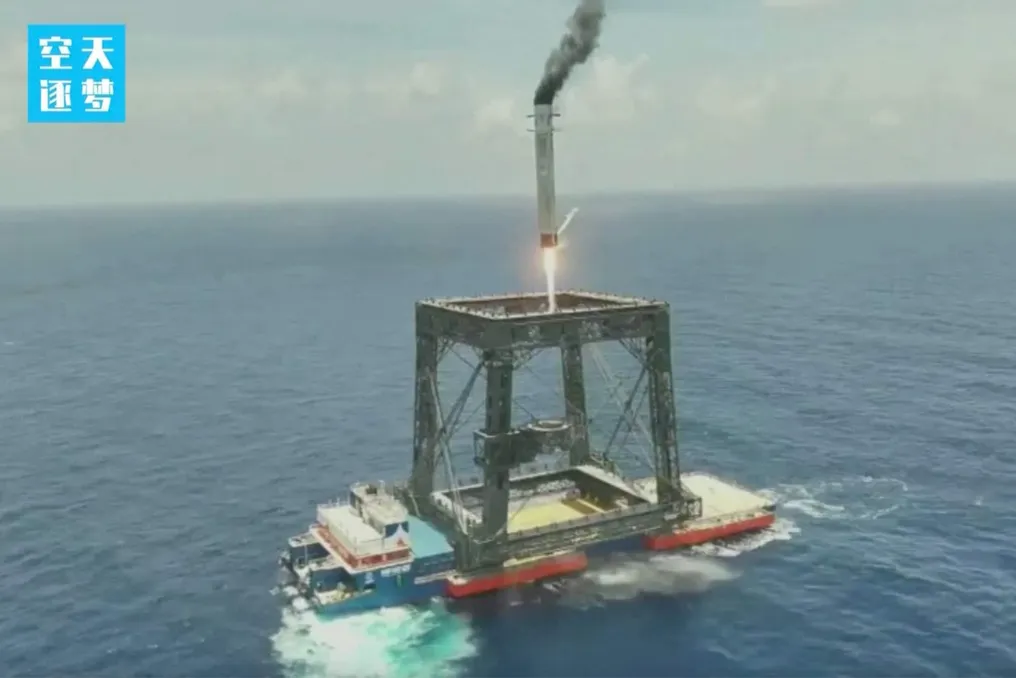
China succeeded in testing an experimental rocket recovery system last Friday (10). The Long March 10B rocket was launched from the commercial space launch center located in Hainan, in the south of the country, at 1:15 AM Brasília time.
First Stage Recovery
About six minutes after the propellant separated from the upper stage, the first stage returned vertically and was successfully recovered on a maritime platform, according to state broadcaster CCTV. With this achievement, the Chinese have reached a capability that is already the domain of American companies, such as SpaceX and Blue Origin: the ability to return the rocket to its starting point.
Technological Difference
Beijing's purpose is to destabilize US supremacy in the reusable rocket segment. However, the method employed by China differs from that used by Americans. Unlike autonomously landing on solid ground with extendable legs or on a drone ship, the Long March 10B uses landing hooks that capture a net attached to a maritime platform.
Milestone in Space Program
This test represents the first successful recovery of an orbital-class propellant by China, consolidating nearly a decade of research and development in reuse technologies. Mao Ning, spokesperson for the Ministry of Foreign Affairs, described the event as a 'historic day for China's space program.' This technical advance preserves the most valuable part of the rocket—the engine-containing propellant—which results in a drastic reduction in orbital operational costs.
Commercial and Future Implications
For comparison, SpaceX launches the Falcon 9 approximately 150 times annually, reusing its propellants dozens of times. The Long March 10B, capable of carrying a minimum of 16 metric tons of payload to low Earth orbit, was designed for the commercial market by the Chinese Academy of Launch Vehicle Technology, the country's main state rocket agency. This reuse technology is expected to decrease expenses for launching Chinese commercial satellite constellations.
Plans Beyond Reuse
China's goals are even broader: the Long March 10 line is being planned to conduct crewed missions to the Moon before 2030. In this context, the experimental model will serve to collect vital data and validate the necessary technologies for the lunar program. CCTV also reported that the country intends to reuse this same propulsion stage in another launch by the end of 2026.