The Tashkent Stock Exchange has executed its first transaction involving mortgage bonds, marking the start of trading this new financial instrument in Uzbekistan's capital market, according to the exchange's press service.
The Tashkent Stock Exchange has executed its first transaction involving mortgage bonds, marking the start of trading this new financial instrument in Uzbekistan's capital market, according to the exchange's press service.
These securities were issued by UMRC SPV, a subsidiary of the Uzbekistan Mortgage Refinancing Company (UzMRC). The bonds are secured by securitized mortgage loans issued by commercial banks.
The placement of mortgage bonds totaling 40.56 billion soms was conducted through a private subscription on July 8, 2026. Narodny Bank acted as a partner in this transaction.
According to exchange representatives, this operation effectively launched the circulation of mortgage bonds and opened a new stage in the development of the local capital market. In June 2026, the National Agency for Advanced Projects registered the issuance of mortgage bonds worth 40.5 billion soms.
The regulator noted that UzMRC plans to use the raised funds to finance and refinance mortgage loans. The prospectus was registered in accordance with the Temporary Regulation on the Issuance of Mortgage Bonds, which operates under a 'regulatory sandbox' regime. This document, adopted in November 2025, establishes the procedures for trading such bonds and the requirements for the mortgage loans used as collateral.
Furthermore, since 2024, UzMRC has placed nine issues of corporate bonds on the Tashkent Stock Exchange totaling 2.19 trillion soms. The yield on the last two placements, which took place in March 2026 and June 2026, was 16.5%, which is the lowest rate for the issuer to date.
Tashkent International Airport has received the first regular flight operated by the national airline of the Sultanate of Oman—Oman Air. This flight established a direct air connection between Muscat and the capital of Uzbekistan.
The expansion of the route network opens up additional opportunities for the development of tourism, business contacts, and transit traffic between Central Asia, the Gulf countries, and other regions of the world. The first flight on the Muscat–Tashkent route arrived at 04:01 Tashkent time. In accordance with established aviation tradition, the aircraft was greeted with an arch of water, and the crew was presented with flowers.
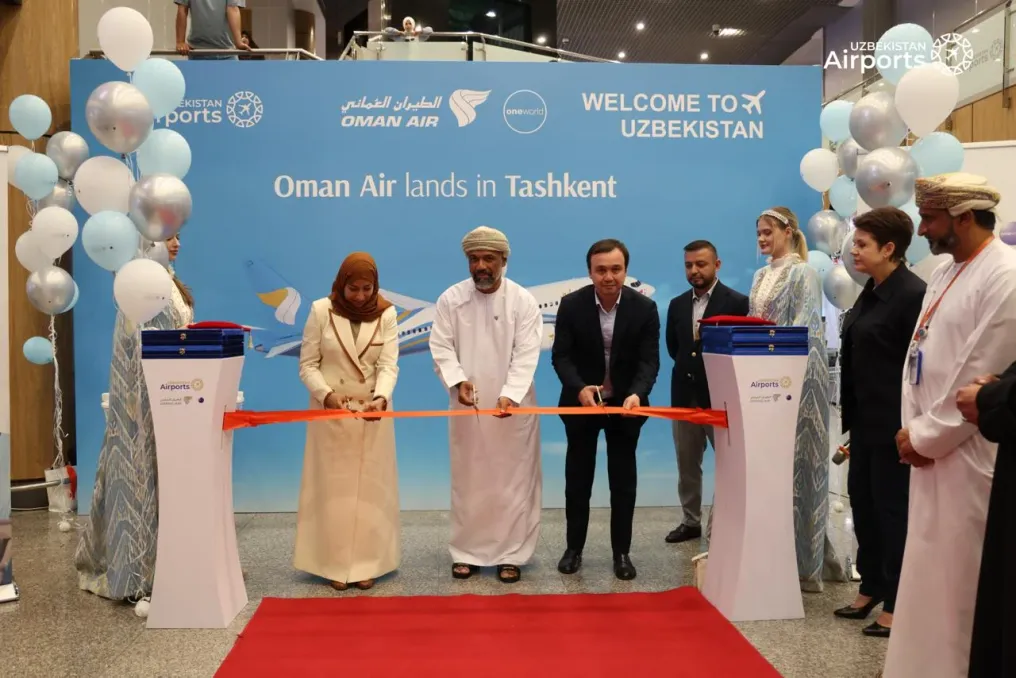
A solemn ceremony marking the opening of the new international route took place at the airport terminal. Representatives from Uzbekistan Airports, Tashkent International Airport, Oman Air, the Embassy of the Sultanate of Oman in Uzbekistan, and the first passengers attended the event. According to the schedule, the airline will operate three direct flights per week—on Tuesdays, Fridays, and Saturdays—using Boeing 737 aircraft.
A representative of Oman Air noted that the launch of these flights reflects the high potential of the Uzbek aviation market and the growing importance of Tashkent as one of the key aviation hubs in Central Asia. The airline's representative emphasized: 'We are pleased to start direct flights to Tashkent and become part of Uzbekistan's rapidly developing aviation market. The new route will contribute to the development of tourism and business ties between Oman and Uzbekistan, and it will provide passengers with convenient access to Oman Air's international route network via Muscat.'
Timur Khalilov, Head of the Commercial Department of Uzbekistan Airports, stated that expanding the international route network improves the country's transport accessibility and strengthens its position as a regional aviation hub. He added: 'Every new international route is an investment in the development of the country's transport accessibility. Direct flights between Tashkent and Muscat open up new opportunities for the exchange of tourism and business, strengthen economic ties between Uzbekistan and the Sultanate of Oman, and integrate our country into the global route network thanks to Oman Air's extensive transit capabilities.'
The opening of direct air communication between Tashkent and Muscat is part of a broader trend of actively expanding Uzbekistan's international route network. In recent years, the republic has consistently increased the number of direct flights to countries in Asia, the Middle East, and Europe, which has contributed to the growth of tourist flows, the development of foreign trade, and the attraction of foreign investment. The launch of Oman Air flights also expands transit options for passengers. Thanks to the airline's well-developed network through Muscat International Airport, travelers from Uzbekistan gain convenient access to dozens of destinations in the Gulf countries, South and Southeast Asia, Africa, and Europe.
Experts note that the increase in the number of international carriers in the Uzbek market stimulates competition, improves passenger service quality, and enhances Tashkent's role as one of the most important aviation centers in Central Asia. Oman Air operates as the national airline of the Sultanate of Oman, is based at Muscat International Airport, and is a member of the global alliance oneworld, providing passengers with wide opportunities for international flights and travel around the world.
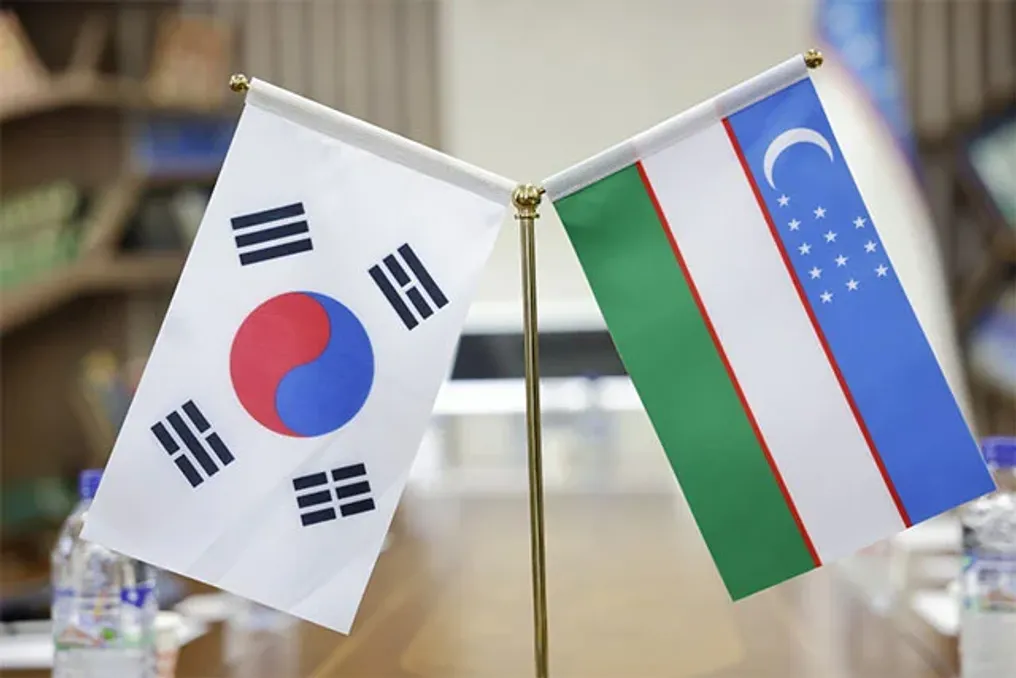
The second International Uzbekistan-Korea Energy Forum, officially named the Energy Value Networks Forum, will take place in the capital of Uzbekistan in the second half of June and early July 2026.
This major bilateral business event will be held in Tashkent from June 30 to July 1, 2026. The Ministry of Energy of the Republic of Uzbekistan officially supports the forum's organization. The direct initiators and organizers of the meeting are the South Korean energy corporation Korea Western Power and the Korea International Cooperation Agency (KOICA).
The international forum is expected to become an authoritative and sought-after platform for strengthening interstate cooperation. The event will gather representatives of state bodies of Uzbekistan and the Republic of Korea, top executives of leading energy companies from both countries, as well as renowned international experts, analysts, and major foreign investors.
The main goal of the meetings is to create favorable conditions for forming new long-term partnerships and developing strategic plans. Over two days, participants will focus on current trends and issues in the modern industry. Delegates will examine in detail the practical application of advanced, highly efficient energy technologies, the accelerated development of the renewable energy sector, and comprehensive measures to improve the overall energy efficiency of industrial facilities.
A separate block of discussions will be dedicated to mechanisms for expanding direct investment interaction and launching new joint projects in the energy sector in Uzbekistan.