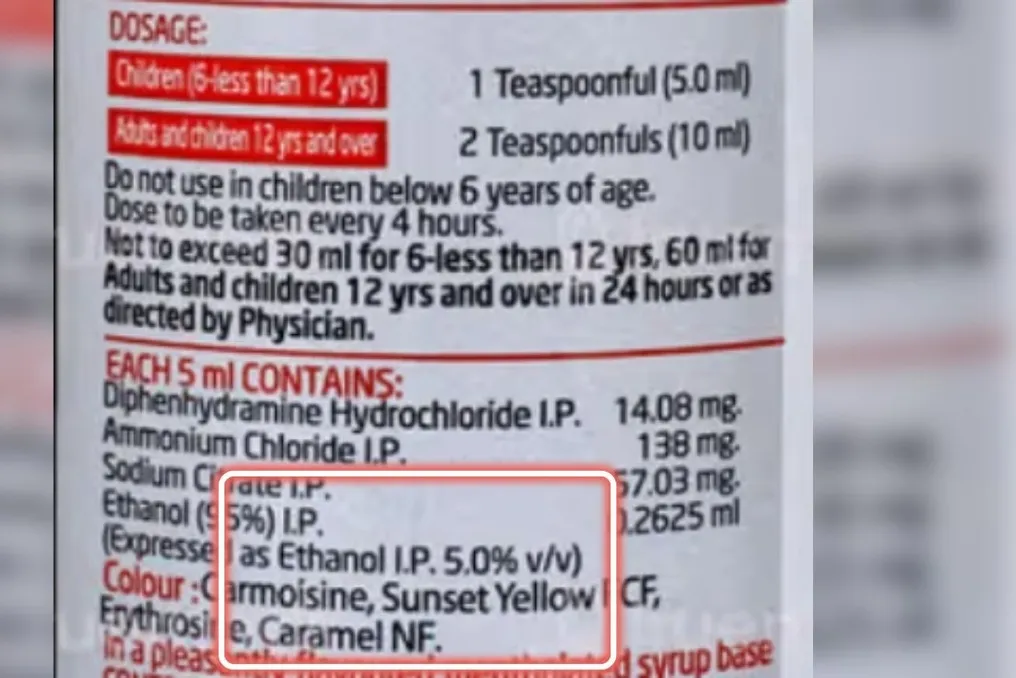
Due to a new rule introduced by the central government, the purchase of cough syrups and medicines from pharmacies will become more regulated in the future. According to this regulation, preparations with packaging volume exceeding 30 ml and containing more than 12 percent ethyl alcohol are now classified as Schedule H1, meaning they can only be obtained by a doctor's prescription. This decision particularly affects those syrups that contain a high amount of alcohol. Therefore, it is crucial to know how to determine the content of over 12% alcohol in a cough syrup, why taking such remedies without a specialist's consultation is dangerous, and what the reasons are for introducing this new government rule.
Risks of self-medication for cough
In many regions, people independently buy syrups or other medicines from pharmacies when a cough appears, and pharmacists often dispense them without a prescription. Specialists note that cough syrups usually contain expectorants (mucus-clearing agents), suppressants (cough-suppressing agents), or antihistamine components. These agents are intended to alleviate symptoms under a doctor's supervision, but they do not treat the underlying cause of the cough. Excessive use can lead to serious side effects, and overdose of cough syrup can cause serious harm to children. Many such cases have been recorded worldwide in the past.
Function of alcohol in syrups
Some cough syrups contain a small amount of alcohol. This is because some active substances are not soluble in water, and alcohol acts as an effective solvent, helping these components to distribute evenly in the syrup. However, in some cases, the alcohol concentration exceeds 12%, which has become one of the reasons for the government's decision. Professor Dr. Jugal Kishor, Director of Community Medicine at Safdarjung Hospital, told Aajtak.in that syrups with alcohol content above 12% can have negative consequences and should only be taken after consulting a doctor.
Potential for substance abuse
Dr. Kishor also warns that many young people become dependent on cough syrups because they are available in pharmacies without any restrictions. Compared to alcohol or narcotics (which can be expensive on the black market), taking cough syrups is perceived by society as a more socially acceptable option, although this leads to misuse. Even in states where alcohol sales are prohibited, such syrups can be used as an alcohol substitute. Some young people use cough syrups for intoxication. This is why the government has placed syrups and medicines containing more than 12% alcohol into the Schedule H1 category to prevent their use without a doctor's prescription.
How to determine alcohol content
Pharmacist Narendra Sharma from the Ghaziabad District Hospital informed about this issue. He clarified that the government has not yet published an open list of syrups or medicines containing more than 12% alcohol. Nevertheless, the composition of some syrups and medicines may state 'ethyl alcohol/ethanol'. Ethanol is a type of alcohol added to the syrup for better component dissolution. The label of many cough syrups clearly indicates the percentage of ethyl alcohol/ethanol in volume (v/v). If it states 13% or 14%, such a syrup should not be taken without a doctor's advice. If the information on the label is unclear, one should consult a pharmacist at the pharmacy, as it is their duty to provide complete information.
When to take cough syrup
Dr. Jugal Kishor insists that any medicine or cough syrup should be taken strictly according to a doctor's prescription. Usually, a common cough resolves on its own within three to four days, but people often start taking syrups on the first day, mistakenly believing the cough has recovered. This is not always the case. As for children, cough syrups should never be given to them independently. The World Health Organization has clear guidelines stating that children under two years old should not be given cough medicines, and children over five years old should only do so under a doctor's supervision. Primarily, non-medicinal methods such as maintaining hydration, rest, and necessary care should be applied as treatment. Dr. Kishor added that the new government rule regarding syrups and medicines will come into effect in six months, and he hopes that pharmacy owners and the public will adhere to this directive.