China's AI computing industry is undergoing a historic transformation as major internet giants begin actively adopting domestic chips. According to an in-depth analysis by TMTPost, the share of domestic Graphics Processing Units (GPUs) in new deployments has reached 41%.
Supplier Shift and Market Reaction
In mid-June, reports emerged that ByteDance was negotiating to purchase at least 50,000 AI chips from Tianshu Zhixin, primarily for inference tasks, utilizing the Zhikai and Tianai GPU series. Shortly thereafter, it became known that Alibaba was also considering Tianshu Zhixin as a potential client.
The market reacted very strongly. On the day of ByteDance's procurement announcement, Tianshu Zhixin shares listed in Hong Kong jumped nearly 15%, reaching a record HK$887.50 within three days. Meanwhile, Baidu's subsidiary, Kunlun Chip, plans an IPO in Hong Kong with a target valuation of approximately $50 billion USD, which is more than 15 times its previous valuation of 21 billion yuan after the Series D round in July 2025.
Reasons for the Shift and Demand Growth
This rapid transition to domestic chips is driven by export controls imposed by the United States. NVIDIA CEO Jensen Huang publicly acknowledged that NVIDIA's share in the Chinese market has dropped from 95% to zero, as even heavily restricted H20 chips stopped being supplied in 2025. This supply shortage coincided with explosive growth in demand for AI computing. Daily token requests in China increased from 100 billion at the beginning of 2024 to over 100 trillion by the end of 2025, reaching 140 trillion by March 2026.
Statistics and Regulatory Changes
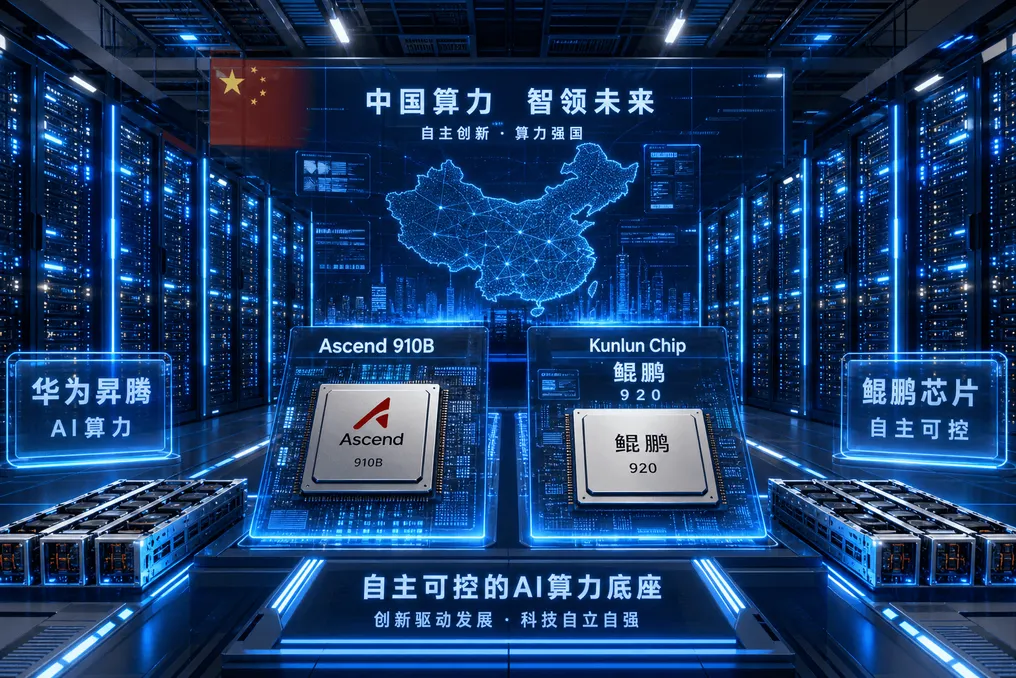
According to IDC, out of 4 million AI GPUs delivered to China's AI server market in 2025, domestic chips accounted for 41%. Only Huawei Ascend supplied about 812,000 units, while Baidu Kunlun Chip and Cambricon each provided approximately 116,000 units. In May 2026, China's information security authorities first included AI chips in the security verification system, assigning the highest Level I rating to nine domestic chips for training and inference.
Giants' Strategies
Internet giants are employing various approaches. ByteDance, whose assistant Doubao reached 368 million monthly active users and 120 trillion daily token requests, adheres to a pragmatic strategy: using Huawei Ascend for training and adopting a dual-sourcing strategy, including Cambricon and Tianshu Zhixin, for inference. ByteDance's budget for AI infrastructure in 2026 was increased by approximately 25%, totaling 200 billion yuan, with domestic chip purchases expected to exceed 40 billion yuan.
Baidu has chosen the most vertically integrated path. Its subsidiary, Kunlun Chip, which originated from an FPGA accelerator project launched in 2011, released its third-generation P800 chip in 2024 and built the first AI cluster in China with 32,000 cards, entirely assembled from domestic components, in 2025. Kunlun Chip won a centralized tender worth one billion yuan from China Mobile, marking its first major external contract. Baidu's strategy represents the most comprehensive model of self-sufficiency, covering the entire cycle from design to deployment.