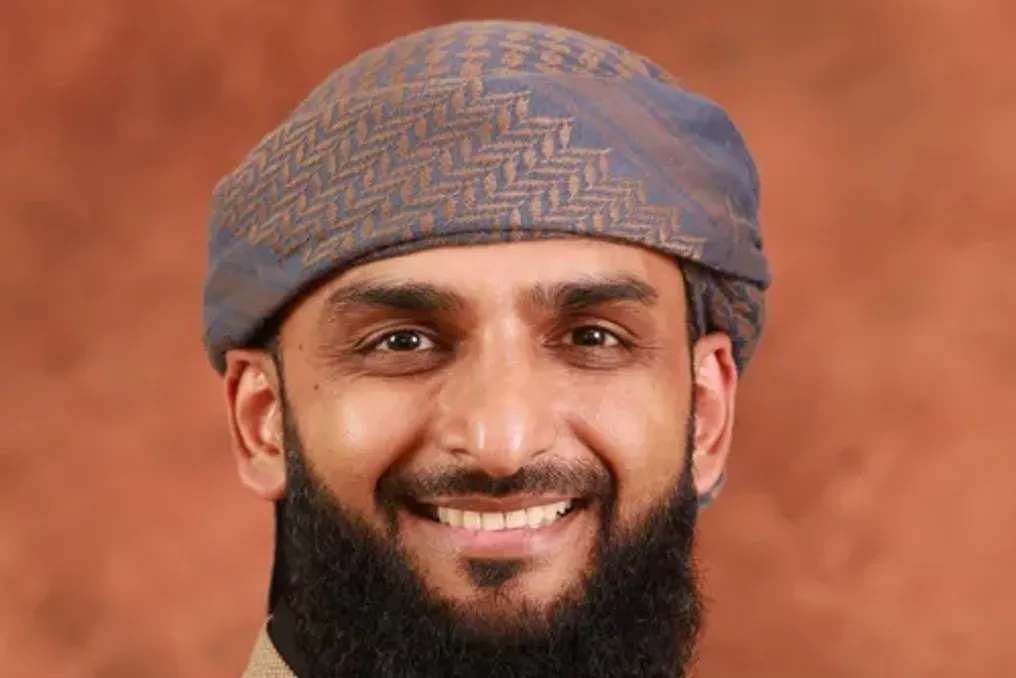
Yusuf Kassim, the newly appointed Deputy Minister of Higher Education, stated his commitment to resolving the problems faced by South African youth, despite opposition based on Islamophobia.
The Path from Student Life to Politics
Kassim, who is 36 years old and hails from the Eastern Cape, took office last week, describing the event as a moment of 'full circle'. He recounted how his political involvement began during his university studies when he witnessed the critical issues confronting his peers. However, he realized that these matters could not be resolved solely at the institutional level.
He emphasized that this appointment represents a return to the beginning of his political journey, but now he can contribute more significantly to solving these problems at the parliamentary level. At the same time, he noted the weight of the responsibility he feels, stating that it will not be easy.
Kassim expressed his readiness to fight for students whom the system condemns to failure or excludes from realizing their aspirations in higher education, declaring: 'I am ready to fight with all my might for these South Africans, especially the youth.'
Student Activism and Reforms
As a student studying BCom Accounting at Nelson Mandela University, Kassim was actively involved in various student organizations, including the Muslim Students' Association, where he also held leadership positions. As a natural activist, he observed that the Student Representative Council (SRC), the elected student leadership of the university, was ignoring student problems.
He described the difficulties faced by young people entering the institution: lack of funds for tuition, accommodation, or transport. Some students could not afford transportation to attend classes or take exams. Kassim was outraged that the then student leadership was more interested in organizing parties and renting transport using student funds.
A turning point for him was an incident where the SRC president rented a vehicle and drove it while intoxicated, subsequently using the student budget to cover repair costs. These scandals caused him strong aversion, and he decided to act to prevent the further theft of people's futures due to such negligence.
In 2009, Kassim founded the Democratic Alliance Students' Organization (DASO) at the university. Despite attempts to stop their participation, they gained institutional recognition. Eventually, he became the first DA student elected as SRC president. Under his leadership, the DASO administration achieved historic victories that continue to benefit the university's students.
Reforms were implemented, such as the introduction of an Expanded School Bus Service, providing students with transport for classes and exams, and the creation of the SRC Aid Fund to support students with debts and provide them with financial assistance. Kassim noted that his appointment was a modest experience for him, as he received messages of support from the students he helped, many of whom now hold high positions in the public and private sectors.
Political Career
In 2013, Kassim was appointed chairman of the DA Youth Federal Committee at the DA Youth Federal Committee Congress. In 2014, he was elected as a Member of Parliament from the Eastern Cape. In 2014, Kassim led the newly established DASO electoral group, in 2016, the Ngqura electoral group, and in 2021, the Pretoria North constituencies electoral group.
He was elected provincial deputy chairperson of the DA in the Eastern Cape at the Provincial Congresses in 2017 and 2020. In 2023, Kassim was elected provincial chairperson of the DA in the Eastern Cape and was re-elected without opponents in 2026.
In his new role, Kassim aims to make a positive contribution to the higher education sector. He pointed out several issues affecting students, one of which is the instability of the National Student Financial Aid Scheme (NSFAS), which directly impacts students' academic success, especially those from low-income groups. He has received numerous messages from students who have not received their NSFAS aid.
However, he believes that to solve this problem, it is necessary to fight for policy reform. He argues that victory is impossible without addressing the root problems at the policy level. He intends to actively advocate for government decentralization, believing there is no reason why student funding should not be distributed directly to students through higher education institutions rather than through the existing centralized model.
Furthermore, Kassim is very interested in fighting the quota system. He insists that every citizen of South Africa, regardless of skin color, must have the opportunity to realize their aspirations based on their hard work, merit, and talent. He wants South Africans to be able to become who they want to be and live the life they desire, without any obstacles.
Fighting Islamophobia
Commenting on recent Islamophobic remarks on social media following his appointment, Kassim stated that he has always fiercely fought against nationalist and extremist movements seeking to sow division. He noted that this trend is not only in South Africa but also in global politics in recent years. According to him, political populists see an opportunity to profit from creating societal discord, trying to divide people by race, ethnicity, or religion.
Nevertheless, he stressed that such disagreements do not contribute to achieving the common goal—building a South Africa where all citizens can enjoy the freedom they have fought for. Instead, they only breed hatred and intolerance, which is extremely dangerous. In response to this, Kassim called on South African citizens to unite to jointly confront the serious challenges facing the nation.