Questions frequently arise surrounding the Central Board of Film Certification (CBFC) in India regarding the criteria for issuing film certificates, the reasons for dialogue amendments, and the refusal of certification. The issue of certificate denial remains one of the most discussed topics recently.
Examples of controversial releases
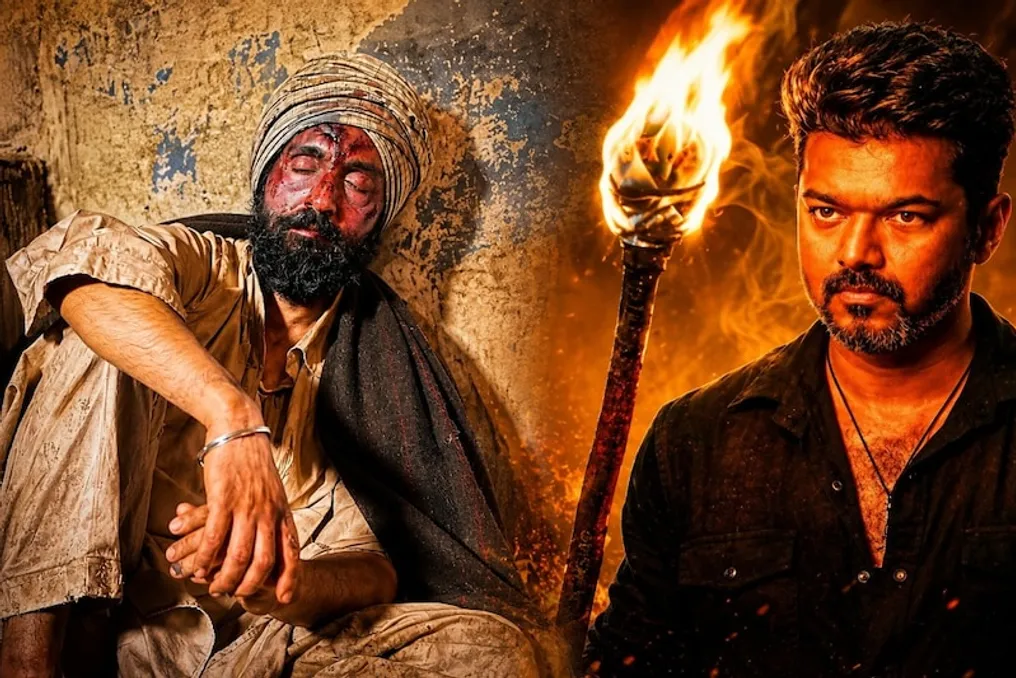
Diljit Dosanjh's film 'Satluj', originally titled 'Punjab 95', did not receive approval from the CBFC. The requirement for approximately 120 amendments was rejected by the creators, who released the film directly on an OTT platform without official certification, causing significant public outcry.
In addition to Diljit's film, the Tamil film 'Jan Nigam', directed by Tamil Nadu Chief Minister Thalapathy Vijay, was also under consideration by the CBFC. After about seven months of waiting, the film was granted an 'A' certificate. The issues with 'Jan Nigam' related to certain scenes that could offend viewers' sentiments, which led to the suspension of the certificate issuance. Although Thalapathy passed the CBFC review, Diljit's film remains in limbo.
CBFC operational mechanism
CBFC member Raj Mishra detailed the Board's working procedure in an interview. He emphasized that publicly screening any film without obtaining a certificate from the CBFC is illegal and can lead to penalties. The Chairman of the CBFC is appointed by the Ministry of Information and Broadcasting, and currently, it is Prasan Joshi.
Before issuing a certificate, the film is reviewed by a special committee of five CBFC members. If at least three committee members vote in favor of the film, the certificate is issued. Raj Mishra explained three types of certificates: A, U, and U/A. The 'A' certificate is intended for films containing a high amount of violence and criminal elements and is only available to persons over 18 years of age. The 'U/A' certificate is issued for films with a moderate amount of violence and crime that can be shown to children under parental supervision. The 'U' certificate is assigned to films suitable for all age groups.
Appeals process
Raj Mishra also described what happens if a film does not pass the first committee. In such a case, the creators can apply for reconsideration. This is forwarded to a second committee consisting of 11 members. If this committee also denies certification, the creators can approach the Tribunal in Delhi, although such cases, according to him, are rare.
Requirements for filmmaking
He also spoke about how a film gets the 'green light'. According to Raj Mishra, the plot and presentation style must align with contemporary realities. Rules change over time: mild violence is accepted by society today, but extremely frightening and brutal scenes, such as jaw pulling, require assessment for their negative impact on viewers.
Furthermore, he noted that films must not promote anti-state ideas or insult the country and its policies. Although the film's purpose may be entertainment, it should not incite people to unrest or agitation. Creators are given freedom of expression, but this freedom has certain boundaries.
Independence from political pressure
When asked about the influence of political figures on the certification process, Raj Mishra replied that, as a CBFC member, he had never received calls with pressure regarding any films. Information about which film and who is making it only reaches them during the screening session. He suggested that political support for a film might be possible, but such information does not reach the Board. The work of the CBFC is limited only to checking that the film does not excessively offend people's sentiments.
Consequences of releasing without a certificate
According to Raj Mishra, releasing a film without the permission of the CBFC is a legal violation. Diljit's film 'Satluj' was released without such a certificate. Under Section 7 of the Cinematograph Act of 1952, such an act is punishable by imprisonment up to three years, a heavy fine, and confiscation of everything related to the film's screening, with the fine potentially reaching 100,000 rupees. Since 'Satluj' was released on an OTT platform where censorship is absent, the possibility of action against it remains open.