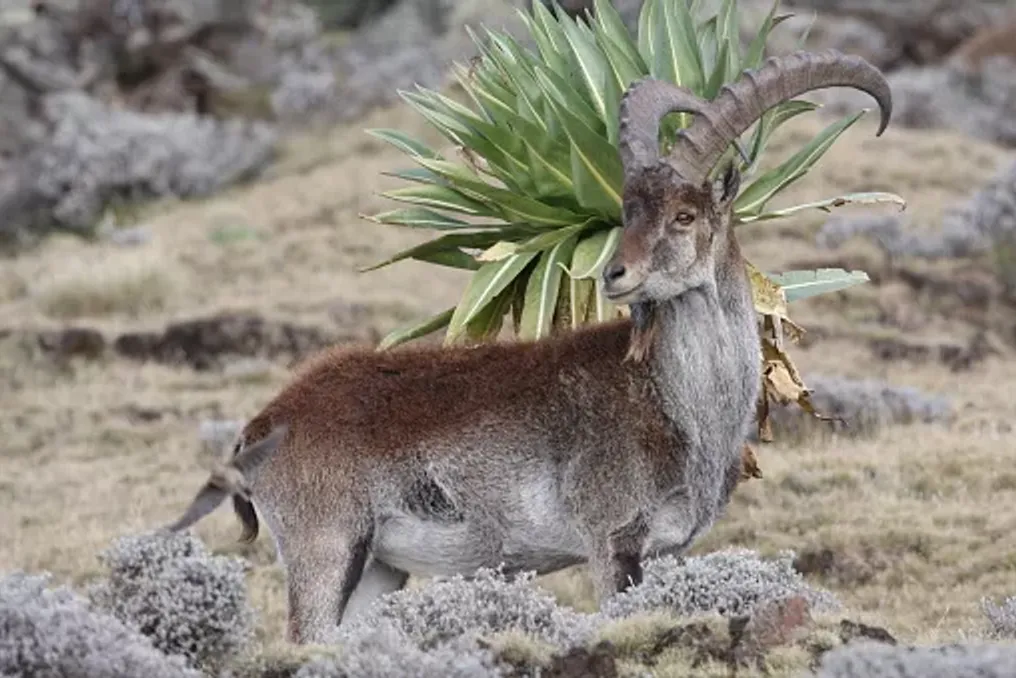
The Walie mountain goat, one of Africa's rarest mountain mammals, has faced a worrying rollback in its conservation status. This wild goat, found exclusively in the Simien Mountains of Ethiopia, has once again been classified as critically endangered after new population studies revealed a sharp and sustained decline in numbers.
History of Population Status Changes
The species, which inhabits the impressive cliffs of the Simien Mountains National Park, was previously listed by the IUCN Red List as vulnerable following several years of population recovery. However, recent assessments paint a much more alarming picture.
Over the past four decades, the status of the Walie mountain goat (Capra walie) has changed multiple times. In 1986, it was included on the list as threatened; in 1996, it was upgraded to critically endangered, then returned to the threatened category in 2008, and later reclassified as vulnerable after surveys showed an improvement in numbers.
Latest Decline Data
Between 2009 and 2012, researchers recorded a population increase from approximately 680 to 850 individuals, leading to forecasts of further growth. Nevertheless, in 2019, only 619 goats were counted, which was initially viewed as an anomaly rather than the start of a long-term decline. According to Paul Scholte, senior advisor to the Ethiopian Wildlife Conservation Authority and lead assessor for the latest IUCN assessment, this conclusion proved to be mistaken.
A study published in 2025 showed that the population had been steadily declining from a peak of 865 individuals in 2015 to only 306 by May 2024. Even more alarming is the number of breeding adults: researchers found that in 2023 and 2024, there were fewer than 250, which meets the IUCN threshold for assigning the species a critically endangered status.
Subsequent surveys confirmed the ongoing decline. A count in November 2024 recorded 289 goats, including 228 adults, while in December 2025, only 271 individuals remained.
Causes of Species Decline
To better understand the reasons for the decline, researchers interviewed nearly 200 people, including park staff, local authorities, and local residents. Poaching emerged as the most serious threat, as the animals are reportedly hunted for meat and traditional medicine. Human encroachment and habitat degradation have also been significant pressures.
The situation was exacerbated by the COVID-19 pandemic and the conflict between the Ethiopian government and the Tigray People's Liberation Front from 2021 to 2022. According to researchers, the pandemic disrupted tourism, leading to reduced funding for conservation efforts and limited anti-poaching patrols, while the conflict created conditions conducive to increased illegal hunting.
Poaching remains a persistent problem. In April 2025, authorities arrested four suspected poachers after discovering the remains of two Walie goats, highlighting the continued pressure on one of Africa's most vulnerable mammals.
Endemism and Species Significance
The Walie mountain goat is endemic to Ethiopia, and its entire wild population is confined to the rocky cliffs of the Simien Mountains National Park, a UNESCO World Heritage site known for its breathtaking landscapes and unique wildlife. Alongside the Ethiopian wolf and Gelada baboon, the Walie mountain goat is one of the country's most iconic endemic species. Its reclassified critically endangered status serves as a stark reminder of how quickly conservation achievements can be reversed without constant protection.