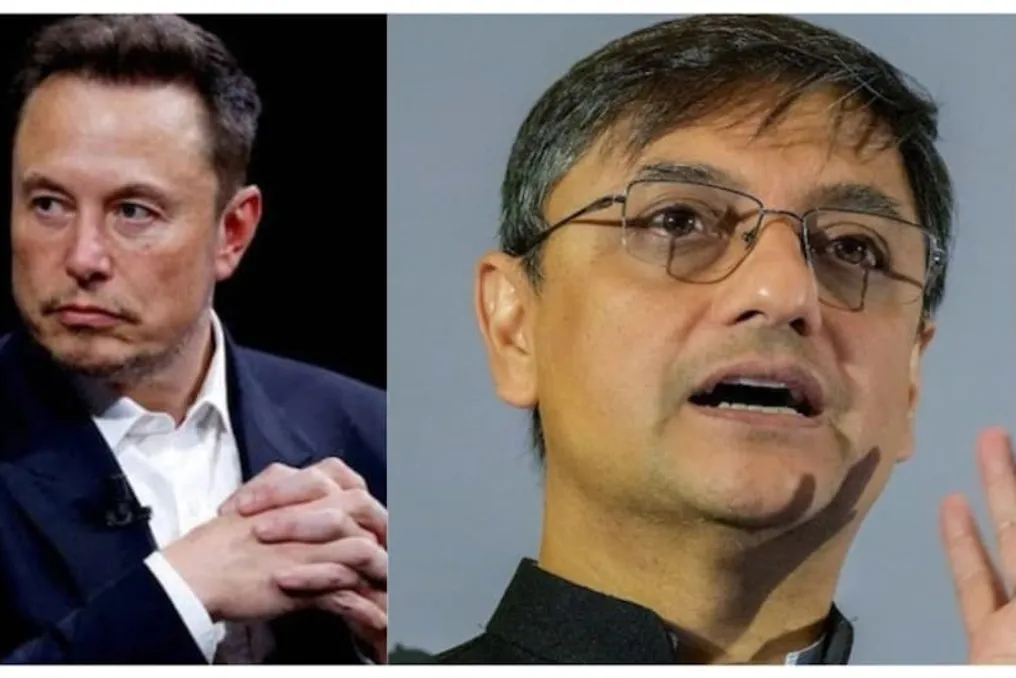
Questions are arising about whether a career can be built in India relying solely on a college degree. Some analysts and senior economic advisors to the government are questioning whether Indian educational institutions have turned into information memorization machines instead of preparing youth for the future.
Experts' view on the job market
Sourang Mukherjee, founder and Chief Operating Officer (COO) of Marcellus Investment Managers, stated in a podcast that students who drop out after 12th grade are in a better financial position than university graduates, and believes that attending a university in India may not be the best choice.
Mukherjee supports his claims with statistical data, pointing out that only three out of every 100 college graduates in India find employment in the year of graduation. The unemployment rate among young people who have completed college ranges from 30 to 40 percent. In contrast, among those who have never received an education, the unemployment rate is only about 3 percent.
Contrast between qualifications
He also noted a significant difference in income: a worker performing manual labor on a construction site earns more than an office worker graduate in a city like Mumbai who has an air-conditioned workspace. An experienced JCB operator can earn twice as much as the average graduate or engineer.
In Mukherjee's opinion, the Indian education system focuses on mechanical memorization rather than critical thinking. This model, operating from school to college, does not align with modern trends such as artificial intelligence (AI), electric vehicles (EV), biotechnology, clean technology, and advanced science, leaving graduates unprepared for these sectors.
Calls for developing vocational skills
Mukherjee is not the only one holding this view. V. Anand Nagarajan, India's Chief Economic Advisor (CEA), has also urged Indian youth to move beyond the traditional path (school, college, then UPSC or civil service). Nagarajan emphasized that in developed countries such as Germany, Switzerland, Japan, South Korea, and China, 'trade skills' like welding, plumbing, carpentry, and electrical repair are highly valued and well-paid, whereas in India they are often looked down upon.
He added that the times when a computer science degree or an MBA provided an advantage are over. Currently, 'human skills,' such as caregiving, consulting, and hospitality, which are difficult to replace with machines or AI, are in demand.
Views of global leaders
This discussion has a long history. Elon Musk, one of the world's wealthiest individuals and a technological leader, has long stated that a college degree is not a mandatory requirement for working at his companies (Tesla, SpaceX). In his view, college serves more as entertainment or a demonstration of the ability to meet deadlines, rather than knowledge acquisition—skills are what matter.
Furthermore, Sanjeev Sanyal, a member of the Prime Minister's Economic Advisory Council (EAC-PM), expressed serious concern over young people spending precious 5-7 years preparing for the UPSC exams. He insisted that youth should move away from this 'examination' mentality and focus on entrepreneurship and practical skills on the ground.