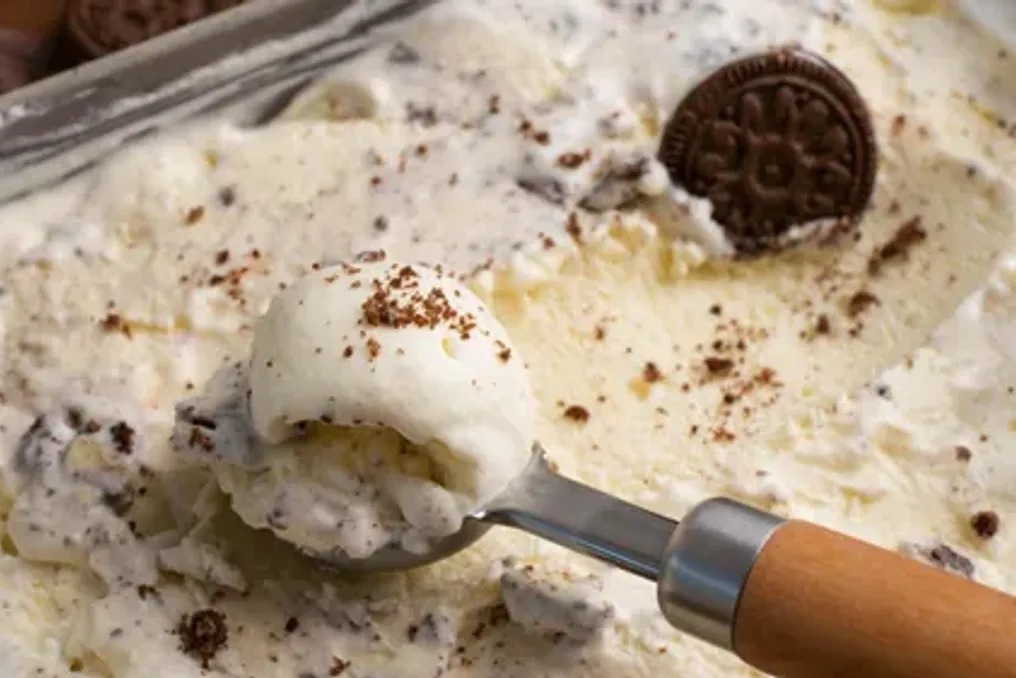
With a few basic ingredients and some free space in the freezer, you can create creamy ice cream whose taste is very close to store-bought. Although ice cream is always in demand, its price in supermarkets has significantly increased, prompting more residents of South Africa to look for ways to make homemade ice cream without special equipment.
Popular
The Secret to Creamy Texture
The good news is that the process is simpler than most people think; it does not require a specialized machine, a complex custard base, or professional pastry skills. The main secret lies not in the machine, but in understanding how to prevent the formation of large ice crystals.
Reasons for Ice Structure Formation
When people first try to make ice cream, the most common complaint is that it freezes into a hard, icy block. This happens because water naturally crystallizes during freezing. Commercial ice cream makers constantly stir the mixture while freezing, breaking down these crystals and ensuring a smooth texture.
No-Machine Preparation Method
The recipe for ice cream without a machine solves this problem differently: instead of relying on technology, it uses ingredients that reduce the amount of free water in the mixture. Less free water means fewer large ice crystals. The simplest recipe, often used by home cooks, is characterized by its simplicity, availability, and reliability.
Ingredients and Preparation Method
To prepare servings for 6–8 people, you need 500 ml of cold heavy cream, one can (385 g) of condensed milk, and optionally, 1 teaspoon of vanilla extract. The process involves whipping the cold cream to soft peaks so that it holds its shape but remains smooth. Then, the condensed milk and vanilla are added to this mass, gently folding in all components. The mixture is transferred to a container suitable for the freezer, covered, and frozen for at least 6 hours, or preferably overnight.
The Function of Condensed Milk
Many mistakenly believe that condensed milk is solely for adding sweetness. However, it performs the main function. Condensed milk contains significantly less water than regular milk and has a high concentration of sugar. Sugar lowers the freezing point of the mixture, which helps keep the ice cream softer and easier to eat, allowing for a surprisingly creamy result without the need for churning.
Flavor Variations and Mistakes
The basic recipe can easily be adapted to different taste preferences by adding chocolate chips, crushed cookies, peanut butter, caramel or chocolate sauce, and pureed cooked fruits. However, there are several common mistakes: using skimmed cream (it is better to use high-fat cream for a creamy texture), over-whipping the cream (which can lead to a crumbly consistency), adding too much liquid flavoring (extra water increases the number of ice crystals), and freezing without a tightly sealed container, which causes freezer burn.
Conclusion
Making ice cream at home without an ice cream maker may seem complicated, but the basic formula is whipped cream plus condensed milk, frozen until solid. Understanding how these ingredients prevent the formation of large ice crystals explains the stability of the result. For many home cooks, the hardest part is the waiting, and the first homemade scoop of ice cream, especially against the backdrop of rising supermarket prices, seems even tastier.