Global financial markets managed to partially regain stability on Thursday after a sharp decline triggered by renewed military tensions between the United States and Iran. Investors began paying attention to strong corporate earnings and a slight decrease in oil prices.
Market Reaction and Geopolitical Risks
Despite ongoing concerns about the safety of maritime transport through the Strait of Hormuz, markets showed less conviction that the latest military actions would lead to prolonged escalation. Neil Wilson, strategist at Saxo UK Investor, noted that investors have become more measured in assessing geopolitical risks.
He commented on the situation: 'Fighting continues, but oil prices have fallen, and stocks have shown moderate growth. Although the US struck Iran for the second day, the market is not yet viewing this as a major escalation.' Wilson also added that President Donald Trump's statements hinted at a possible desire by Washington for a diplomatic exit.
Commodity and Currency Price Dynamics
Oil prices, which rose sharply after the conflict resumed, have also retreated from recent highs. According to Wilson, crude oil rose by approximately 7%, reaching the $80 mark to test the 200-day moving average, which acts as a resistance level. However, by Thursday morning, prices fell to around $77.50, allowing some of the geopolitical premium generated by the initial surge to dissipate.
George Herman, Chief Investment Officer at Citadel, believes that the direct impact of rising oil prices in South Africa will be felt through increased fuel costs. He specified that since fuel prices are averaged over a monthly period, there is a certain delay before tariffs increase. There was oversaturation until yesterday, so the immediate effect was mitigated. Markets react to inflation expectations immediately and reassess risks within hours of the resumption of hostilities.
Impact on the South African Rand
Herman explained that this occurs because it is assumed that oil exporters are forced to sell gold from their reserves to maintain cash flow. Currently, the rand has demonstrated high resilience due to improved fiscal indicators and credit upgrades, boosting sentiment. However, a further prolongation of military action could seriously undermine positive factors for the rand.
Herman also noted that markets have become dangerously complacent regarding the conflict, as Trump's mood and decisions change faster than the weather in Cape Town. He warned that the slow reaction of markets to news increases the risk of medium-term shocks. Hope for a long-term resolution must be maintained, otherwise, the worst-case scenario—where oil prices exceed $140 due to depleted reserves and uncontrolled inflation—will begin to become a reality.
International and Local Indices
According to Anchor Capital, the JSE All Share Index rose by 1.5%, reaching 111,960.40. This was a strong recovery, coinciding with the start of the second-quarter earnings season in the US, which brought encouraging corporate results, and a calmer investor reaction to the renewed tension.
Local gains were led by technology stocks: Naspers rose by 7.8%, and Prosus by 6.7%. Significant growth was also recorded by retailers, gold miners, and platinum miners. The positive sentiment was reflected internationally: the S&P 500 increased by 1.1%, the Nasdaq advanced by 1.3%, and the Dow Jones Industrial Average rose by 1.2%, as Wall Street welcomed strong reports from major financial institutions.
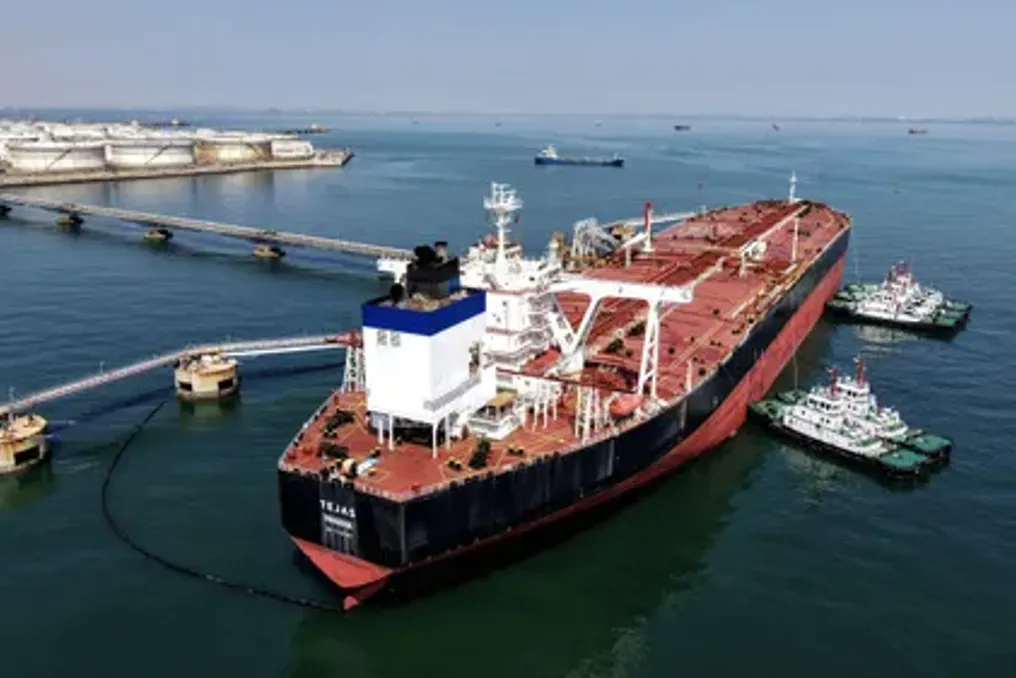
Anchor Capital warned that marine insurance companies now consider the Strait of Hormuz unsafe for commercial vessels without escort following attacks by Iranian tankers and retaliatory strikes by the US. Brent crude traded at $76.84 per barrel at the beginning of Thursday, down from Wednesday's high, before recovering to approximately $78.42 per barrel. Gold strengthened to $4,140 per ounce as investors continued to seek a hedge against geopolitical uncertainty. Bianca Botes, Managing Director at Citadel Global, noted that the rand remains in a cautious range, trading at 16.38 to the dollar, 18.72 to the euro, and 21.95 to the pound.