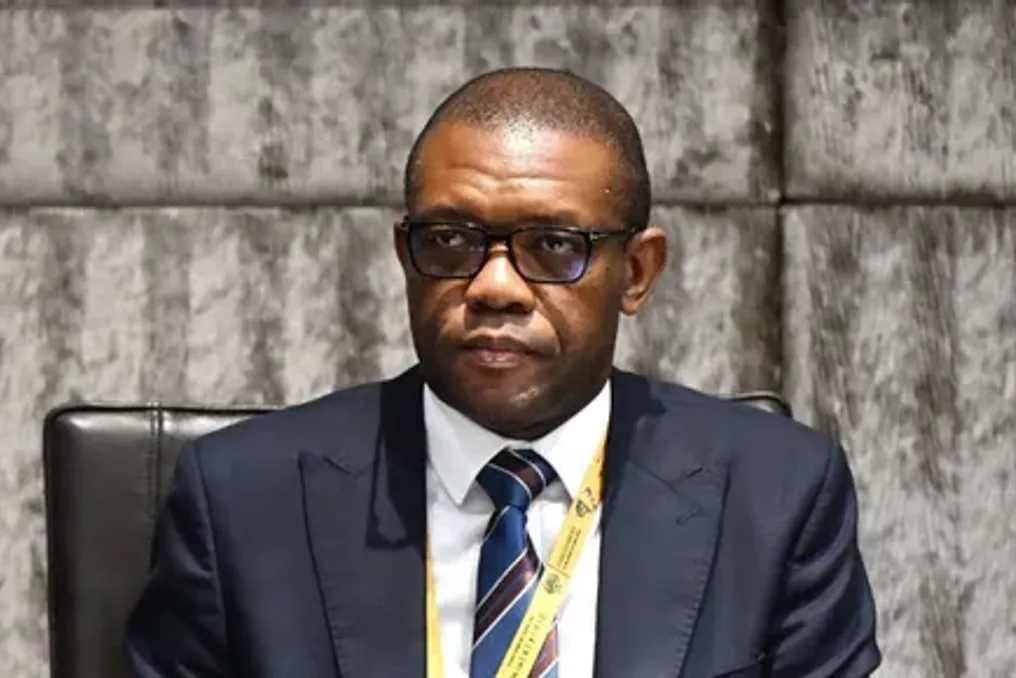
The Chairperson of the Standing Committee on Public Accounts (Scopa), Songeso Sibisi, stated that it is long overdue for the National Treasury to require municipalities to put their affairs in order, as they did not anticipate the consequences of their actions.
Support for Financial Discipline Measures
The Chairperson of Scopa, Songeso Sibisi, and the Portfolio Committee on Cooperative Governance and Traditional Affairs (CoGTA) support the National Treasury's decision to suspend the transfer of R13.5 billion in equitable share to 69 municipalities. These funds were withheld to implement financial discipline and ensure proper management of public money, including addressing unauthorized, irregular, fruitless, and wasteful expenditure (UIFWE), while guaranteeing that service delivery would not be affected.
Sibisi welcomed the steps taken by the National Treasury, noting that it had acted too slowly against these municipalities. He emphasized that taxpayers cannot be expected to continue providing money that is subsequently wasted, goes into corruption, and so on. He agreed with the Treasury's actions.
Identified Problems in Municipalities
He reported that during oversight work, Scopa and the CoGTA Portfolio Committee discovered municipalities that managed and spent funds extremely inefficiently. These bodies are failing in their duty to collect their own revenue. Cases were reviewed where municipalities failed to collect funds from large companies for years, involving hundreds of millions.
CoGTA Portfolio Committee member Zweli Mhize stated that the National Treasury's decision confirms the seriousness of the financial and corporate governance problems identified during joint audits with Scopa. He stressed that all municipalities must realize that it is impossible to continue operating under the previous regime when governance principles and financial regulations are undermined.
Positions of Various Parties
Salga stated that any suspension of equitable share transfers must balance compliance objectives with the impact on service delivery and the financial sustainability of municipalities. The organization noted the difference between actual management failures and deeper structural problems. Salga added that while non-compliance is unacceptable, many municipalities face severe fiscal and economic pressure that weakens financial sustainability and service provision, and these realities must be considered when resolving recurring financial difficulties.
Despite criticism of municipalities for failing to pay creditors, including pension fund contributions, UIF, and PAYE deductions from municipal employees' salaries, Salga committed to cooperating with the National Treasury, the Auditor-General, the CoGTA Department, provincial governments, and the municipalities themselves to implement immediate corrective measures and long-term structural reforms.
Concerns Over Collapse
However, General Secretary Samwu Dumisane Magagula expressed concern that freezing funds will push already struggling municipalities closer to collapse. He refuted the claim that the National Treasury's actions would not affect service delivery, calling it not a corrective intervention but a recipe for deepening the municipal financial crisis. Magagula warned that if funds intended for these functions are frozen, municipalities will be unable to pay staff salaries, meet pension and medical contributions, settle third-party deductions, or fulfill obligations to service providers. He concluded that an inevitable consequence of this decision will be the renewed uncertainty regarding municipal employee salaries, while communities bear the burden of deteriorating public services.
MK Party representative Sifiso Malangu stated that responsibility should lie with those responsible for the violations, not with residents who will suffer the consequences. EFF argued that the solution should not be freezing money meant to provide services to people, stating that 'Municipalities have let down our people, and now the National Treasury is doing the same.'
Concurrently, Cosatu union parliamentary coordinator Matthew Parks noted that the union values the need to establish financial discipline in non-compliant municipalities but is extremely concerned about the unintended consequences of freezing funds. He described the freezing of conditional grants as merely a punitive tool that does not solve the systemic problems that have placed many municipalities in dire financial straits, and called for a comprehensive package of intervention measures.
Reporting Requirements
Meanwhile, Johannesburg mayoral candidate from Build One South Africa (Bosa), Nobuntu Khlazo-Webster, demanded that the City of Johannesburg, whose R3.6 billion was frozen, publish a report detailing the accountability measures taken against officials and political leaders responsible for UIFWE. Khlazo-Webster stated that Johannesburg residents have the right to know who has been held accountable, what disciplinary or legal action has been taken, and what steps are being taken to prevent similar failures in the future.