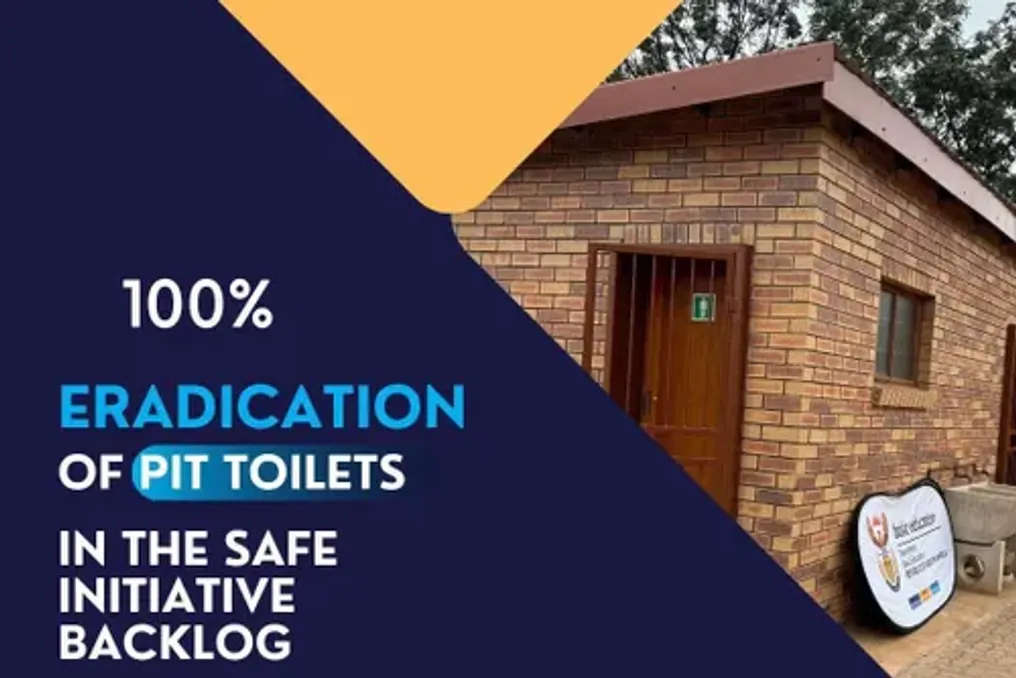
Basic Department Education Minister Sivive Gwarube faced criticism after announcing the completion of a program to eliminate pit latrines in schools that was launched four years ago.
Statements on Project Completion
Gwarube previously stated that the department had completed all projects to eradicate pit latrines identified under the 'Sanitation Appropriate for Education' (SAFE) initiative in 2018. She confirmed that all 3372 schools identified eight years ago received safe and sanitary facilities.
The Minister noted that this achievement marks the conclusion of one of the most significant programs for school infrastructure development in South Africa, and also honors the memory of children such as Michael Komane, Lumka Mketwa, and Langalam Wiki, whose deaths forever changed the public discourse on school sanitation.
Problems and Criticism
Previously, the department repeatedly failed to meet deadlines for completing work on pit latrines. The previous minister postponed the deadline from 2023 to the following year, but Gwarube did not meet even her own deadline of 2025 when her party entered the National Unity Government.
The Democratic Alliance (DA) even threatened legal action three years ago to find the most effective ways to compel the government to eliminate pit latrines for all students. Makhisi Phani, chairperson of the Electoral Committee on Education, Science and Creative Industries, stated that it is impossible to avoid discussing the poor state of sanitation in many rural provinces.
Phani noted that it is extremely frustrating that the Basic Education Department and the minister are deliberately presenting an old project as complete, while the delay has become very serious. He emphasized that eradicating pit latrines requires continuous work due to the complex issue of water supply, as state schools can go weeks without water, relying on JoJo tanks.
Examples of Problems and Appeals
The committee chairperson reported that the portfolio committee visited various provinces to personally examine sanitation issues, especially in the Eastern Cape, North West, and Limpopo. He pointed out that many schools struggle with access to water for use in sanitary and kitchen facilities, as well as problems with preschool classes.
Phani cited Bodium Primary School in Hamburg, Eastern Cape, where construction work to build new toilets was poorly executed, forcing the school to revert to using pit latrines where children previously had to extract from feces. He warned the department to be careful with phrasing regarding sanitation issues, as they are fundamental to the lives of poor Black learners.
Phani urged the Basic Education Department and Gwarube to focus on informing about maintenance plans and implementing measures to address the most pressing problems in schools, rather than limiting themselves to the SAFE 2018 initiative.
Minister's Response and Future Plans
Meanwhile, Gwarube reported that provincial education departments are currently conducting assessments of school infrastructure conditions as part of their infrastructure planning duties. She clarified that the department reported that 2287 schools still require additional assessment, verification, classification, or intervention regarding sanitary facilities.
The Minister stressed that this figure is a preliminary report subject to verification and cannot be considered part of the delay in the SAFE 2018 initiative, nor can it be assumed that each of these facilities is necessarily unsafe or non-compliant.
Gwarube responded to parliamentary questions from IFP MP Sifosetu Ngcobo, who inquired about the number of schools using pit latrines as of June 1, 2026, and the projected timeline for completing all unfinished sanitation upgrades. The Minister stated that any remaining or newly identified sanitation risks outside the initial SAFE backlog will be addressed through the planning, budgeting, and infrastructure implementation processes of the respective provincial education departments.
She added that the timelines for implementing such projects depend on the completion and verification of provincial condition assessments, facility classification, project readiness, availability of provincial infrastructure budgets, procurement processes, and provincial implementation plans. Furthermore, the department has allocated 1.6 billion rand for school sanitation infrastructure in the 2026/27 financial year.