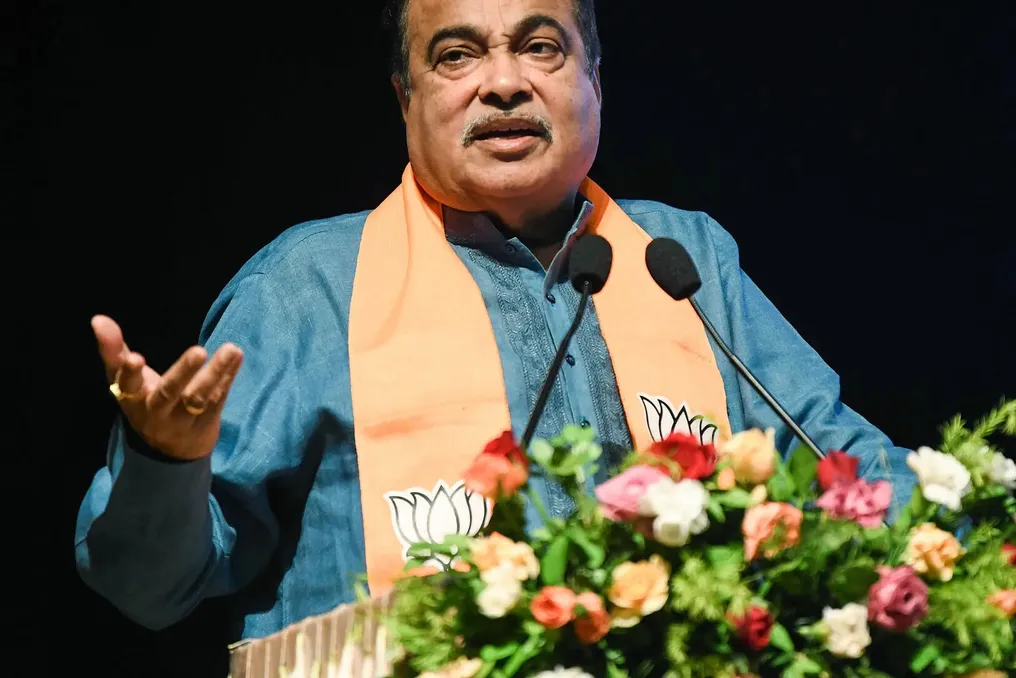
Union Minister Nitin Gadkari stated on Thursday that hydrogen will play a decisive role in the future of the transport industry. The government is currently conducting pilot projects on ten major corridors to test mobility solutions using hydrogen fuel.
Routes and Initiatives
The current trials are being conducted on the following routes: Greater Noida-Delhi-Agra, Bhubaneswar-Konark-Puri, Ahmedabad-Vadodara-Surat, Sahibabad-Faridabad-Delhi, Pune-Mumbai, Jamshedpur-Kalinga Nagar, Thiruvananthapuram-Kochi, Kochi-Edappally, Jamnagar-Ahmedabad, and NH-16 Visakhapatnam-Bayyaram.
Speaking at the Prawaas 5.0 and Bharat Prawaas Awards event in Gandhinagar, Gadkari emphasized that the government's initiative in the field of hydrogen is part of a broader push towards cleaner transportation.
Future of Transport and Automotive Industry
Gadkari noted: 'My ministry is running a pilot project on ten routes for hydrogen testing. I am confident that the future of the transport industry is hydrogen, and hydrogen is the fuel of the future, and we are working on it.' The minister also expressed confidence that India's automotive industry is making significant strides in developing alternative fuel and biofuel technologies, enabling the country to become a global leader in both innovation and price competitiveness.
He urged vehicle manufacturers and transport operators to focus on enhancing passenger comfort through the implementation of advanced technologies while maintaining affordability. Gadkari added that manufacturers and transporters must strive to provide quality and comfortable transport using global technology standards, and it is the manufacturers' duty to offer greater comfort at a reasonable economic cost.
Road Safety
Highlighting road safety as another key priority, Gadkari reported that approximately five hundred thousand road accidents occur annually in India, resulting in around 180,000 deaths. He pointed out that nearly 66 percent of the deceased are between the ages of 18 and 36, and road accidents also cost the country about 3 percent of its GDP.
According to him, since accidents lead to a loss of 3 percent of GDP, assistance in preventing these incidents is required, making road safety the highest priority for the government. He noted that the industry is performing well in terms of safety and technology, allowing Indian two-wheeler manufacturers to export 50 percent of their production.
Growth of the Automotive Sector
Gadkari reported that the Indian automotive sector has grown from 14 lakh crore rupees at the time of his assumption of office to 22 lakh crore rupees, elevating it from the seventh to the third largest automotive market globally. The government's goal is to make India a world leader in this sector.
He added: 'Our ambition is to reach the first position soon. This industry generates the most revenue for state and central governments and has created 4.5 crore jobs. We have naturally made many improvements in automotive engineering, and the industry has cooperated with us.' The center promotes alternative fuels to reduce dependence on imported crude oil and strengthen the country's energy security.
Discussion on Alternative Fuels
Separately, Petroleum Minister Hardeep Singh Puri stated that the government is currently testing E25, gasoline blended with 25 percent ethanol, but clarified that a decision on the commercial introduction of this fuel has not been made. He stressed that the testing of E25 is only in the verification stage, and there are no set timelines for this process. Puri reported that the government will complete scientific research and consult all stakeholders before making any decision on its adoption.
Speaking to TOI, Gadkari noted that decisions on fuel policy remain with the Ministry of Energy, but he affirmed his support for providing consumers with multiple options for alternative fuels. He stated: 'Ethanol has lower calorific value and slightly affects fuel consumption. But it also depends on road and traffic conditions. I have always supported the idea that people should have the option of alternative fuels in different regions. For example, if methanol is available in a region and is economical, people can choose it. People can use flexible fuel vehicles where higher concentrations of ethanol are available.'
Puri also mentioned that Gadkari invited anyone claiming engine damage due to ethanol-blended fuel to approach him directly. He added that investigations into previous complaints revealed causes other than the fuel itself were responsible for the reported engine problems.