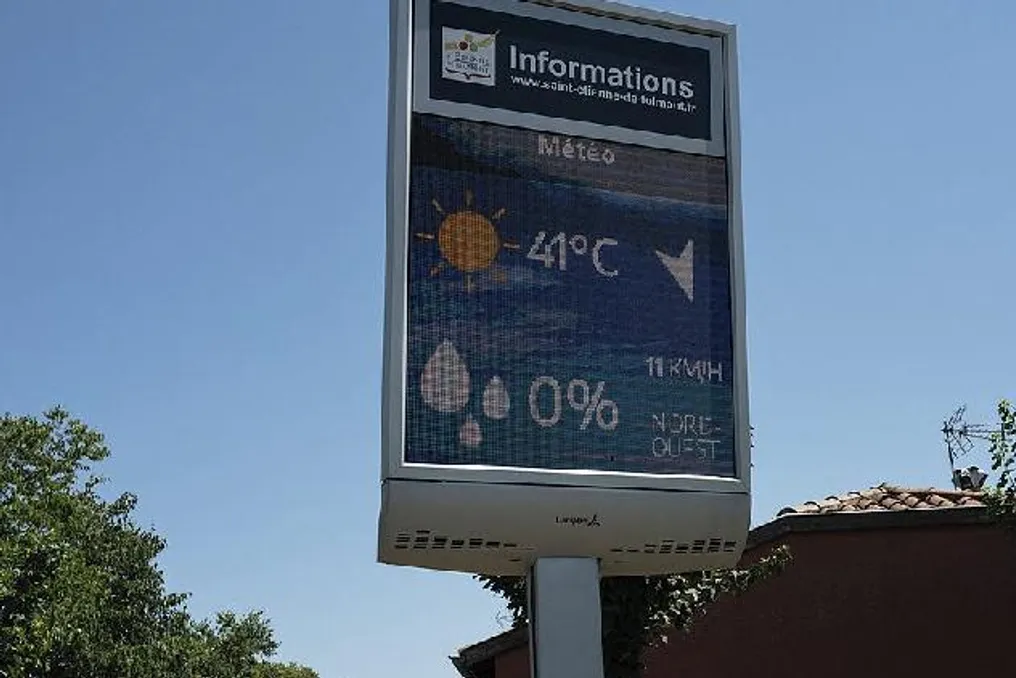
According to an analysis published on Thursday by the U.S. National Oceanic and Atmospheric Administration (NOAA), Planet Earth experienced its second warmest June in observational history for 2026. Furthermore, the global ocean surface temperature reached a record level for this month.
Weather Conditions and Ice Cover
The report prepared by NOAA's National Centers for Environmental Information (NCEI) also showed that in both the Arctic and the Antarctic, the sea ice area in June was among the ten smallest recorded figures in the respective regions. Additionally, tropical cyclone activity worldwide was above average.
June Temperature Readings
The average global surface temperature in June exceeded the 20th-century average by 1.09 degrees Celsius, making this month the second warmest in history. According to the report, this figure is only surpassed by the results of 2024.
Throughout the month, most regions of the world experienced warmer than average conditions, with several continents and areas recording one of the ten warmest Junes in their history.
Sea Ice Status and Annual Trends
The report indicates that the total sea ice area was the fourth smallest for June within 48 years of satellite monitoring, covering an area of 22.7 million square kilometers. This is approximately 2.02 million square kilometers less than the average for the 1991–2020 period.
Considering data from the beginning of the year, the global surface temperature for the January-June period was the third highest in history. According to NCEI's Global Annual Temperature Forecast, it is highly likely that 2026 will enter the top five warmest years in history.