As Europe faces another summer of extreme heat, demand for cooling devices is sharply increasing again. In China, factories are ramping up production of various goods, including portable fans, umbrellas, and home coolers. However, for many manufacturers, the priority is not only meeting growing demand but also adapting the design to local consumer habits and lifestyles.
Adaptation for the European Market
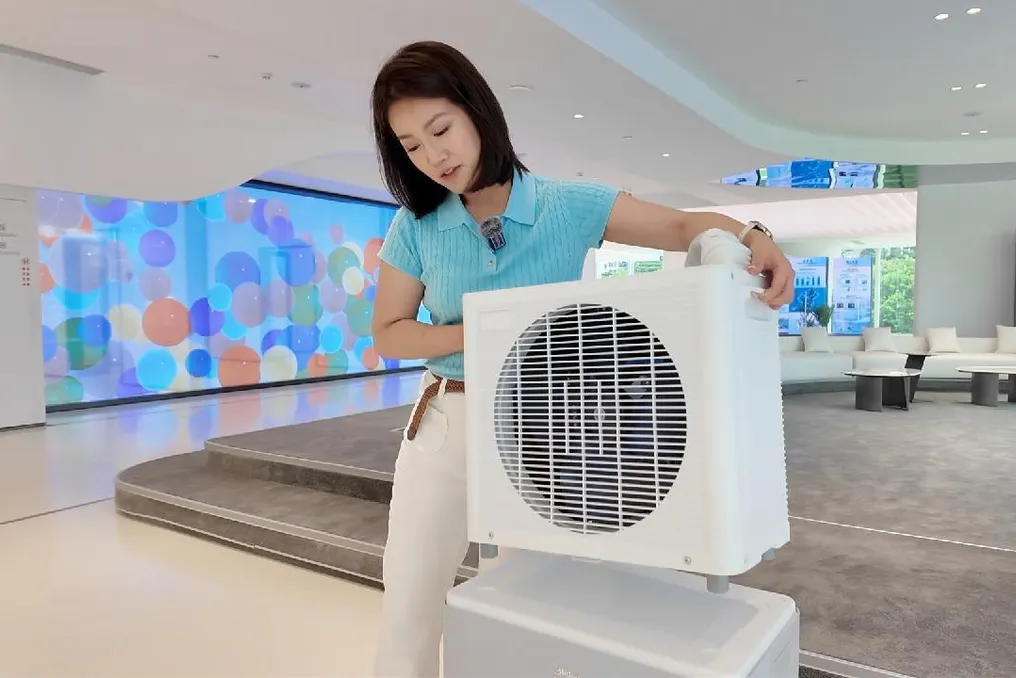
At the Midea factory in Foshan, Guangdong province, engineers presented a portable split air conditioner specifically designed for the needs of European buyers. Unlike standard models, this unit does not require professional installation. Its external module weighs only 10 kilograms and can be placed on a windowsill without drilling walls, making it an ideal option for renters and older buildings where external modifications are prohibited.
Xun Xueqin, Director of RAC Sales for Europe at Midea, noted that rental costs are high in Europe, and consumers prefer easily installable and removable products. She added that this model is more energy-efficient, quieter, and helps reduce electricity costs—these are the characteristics most valued by European buyers.
From Local Problems to Solutions
This product demonstrates a broader trend in how Chinese manufacturers approach foreign markets. Instead of simply modifying existing models, the Midea development team started by identifying specific difficulties faced by European consumers: high installation costs, shortage of installers during peak summer season, restrictions on installing outdoor units in historic buildings, and a growing number of renters seeking more flexible and mobile solutions.
To solve these issues, engineers in China collaborated with an industrial design team in Italy over a three-year development cycle. Zhao Ali, Product Manager for Europe at Midea RAC Overseas, emphasized: 'We start by defining the needs of local consumers. Once we identify a specific problem, we assemble a dedicated project group that works closely with our R&D teams in China and our industrial design team in Italy. This has become a successful example of turning local knowledge into locally relevant products.'
Expanding Strategy and Logistics
This strategy appears to be yielding results: according to the company, sales of this model in Europe have doubled this year, reaching approximately 200,000 units. A similar approach is observed in China's consumer goods sector. At the Yuwu International Trade Market in Zhejiang province, eastern China, sellers note a rise in overseas demand for portable cooling devices amid unusually hot summers in Europe. Exports of portable coolers have also increased, with a manufacturer from Ningbo reporting an increase in shipments to Europe by over 70 percent in the first five months of this year.
Chinese firms are developing goods tailored to the needs of entirely different markets. For instance, manufacturers in Guangdong province have released multi-functional portable fans that combine cooling with LED lighting and Bluetooth speakers, aimed at outdoor recreation and camping in Latin America. Liu Zhizhe, Director of International Cooperation Department at the China Development Institute, believes that such products reflect a deeper transformation in China's manufacturing sector. He told CGTN: 'It is about technological innovation. We have long moved away from the traditional OEM model. Chinese companies are now able to bring self-developed products to market much faster, thanks to consumer demand.'