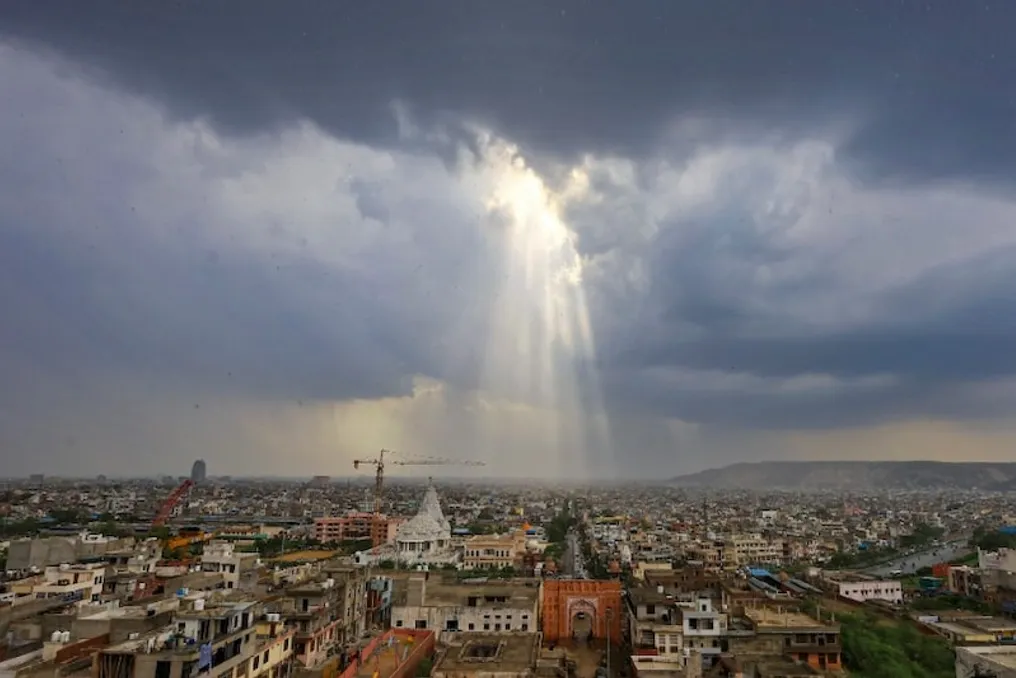
Following the El Niño event, dry air masses from the northwest are impeding the advance of moist monsoon winds. Due to the influence of these dry winds, a significant decrease in precipitation is expected in regions such as Delhi-NCR, Punjab, Haryana, Rajasthan, Gujarat, and western Madhya Pradesh.
Monsoon activity reduction
According to the Meteorological Department (IMD), the speed of the monsoon in northwestern India is slowing down. This is because the dry air reduces atmospheric humidity, which halts cloud formation and leads to decreased rainfall.
The Meteorological Department (IMD) also noted that in June of this year, rainfall in many areas was significantly below average, with a recorded decrease of 20–30 percent or more. It is expected that the influence of dry winds will continue into July in the northwestern part of the country.
Role of dry winds in the monsoon
The main monsoon wind brings moisture from the Arabian Sea and the Bay of Bengal; however, warm and dry winds in the northwestern regions (such as Rajasthan, Punjab, and Haryana) block these moist currents. This results either in a slowdown of the monsoon or a reduction in precipitation.
Regional forecast
Dry winds may cause lower precipitation in Rajasthan, Punjab, Haryana, Delhi-NCR, Gujarat, and western Madhya Pradesh. Nevertheless, according to All India Weather forecasts, good rains are expected only in the Indo-Gangetic plains and in the northeastern states of India within the next 24 hours. The weather in the rest of the country will be predominantly clear and sunny, although light showers or drizzle with thunderstorms are possible in some isolated places.
Prospects for improvement
Meteorological experts emphasize that this change in weather should not cause concern. A new Low Pressure System (LPS) is forming over the Bay of Bengal from approximately July 13 to 15. This new atmospheric complex will gradually shift westward, allowing the monsoon to regain strength and resume heavy rains starting from eastern and central India.
Monsoon in late July
According to various meteorological models, the second half of July promises generally normal monsoon conditions across the country. Eastern India is predicted to have higher than average rainfall for July. Meanwhile, northwestern, western, and southern parts of India are expected to receive less rain than normal. However, when considering the national average, the monsoon in July is expected to be within normal limits.