According to a report by the Ministry of Textiles of India, the country produces 70.73 million tons of textile waste annually, most of which is not used productively and is primarily viewed as an environmental problem.
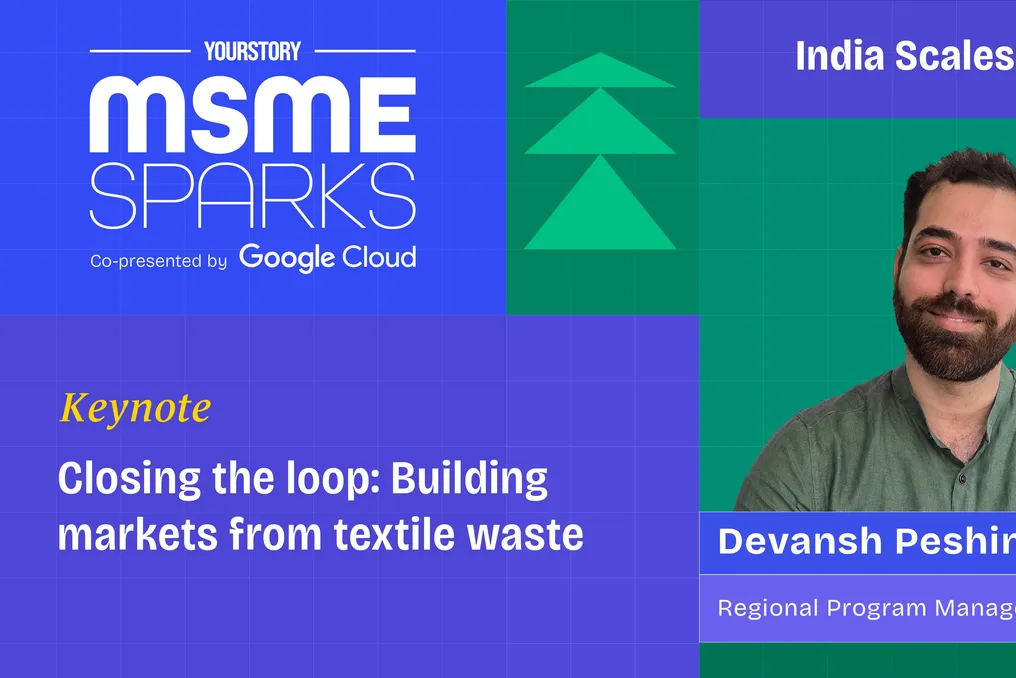
At the MSME Sparks 2026 event, dedicated to the Indian MSME ecosystem, Devansh Peshin, Regional Program Manager at Enviu, stated that this problem also presents a business opportunity. He also outlined the obstacles to scaling up circular solutions.
Enviu, headquartered in the Netherlands, implements programs in Europe, South and Southeast Asia, and East Africa. At the event, Peshin presented the results of four years of field research and listed necessary policy changes.
Peshin noted that globally, the textile waste problem amounts to 92 million tons. However, the use of lower-quality clothing, blended fabrics, and rapidly changing fashion trends complicate the recycling process. A significant portion of this waste still goes to landfills or is incinerated.
Enviu's approach involved identifying gaps in the textile waste value chain to launch businesses to address them. The organization collaborated with seven MSMEs managing textile waste in 14 cities and partnered with textile clusters such as Tiruppur, Karur, and Panipat to study local collection, sorting, and recycling systems.
Thanks to these efforts, 4.4 million kilograms of textile waste were diverted, and 2,900 green jobs were created, most of which are for waste collectors, with about 95% being women. For example, Krishna, a third-generation waste collector in Bengaluru, was able to transition from informal collection to running his own higher-income business after working with Enviu.
The work also identified shortcomings that existing recycling systems cannot solve. The Indian recycling system mainly deals with cotton through mechanical recycling, but blended fabrics containing polyester and elastane remain difficult to process. Furthermore, institutional waste generated in hotels, hospitals, and spas was largely outside formal collection systems.
These gaps prompted Enviu to support new ventures focused on polyester recycling, institutional textile waste management, and textile reuse. Peshin asked: 'If we stop viewing textile waste as trash and start thinking of it as an asset in your closet, can we build a reuse movement and a circular economy based on it?'
Peshin argued that scaling circular business will depend not only on technology but also on economics. He reported that currently, only 39% of textile waste brings positive value to waste management enterprises. Only 2% enters recycling pathways, while 55%–70% goes to landfills or incinerators.
According to the Ministry of Textiles report presented during the session, the textile recycling market is projected to grow to $3.5 billion by 2031, creating one hundred thousand new green jobs if the share of post-consumer waste converted into value increases from 39% to 55%.
Peshin emphasized that achieving this goal requires first improving the level of collection and sorting: increasing the number of textile recovery facilities, optimizing collection, and increasing added value at the sorting stage. He called on waste management firms to move beyond simple collection and engage in material recycling and recovery to create higher value-added products.
He predicted that the next wave of circular business will be linked to innovations in materials, technical textiles, and recovery infrastructure, where the number of participants is currently small.
Peshin stressed that while technology is important, building a circular textile economy also requires viable business models, supportive policies, and financing. He advocated for tax reforms that ensure equal conditions for recycled products compared to virgin materials. He noted that 'if recycled products are taxed under the same regime as virgin products, which incorporate fifty years of ecosystem efficiency, it creates a problem for recycled raw materials.'
He added that sorting and repair cannot be fully automated, calling for state support specifically for this labor-intensive work, as well as the implementation of an Extended Producer Responsibility (EPR) scheme that encourages durability, recyclability, and reuse-friendly design, instead of only penalizing waste after it is generated.
Regarding MSMEs, Peshin advised that collaboration depends on understanding the business's place in the value chain. He said: 'Determine which part of the value chain you want to intervene in. Collaboration will always revolve around that.' He also noted that financing for sustainable textile enterprises has become more accessible.
'There is no shortage of capital now,' he stated, pointing out that incubators and investors are increasingly supporting circular businesses with commercially viable solutions.
He also cautioned against waste imports: Panipat recycles imports from the EU, USA, Korea, and Japan, but only one Indian port has legal permission, and exports often lack traceability. Peshin believes India does not need imports; domestic pre-industrial and post-consumer waste is sufficient to create solutions.
Peshin concluded that circularity must be both a flow of goods and information, providing waste collectors and recyclers with channels to inform brands about recyclability. For India, this opportunity includes securing livelihoods, reducing dependence on virgin materials, and the emergence of new resource recovery-focused MSMEs. Currently, this opportunity is focused on specific measures, such as polyester recycling, institutional waste, and reuse models, rather than textile waste in general. Whether it expands further depends on tax policy, EPR design, and whether the model working in 14 cities today can cover over one hundred untouched cities.