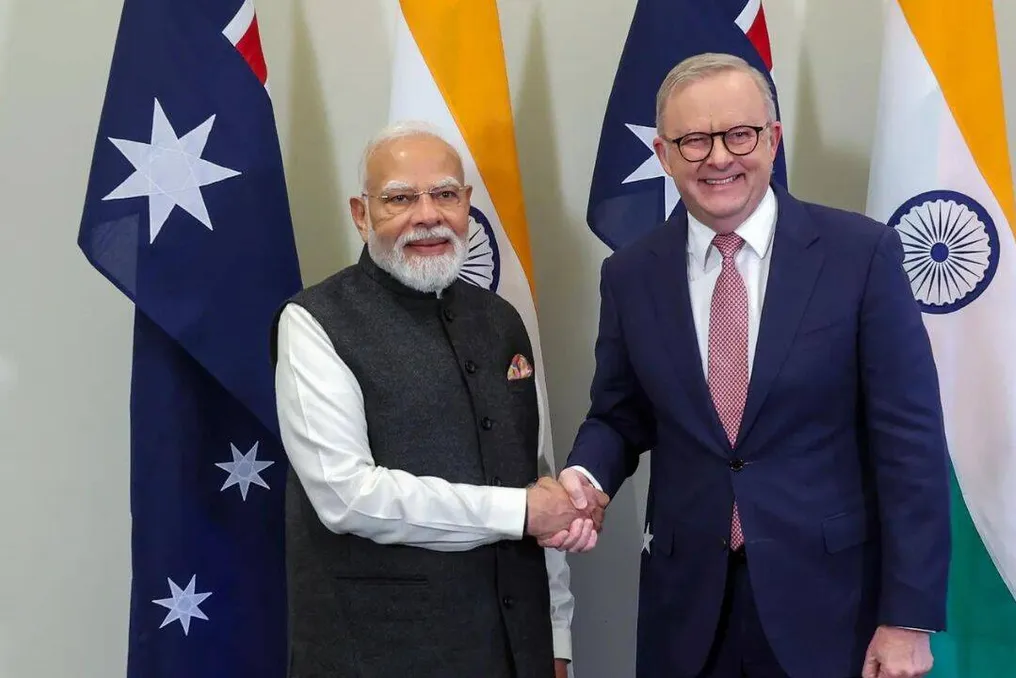
Prime Minister Narendra Modi highly praised the relationship between India and Australia on Thursday, employing cricket analogies to describe the diplomatic partnership of the two nations.
Diplomacy through sport
Speaking at a joint press conference with Australian Prime Minister Anthony Albanese, Modi stated that cricket is the diplomatic language in the relationship between India and Australia, comparing the leaders' meetings to a game of cricket.
Modi noted: 'Today, as we are in Melbourne, the sporting capital of the world, a conversation not about sports would be like winning a draw in a cricket match, but never the start of a game. Cricket is the diplomatic language in the relationship between India and Australia.'
He continued that their meetings resemble a game of cricket: 'Our agenda is as focused as in a One Day International match, our decisions are as quick as in a T20 match, and our partnership is as long-lasting and deep as in a Test match.'
Sports cooperation and investment
During the press conference, the Prime Minister announced that both countries will host major sporting events in the coming years, which will strengthen sports cooperation and open up numerous opportunities for investment in sports infrastructure.
Modi emphasized: 'In the coming years, both our countries will host major sporting events such as the Olympic Games and the Commonwealth Games. This will not only strengthen our sports cooperation but also create many opportunities for investment in sports infrastructure.'
Discussion on terrorism and nuclear cooperation
In a joint statement released after the India-Australia Annual Summit, Prime Ministers Modi and Albanese condemned terrorist acts that occurred in Pahalgam (India) and on Bondi Beach (Sydney).
Both leaders strongly denounced terrorism and violent extremism that fuels terrorism in all its forms and manifestations. They highlighted the importance of all countries combating the threat of terrorism in a comprehensive and sustainable manner, and called for action against globally banned terrorists and terrorist organizations, including those listed by the UN Security Council Sanctions Committee 1267, as well as their proxies, affiliates, sponsors, and financiers.
The Prime Ministers acknowledged the need to enhance cooperation for effective counter-terrorism efforts. They pledged to increase the exchange of information on regional terrorism threats and explore opportunities for broader engagement in countering radicalization, including online radicalization, violence-facilitating extremism, misuse of new and emerging technologies for terrorist purposes, terrorism financing, and threats to critical infrastructure and maritime space.
Furthermore, Modi announced that India and Australia have concluded a landmark agreement on nuclear cooperation, adding a strategic nuclear dimension to their rapidly accelerating partnership.
Future development of the partnership
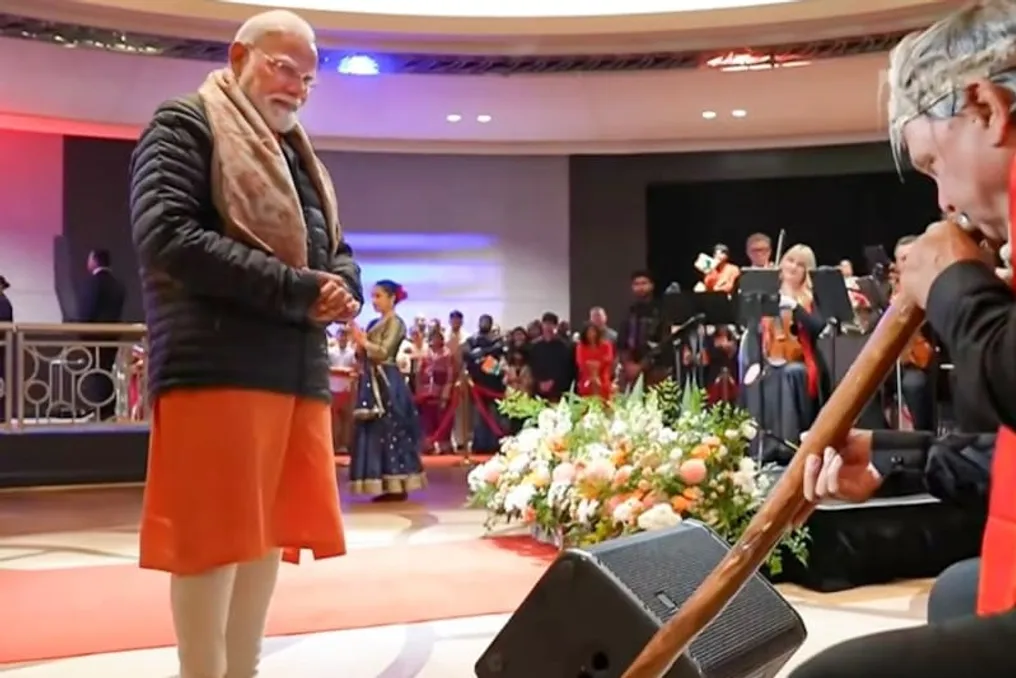
The Prime Minister's visit, which began with his arrival in Melbourne on Wednesday for the second phase of the trilateral visit after visiting Indonesia, is expected to further accelerate the India-Australia Comprehensive Strategic Partnership, which serves as the foundational framework governing bilateral relations between the two states.