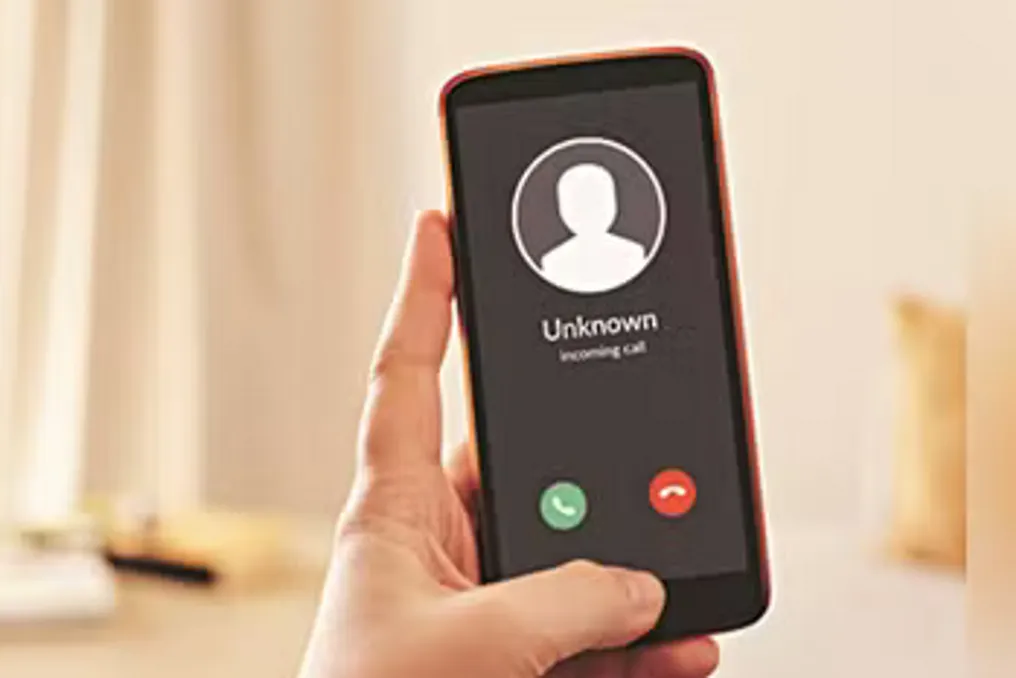
The Ministry of Electronics and Information Technology (Meity) is evaluating the request from India's telecom regulator for authority to regulate applications that provide caller identification and call management services. Meity Secretary C. Krishnan stated on Thursday that the ministry is discussing this matter with the Department of Telecommunications (DoT).
Discussion on Powers and Regulation
Krishnan noted that the regulator approached them seeking rights to control call management applications, such as Truecaller. He added that consultations are currently underway with the DoT regarding granting these powers, and the legal aspects of the issue must be examined.
Caller ID applications, like Truecaller, do not directly fall under the jurisdiction or close scrutiny of the Telecom Regulatory Authority of India (TRAI). Since they function as intermediaries, they are regulated by the rules set out in the Information Technology Act of 2000.
Banks' Stance and Call Issues
The core issue is that banks and financial institutions are pushing for TRAI's intervention to ensure that calls they make to customers are not blocked by platforms like Truecaller. According to officials, TRAI did not request the right to regulate the applications themselves, but rather wanted to be designated as an 'authorized agency' of Meity under the IT Act to respond to rule violations by these applications.
A senior official reported that banks expressed concerns that calls from series 140 and 1600 were being classified as spam or blocked, which hindered banks' access to consumers. It was also noted that calls related to loan recovery or notifications about incorrect passwords/unauthorized transactions could be blocked.
A senior banker at a private lender indicated that while series 1600 calls were used for transactional calls and SMS to customers, once a customer blocked the series 1600 number or marked it as spam, the bank could no longer contact that person via that number.
Proposal for Special Numbers
Senior leadership of the state bank stated that calls from banks are often flagged as spam due to the high volume of daily customer contacts. TRAI proposed that banks use a special numbering series, which would allow customers to easily recognize legitimate bank calls. The option of allocating a separate series of numbers for such purposes is under discussion.
Expert Assessment and Truecaller Statistics
Truecaller previously introduced a 'Frequently Blocked' tag for series 140 and 1600 numbers, which flags a number blocked by many people but does not label it as 'spam'. Experts warn that allowing TRAI to regulate caller ID applications could pave the way for control over other applications outside its jurisdiction. Mahesh Uppal, director of the consulting firm Com First India, called this 'overreach' and a 'bad idea,' as expanding TRAI's powers to online applications could set a dangerous precedent.
Truecaller CEO Rishit Jundzhunwala stated in his post on X on July 8 that TRAI's attempt to regulate caller ID applications 'made no sense' and was 'unacceptable.' He added that TRAI had compelled the platform not to display community-reported spam information, effectively limiting the display of series 140 and 1600 numbers as spam. Nevertheless, he pointed out that over 51 million calls from both series remained unanswered daily.
Jundzhunwala also reported that over the last eight months, Truecaller users ignored 81% of all series 140 calls and 79% of all series 1600 calls. He emphasized that part of these calls were legitimate, which Truecaller could have displayed with a verified badge, but because of this, both consumers and legitimate businesses lost out. Furthermore, he noted that the daily blocking of series 1600 numbers increased by 208% since October 2025, with 74 million manual blocks made. Daily, Truecaller users actively block 400,000 numbers from series 140 and 125,000 calls from series 1600.