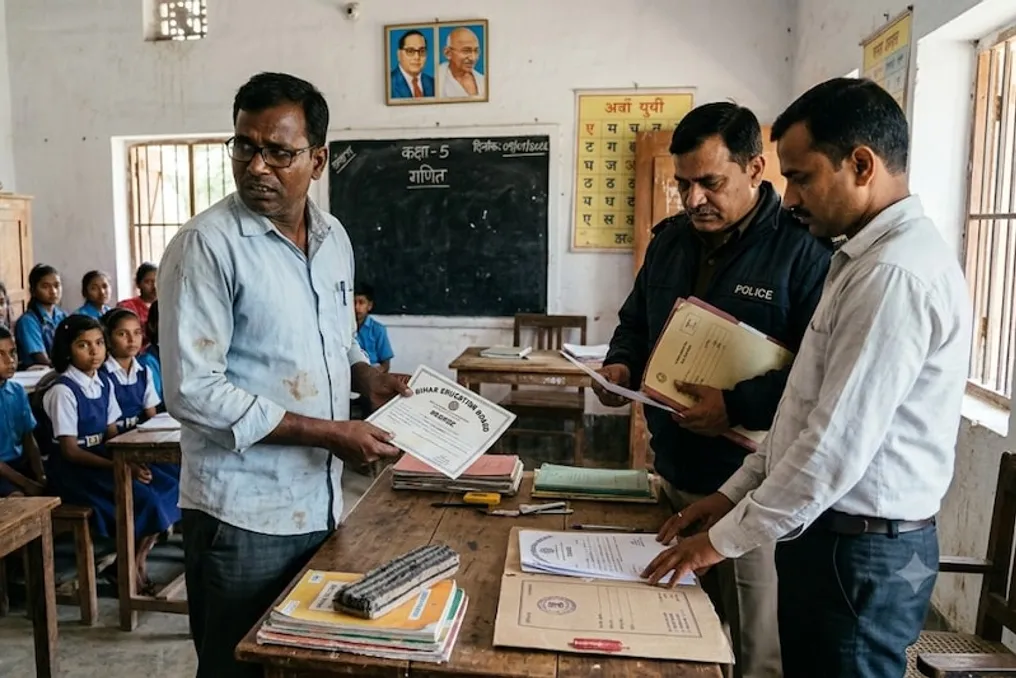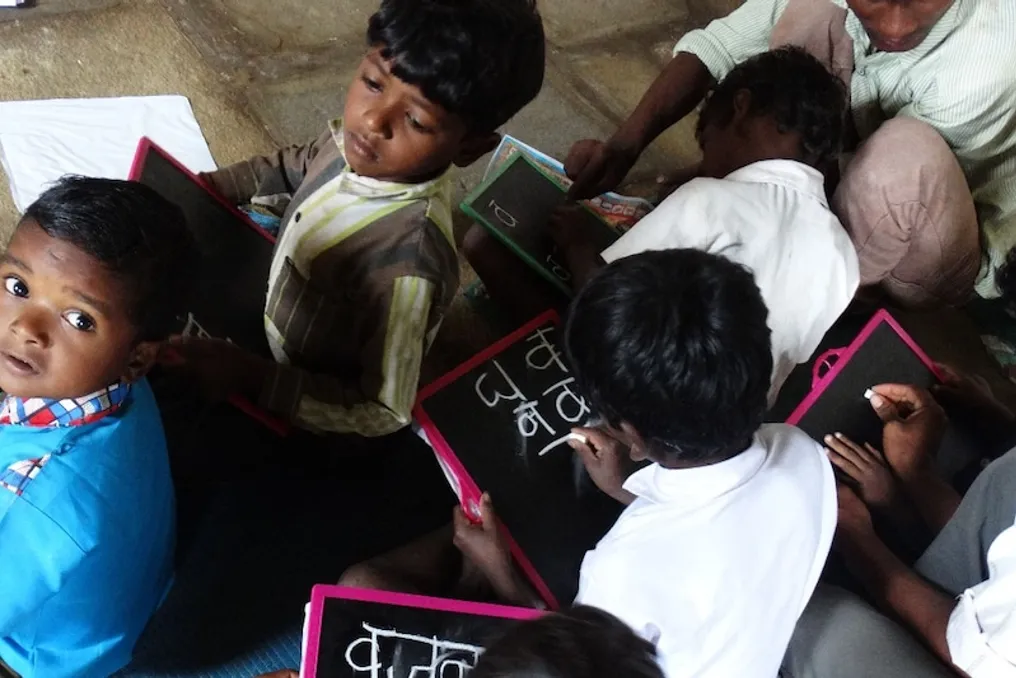
According to a recent report by the National Council for Planning (NITI Aayog), 94,000 government educational institutions have been closed across India over the last decade (10 years). These figures raise serious concerns and highlight numerous issues in rural school education in India.
School Closure Dynamics
Over the past ten years, approximately 25 schools have been closed on average every day. The vast majority of these closing institutions are government schools, which has led to a significant decrease in the total number of enrolled students by 22.6 million. The NITI Aayog report shows that the number of government schools in the country has decreased from 1.107 million in 2014-15 to 1.013 million in 2024-25. Concurrently, the number of government-aided schools has dropped from 83,000 to 79,000. In contrast, during the same period, the number of private schools increased from 2.88 million to 3.39 million.
Reasons for Declining Enrollment
The NITI Aayog report, titled 'School Education System in India: Time Series Analysis and Policy Roadmap for Quality Improvement,' points to several primary reasons for this decline. Among them are declining birth rates, which lead to a smaller population of children of school age, as well as challenges related to school consolidation and retaining children in higher grades.
School Consolidation Policy
'School consolidation' is a policy of merging educational institutions implemented by the central government and NITI Aayog. The goal of this measure is to utilize resources, such as buildings and teachers, more efficiently by merging neighboring schools with small student populations. Nevertheless, social workers dealing with education issues note that this policy has also contributed to the reduction in enrollment. When a school in a neighboring area closes, many children, especially girls, stop attending school due to increased travel distance.
Dropout and Performance Issues
The report expresses deep concern regarding student dropout after the primary level. The dropout rate in primary school (grades 1–5) remains very low—only 0.3%. However, this figure rises to 3.5% in middle school (grades 6–8) and reaches an alarming level of 11.5% by secondary level (grades 9 and 10). Furthermore, the proportion of students transitioning from eighth to ninth grade has decreased from 91.58% in 2014-15 to 86.6% in 2024-25. While this rate is 99.6% in states like Puducherry and Kerala, it is significantly lower in states such as Bihar, Uttar Pradesh, Jharkhand, Madhya Pradesh, Meghalaya, Mizoram, Arunachal Pradesh, and Nagaland.
Challenges in Uttar Pradesh and Madhya Pradesh
The report emphasizes that the largest school mergers over the last decade occurred in Uttar Pradesh and Madhya Pradesh, where these two states combined have merged or closed about 40,000 schools. Moreover, an audit revealed that many ninth-grade students struggle not only with complex subjects like algebra and geometry but also with mastering basic concepts, including percentages, fractions, and ratios. This indicates that gaps created in early stages of learning persist into higher grades.