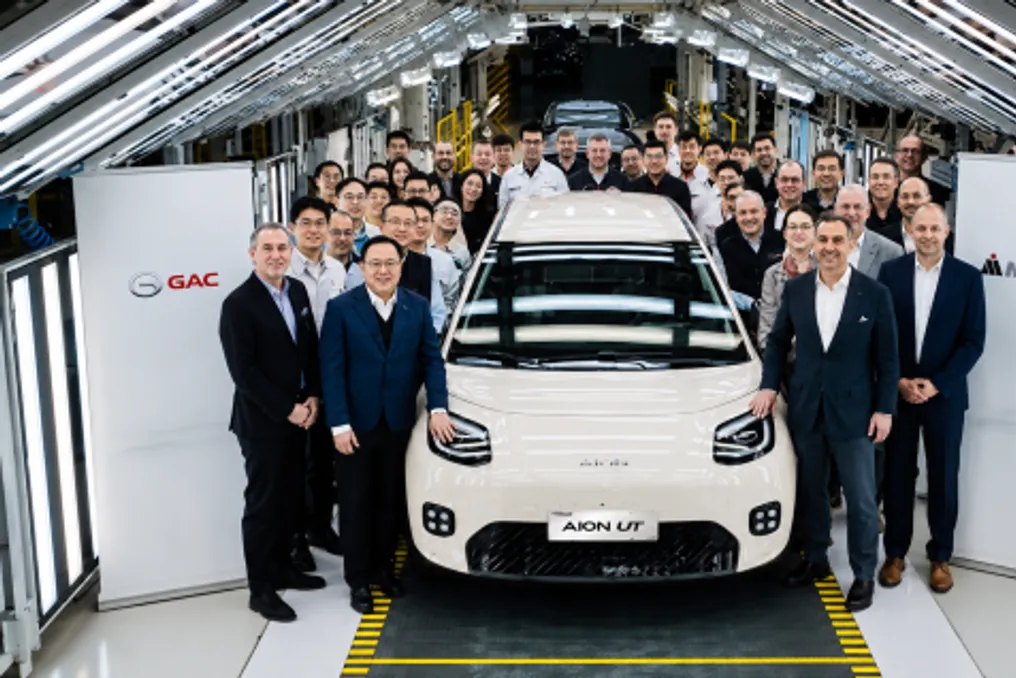
GAC has established a new Engineering, Research, and Development (R&D) Center in São Paulo (SP), positioning Brazil as one of only two countries outside of China to host such a facility; the second hub is located in Europe.
This new unit will be responsible for several crucial functions, including product portfolio planning, new item development, technical validation, market research, and improving mobility technologies aimed at the Brazilian consumer.
Some related activities were already underway before the brand's official arrival in the country in May 2025. Brazilian teams were already working on adapting and validating models such as the GS3 SUV and the Aion UT electric vehicle, adjusting them to the specificities of the infrastructure, usage conditions, and preferences of the national public.
The center is structured into three main areas. The first is dedicated to portfolio planning, using market studies, technology analysis, regulatory requirements, and consumer research to guide future launches. The second front deals with product development, covering durability testing, calibration, driving performance evaluation, ADAS system analysis, emissions, and homologations, in addition to inspections of components such as suspension, steering, brakes, and noise and vibration (NVH).
The third area focuses on the launch phase, managing parts localization, establishing local suppliers, and monitoring customer feedback.
Technical priorities include developing solutions for flex, hybrid, and electric vehicles, as well as evolving REEV technology, which combines electric traction with a combustion generator to increase vehicle range.
This initiative is linked to GAC's investment plan in Brazil and the local production project at the HPE Automotores factory in Catalão (GO), which currently assembles Mitsubishi models. HPE, a wholly national company, has been producing vehicles in the country for over 25 years, and this collaboration allows GAC to begin local production without the need to build a plant from scratch, utilizing the idle capacity of the unit in Goiás.
The Chinese automaker plans to invest US$1.3 billion in Brazil by 2030 and aims to start production in 2027, with a projected capacity of up to 50,000 vehicles annually across combustion, hybrid, and electric lines.
Leonardo Lukacs, Director of Engineering, Research, Development, and Manufacturing at GAC, described the center as 'an important milestone for GAC in Brazil.' He emphasized that the company's purpose goes beyond mere product adaptation, aiming also to contribute to the evolution of mobility in the country, with an emphasis on fostering suppliers and training specialized professionals.