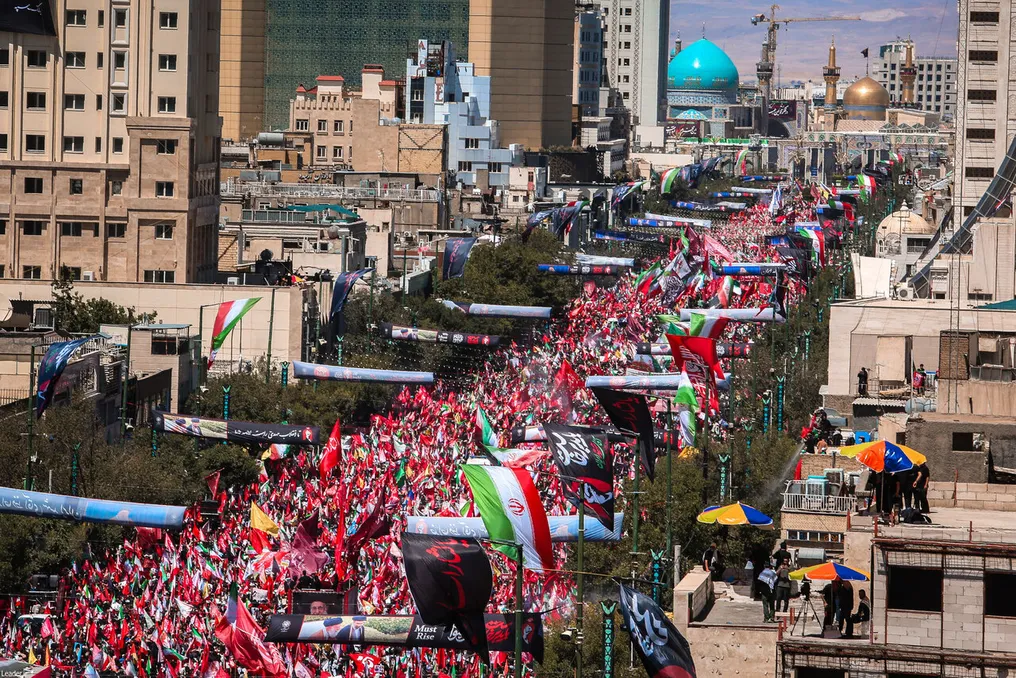
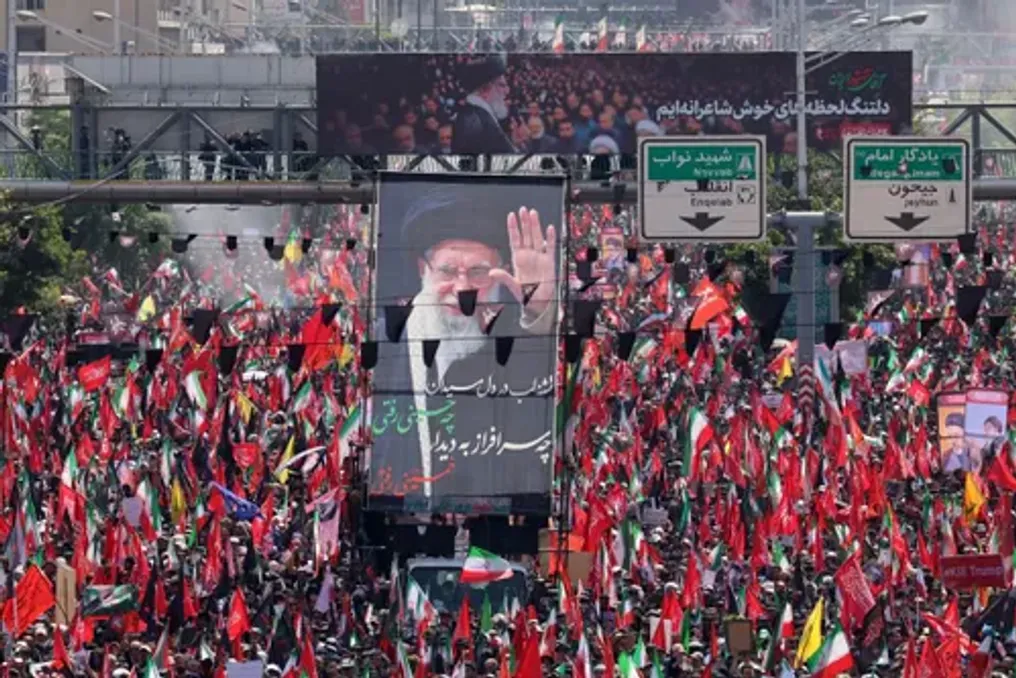
The funeral of the late Supreme Leader of Iran, Ali Khamenei, and members of his family took place in Tehran on Monday. Massive crowds attended the ceremony, with authorities estimating their numbers in the millions, potentially rivaling the scale of the farewell to his predecessor nearly forty years ago.
Demonstration of Iranian Resilience
Although official figures regarding the number of attendees have not yet been released, photos from the AFP agency captured enormous crowds stretching along the main boulevards of the Iranian capital. These ceremonies provide Iran with an opportunity to demonstrate its resilience following five weeks of military action against the United States and Israel. However, public attention remains focused on Khamenei's heir, his son Mojtaba Khamenei, who has not appeared in public since taking office.
After two days the body of Khamenei rested at the Grand Mosalla religious complex in Tehran, where he passed away on the first day of the Middle East war on February 28, his body began its procession through the capital accompanied by huge crowds. As shown by AFP footage, the coffin was covered with flower petals during its movement through the streets.
Preventing Past Chaos
Authorities are striving to avoid a repeat of the chaos that accompanied the funeral of Khamenei's predecessor, Ayatollah Ruhollah Khomeini, in 1989. At that time, according to the state news agency IRNA, about 10 million people gathered for the farewell, and the crush led to the deaths of over 10 people and injuries to more than 10,000. A guest in the procession, Gholamreza Khanbabaei, 58, noted that comparing this ceremony to the last one, they 'are not different at all,' but the crowd this time looks 'more enthusiastic.'
On Monday, the airspace of Tehran was closed while the country mourned its former leader. Mourners walked the streets waving flags of Iran and the Tehran-backed Lebanese militant group Hezbollah, as well as red flags symbolizing revenge. Other people gathered at Imam Hussein Square in eastern Tehran and hung a effigy of US President Donald Trump, according to state media. Former President Mahmoud Ahmadinejad was also seen among the participants, according to local media.
In the intense heat, trucks sprayed water on the mourners for cooling, and organizers distributed Iranian flags and pictures of Ali and Mojtaba.
Heir's Absence and Plans
The procession route covers about 20 kilometers. The day before, thousands of people visited the Grand Mosalla to pay tribute to Khamenei and four of his family members killed in Israeli airstrikes based on US intelligence. Massive concrete walls within the complex separated the public from the coffin to prevent a stampede. It is unclear what level of access and proximity the public will receive during today's procession, but authorities remember that in 1989, they had to use a helicopter to transport Khomeini to his burial after mourners invaded his vehicle, which resulted in the tearing of the shroud and the body falling to the ground.
Similar events will take place on Tuesday at the Kom religious center, and on Wednesday in the holy cities of Iraq—Najaf and Karbala. The culmination will be Khamenei's funeral in his hometown of Mashhad in northeastern Iran on Thursday. Three of Ali Khamenei's sons appeared at the funeral for the first time on Sunday, further highlighting the absence of Mojtaba, who was appointed Supreme Leader shortly after his father's death but has not shown himself publicly. Officials stated that he sustained injuries from airstrikes, but the severity of the injuries remains unclear.
The new commander of the powerful Islamic Revolutionary Guard Corps, Ahmad Vahidi, whose predecessor died on February 28, also appeared at the funeral for the second time on Sunday, this time outdoors, after not appearing during the war. Esmail Kaani, the shadow head of the Quds Force, responsible for its external activities, also made a rare appearance.
Call for Revenge
The government seeks to present mass mobilization in support of the authorities following the mass protests in January, which human rights groups claim were suppressed by repression that claimed thousands of lives. The Middle East war is paused due to a ceasefire and an initial agreement with the US, but both Washington and Tehran have warned of their readiness to resume military action, making the theme of revenge central to the funerals.
Khamenei long maintained a confrontational stance towards the West, and Tehran has supported armed groups opposing the US and Israel across the Middle East for years, including Palestinian Hamas and Lebanese Hezbollah, both of which sent delegations to the ceremony. Some of Khamenei's supporters in Monday's procession backed this message of confrontation. Khanbabaei stated: 'We want revenge. It must be done. Because later, if it is not done, it will be worse.'