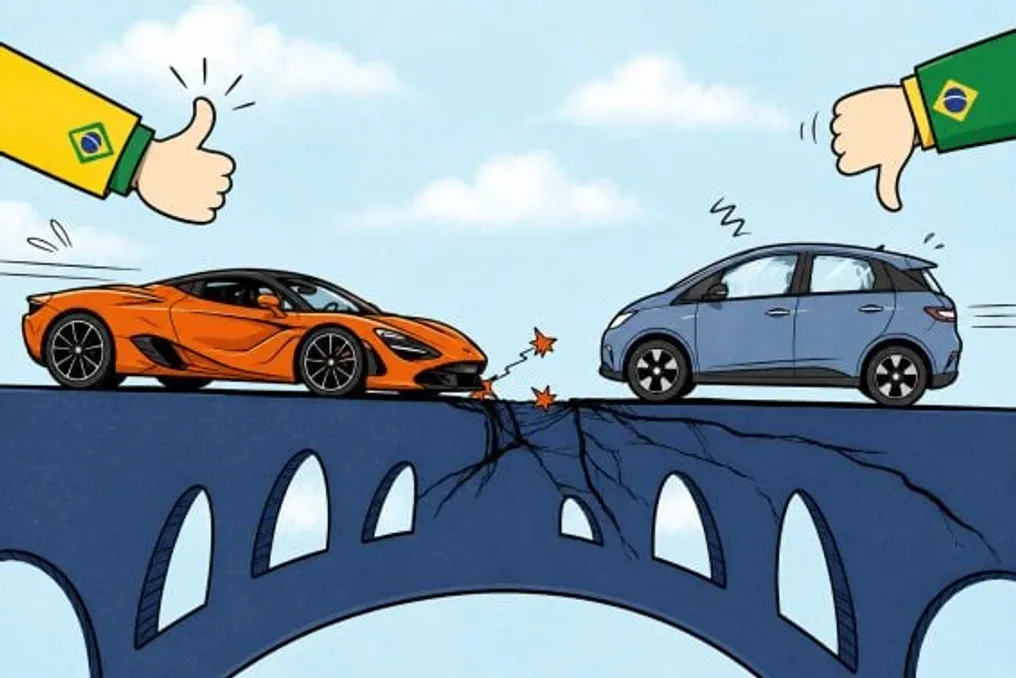
The Constitution and Justice and Citizenship Commission (CCJ) of the Chamber of Deputies approved, on Wednesday (8th), the admissibility of PEC 3/2026. This proposal aims to change the collection methodology for the Motor Vehicle Property Tax (IPVA) in Brazil.
Change in IPVA calculation basis
If the PEC is implemented, the tax calculation will no longer depend on the market value of the automobile but will instead consider the vehicle's manufacturing weight, establishing a national limit of 1%. Currently, IPVA is a state tax levied on the vehicle's assessed value, often based on the Fipe Table, with rates varying between 1% and 4%, reaching 4% annually in states such as São Paulo, Rio de Janeiro, Minas Gerais, Bahia, and the Federal District.
The proposal, authored by Congressman Kim Kataguiri (União-SP), modifies Article 155 of the Constitution. The approval in the CCJ refers only to the constitutionality of the issue, while the merit will still be evaluated by a special committee. Nevertheless, it represents the most concrete change yet presented for this annual tax.
How the new system will work
It is important to note that the Fipe Table will not be eliminated. According to the text, the factory weight will be the calculation basis, but the assessed value will continue to serve as a ceiling. Thus, the state will calculate the tax based on weight, but the final amount cannot exceed 1% of the car's price. In practice, the current table would only indicate the maximum amount to be paid.
This change tends to benefit light and high-cost vehicles, such as a carbon fiber sports car, which would have a reduced tax despite its high price. On the other hand, heavier and lower-value vehicles, such as work trucks or old SUVs, might end up paying proportionally more than currently.
Criticism and the dilemma of electric vehicles
Congressman Helder Salomão (PT-ES) used this point to criticize the PEC in the CCJ, arguing that an old, heavy truck could generate a tax distortion by collecting more tax than an expensive sports car made of light materials.
One aspect noted in the debate is the impact on electrified cars. Since electric vehicles are generally heavier due to batteries, a weight-based system would penalize them, resulting in a higher IPVA. However, the PEC itself provides for states to offer discounts for less polluting vehicles. It is likely that this mechanism will be used by governments to avoid punishing electric and hybrid vehicles, creating a scenario where the vehicle is taxed by weight and simultaneously supported by an environmental benefit.
Fiscal impact and demonstrations
There is also an operational difficulty, given that there is no existing table to convert kilograms into IPVA values. Each state would need to develop a new evaluation system based on weight, which has been forwarded to the special committee.
In fiscal terms, a study by the Chamber's economic team projected a possible revenue loss of about R$ 38 billion. Given that IPVA is a crucial source of state revenue, and half of this amount is allocated to the municipalities where the vehicles are registered, the impact is significant.
The National Committee of Finance Secretaries (Comsefaz) opposed the PEC, alleging that it invaded state competencies and jeopardized the financing of public policies. Kim Kataguiri countered this concern, stating that there are over R$ 200 billion in possible compensations, derived from revisions of tax benefits, super-salaries, and sectoral exemptions.
Changes promoted by the commission
The rapporteur, Congressman Rodrigo de Castro (União-MG), supported the admissibility but stressed that the impacts on state revenues, the autonomy of entities, and the need for transition rules must be analyzed on the merits.
The PEC underwent modifications. The approved opinion removed a suppressive amendment that limited the annual expenditure of the National Congress, legislative assemblies, the Legislative Chamber of the DF, and audit courts to 0.4% of the Net Current Revenue. Rodrigo de Castro considered this limit a threat to the separation of Powers and federal autonomy, making it unconstitutional.
However, another spending control remained: the 0.1% ceiling of the Net Current Revenue for institutional publicity of all Powers, including the Union, states, municipalities, and the Public Ministry. This limit prohibits promotional or personal advertising, and the body that exceeds the limit is prevented from incurring expenses or granting adjustments until it complies.
The legislative process is still extensive. The proposal will go to a special committee for merit analysis and subsequently to the Plenary, requiring approval in two rounds before going to the Senate, indicating that the change is still far from being applied in the next collection period.