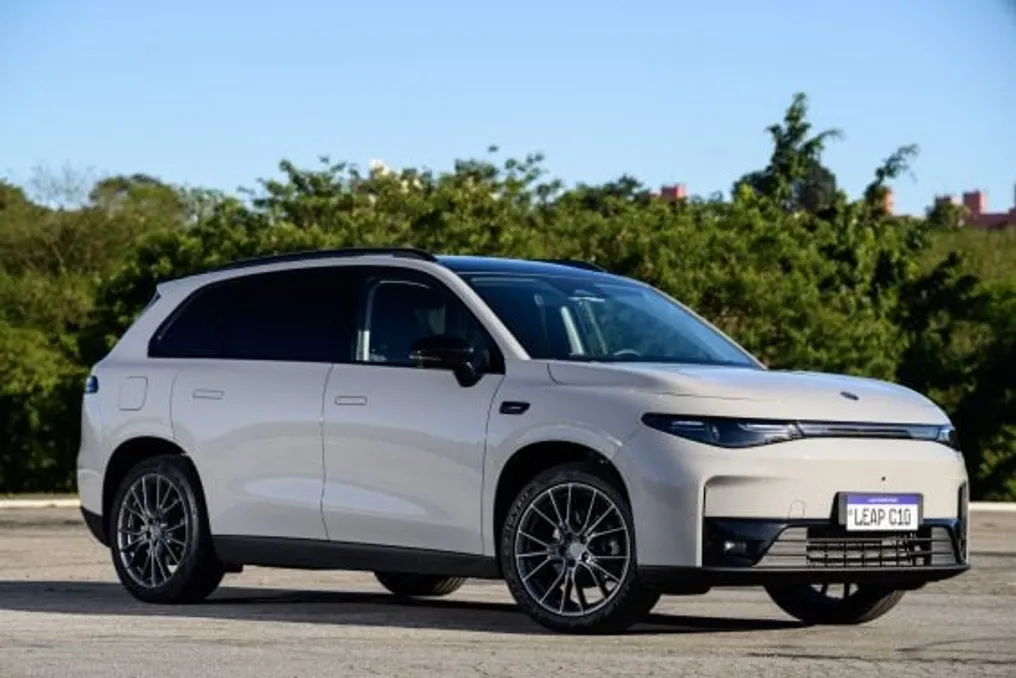
In the last two years, the Brazilian market has received several Chinese brands focused on electrification, with Leapmotor being one of them, operating in partnership (joint venture) with Stellantis.
In the last two years, the Brazilian market has received several Chinese brands focused on electrification, with Leapmotor being one of them, operating in partnership (joint venture) with Stellantis.
Leapmotor dealerships display a Stellantis banner, using this association as a credibility argument during sales. Although many readers are already familiar with the group, there are consumers who are still unaware of the company and might be confused by this relationship.
Stellantis was established in January 2021, resulting from the merger between Fiat Chrysler Automobiles and Peugeot S.A. Currently, the group owns a vast portfolio of brands, including Abarth, Alfa Romeo, Chrysler, Citroën, Dodge, DS Automobiles, Fiat, Jeep, Lancia, Maserati, Opel, Peugeot, Ram, and Vauxhall. Leapmotor is represented by the group outside of China.
In Brazilian territory, Stellantis markets the Fiat, Citroën, Peugeot, Ram, Jeep, and Leapmotor brands. This presence allows for a possible sharing of parts and platforms in certain vehicles, which simplifies the maintenance process for the consumer. However, in the specific case of Leapmotor, component sharing does not yet occur.
The main benefit offered to Leapmotor in Brazil lies in the Stellantis infrastructure, which covers the parts distribution network and financial services. It is foreseen that in the coming years, Leapmotor vehicles will be assembled at the Goiana factory in Pernambuco, alongside models from Fiat, Jeep, and Ram.
Leapmotor vehicles sold in Brazil have received modifications made by the engineering team of the local Stellantis branch. A notable change was the suspension adjustment, which seeks a balance between stability and comfort, reminiscent of what was done on the Jeep Commander. Furthermore, Brazilian engineering conducted durability tests and translated the operating system, representing a competitive advantage over other newly arrived brands, although the essential characteristic of being a Chinese car with a minimalist interior remains.
The formation of this conglomerate has also generated transformations in the Peugeot and Citroën models, which are now sold in Brazil equipped with Fiat engines. In return, the Italian brand plans to introduce new models using the CMP modular platform, previously developed by PSA.
Stellantis' global headquarters is located in the Netherlands. Currently, Antonio Filosa, of Neapolitan origin, holds the position of CEO. He gained experience leading the group's Brazilian branch before assuming the role, succeeding Carlos Tavares, who faced severe criticism due to certain strategic decisions made.