The Jammu and Kashmir government, in collaboration with the University of Kashmir, has initiated a comprehensive review of printed publications. Heads of departments and school principals have been instructed to remove any material that may be deemed 'contradictory' or 'anti-national.'
Reasons and Previous Incidents
This move followed last week's political dispute and the withdrawal of a textbook from state school libraries. This textbook contained descriptions of the region as 'Kashmir occupied by India' and 'Kashmir controlled by India,' and also referred to the founder of the banned organization JKLF, Maqbool Bhat, as a 'Shaheed' (martyr).
Reaction from Political Figures
The new directive on book inspection drew sharp criticism from Srinagar Member of Parliament Aga Ruhullah Mehdi of the ruling National Conference (NC), who called the decision 'deeply alarming.' Mehdi stated that libraries are meant for preserving knowledge, not for curating political narratives, emphasizing that erasing books does not erase history but only impoverishes scholarly research. He added that academic freedom and the right to engage with history should never become victims of ideological control.
PDP MP Wahid Parra supported the criticism, labeling the inspection process as a 'process of anistocracy.'
Previously Withdrawn Publications
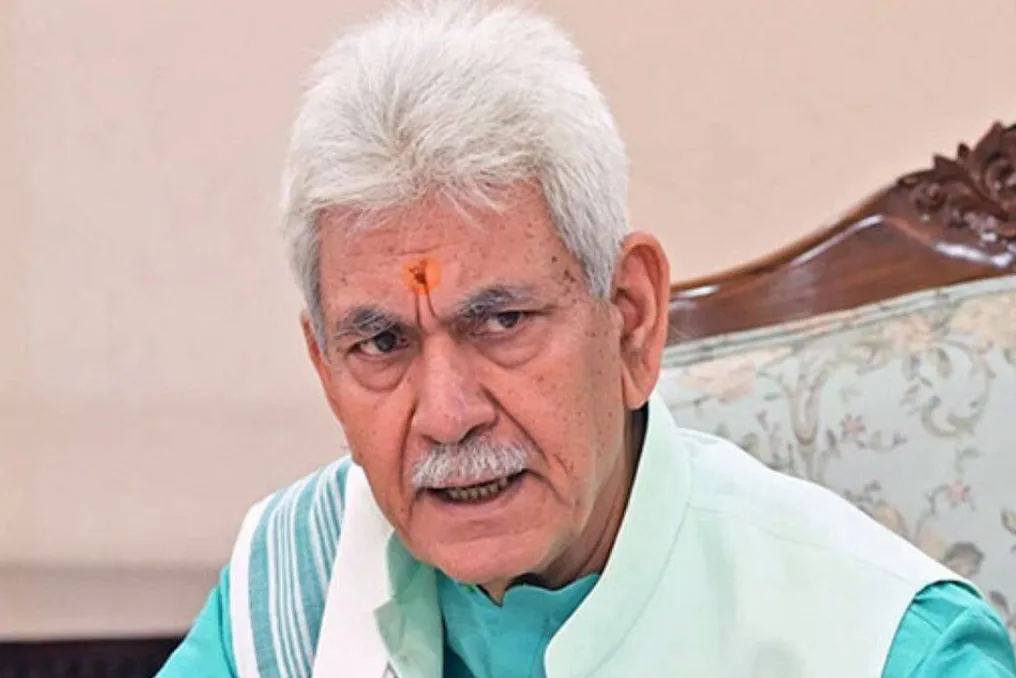
On July 4, the Governor of Jammu and Kashmir, Manoj Sinha, ordered the withdrawal of two books—'Personalities and Legends of Jammu and Kashmir' by Hilal Ahmad and Santosh Mina, and 'Great Personalities of Jammu and Kashmir' by Sushant Giri. The reason cited for the withdrawal was 'highly inappropriate content.' Specifically, the book 'Personalities and Legends of Jammu and Kashmir' contained references to 'Kashmir occupied by India' and to Bhat, who was hanged and buried in Tihar Jail in February 1984 after being convicted of murdering a CID inspector.
Official Directives for Inspection
Nasir Iqbal, Registrar of the University of Kashmir, confirmed receipt of orders to remove books with 'anti-national content.' He stated that departments were directed to identify any books contradicting national interests. Iqbal clarified that heads must remove controversial publications if they are found.
Furthermore, Nasir Ahmad Wani, Director of School Education in Jammu and Kashmir, issued a new order on Thursday. It is addressed to the heads of government and recognized private schools, as well as educational centers, to conduct a comprehensive book review. According to this order, the goal is to ensure the absence of unacceptable material in the books, including material that might offend the religious sentiments of any group, be unsuitable for students, or potentially harm national interests.
Wani also stipulated that upon discovering unacceptable content, the heads must prepare a detailed report and submit a compliance report by July 19, confirming that all books in their institutions have been inspected and do not contain unacceptable material.
Appeal to Child Rights Commission
Meanwhile, the Research and Advocacy Group (RAAG), an organization engaged in legal research, constitutional defense, and public policy, approached the National Commission for Protection of Child Rights (NCPCR) in New Delhi requesting an investigation into the controversial books. RAAG argues that the distribution of such books in state school libraries is not merely a procurement error but a serious violation of children's rights. These books exposed students to materials glorifying terrorists/separatists and promoting narratives contrary to the Constitution, which violates the Education Act 2009 and the National Education Policy 2020.