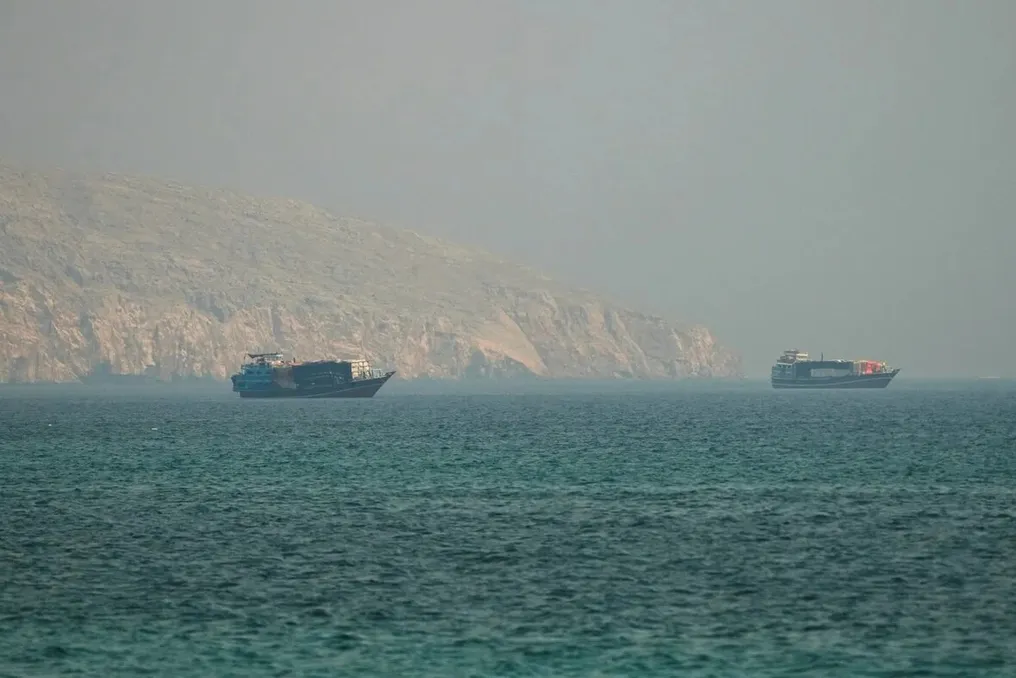
In the last 24 hours, Iran has expedited the shipment of five supertankers and one Suezmax-class vessel carrying approximately 11 million barrels of crude oil. This occurred against the backdrop of escalating tensions between the US and Iran, which threatens to lead to a renewed blockade of Iranian ports, according to Bloomberg on Thursday.
Popular
Tanker Movements and Attacks
According to Bloomberg's tanker tracking system, four vessels that left Iranian ports on that day headed to the Strait of Hormuz, while another transited the Strait of Hormuz. These ships were dispatched immediately following the second day of military strikes by the US, which targeted civilian infrastructure, including railway bridges. As reported by Hossein Kermampour, a representative of the Iranian Ministry of Health, these strikes resulted in 14 deaths, 78 injuries, and 47 hospitalizations.
The resumed military actions jeopardize the memorandum of understanding signed in Islamabad and could lead to a cautious halt of maritime traffic through the Strait of Hormuz. These attacks caused turmoil in the energy market, leading to an increase in oil prices by almost nine percent this week, with them trading near $79 per barrel on Thursday.
Sanctions and Iran's Reaction
The volume of eleven million barrels approaches Iran's weekly export volume before the war, although it is unclear whether there are buyers for these shipments. On Tuesday, tens of millions of barrels of Iranian oil were halted after the Trump administration revoked the deferral, temporarily lifting oil sanctions against Iran. This decision followed attacks by Iran on several vessels in Qatar and Saudi Arabia.
The national fleet of the Islamic Revolutionary Guard Corps of Iran (IRGC) stated on Thursday that US attacks on Iran and interference in rerouting shipping through the Strait of Hormuz violate the process of resuming supplies. The IRGC warned that any further US interference would provoke a 'devastating response.' The Strait of Hormuz has become the most significant point of conflict between the US and Iran, overshadowing Iran's nuclear program, which was long the main cause of tension between the two countries.
Discussions and Agreement Terms
Before the signing of the Memorandum of Understanding in June, Trump, speaking at the G7 summit, stated: 'I did not want to see an economic catastrophe.' His remarks then confirmed that the blockade of the Strait of Hormuz by Iran was causing sufficient economic damage, prompting his administration to extend the truce by 60 days, as announced on Sunday.
The White House reported that the negotiations would lead to a final end to the war through subsequent discussions. According to this memorandum, the Strait of Hormuz would remain free of fees for 60 days, but its future would be subject to negotiation, leaving room for the introduction of charges and giving Iran greater control over the vital waterway than before.
A briefing mentioned: 'The Islamic Republic of Iran will engage in dialogue with the Sultanate of Oman to determine the future management and maritime services in the Strait of Hormuz, in consultation with other Gulf coastal states in accordance with applicable international law.' Following this, the US granted a deferral on Iranian oil sales, which became a key sticking point in the negotiations between the parties. This deferral initially allowed the Islamic Republic to produce, sell, and supply crude oil and related products until August 21, while the US tied the sanctions relief to progress in negotiations for a complete end to the war. This deferral was annulled when Iran attacked vessels in the strait on Tuesday.
Previously, Trump was skeptical about the strength of this memorandum, anticipating events of this week. In June, he said: 'It is a memorandum of understanding. And if I don't like it, we go back to bombing them, dropping bombs on their heads.' He added: 'If I don't like it, if they don't behave well, we go right back to dropping bombs right in the middle of their heads, okay?'