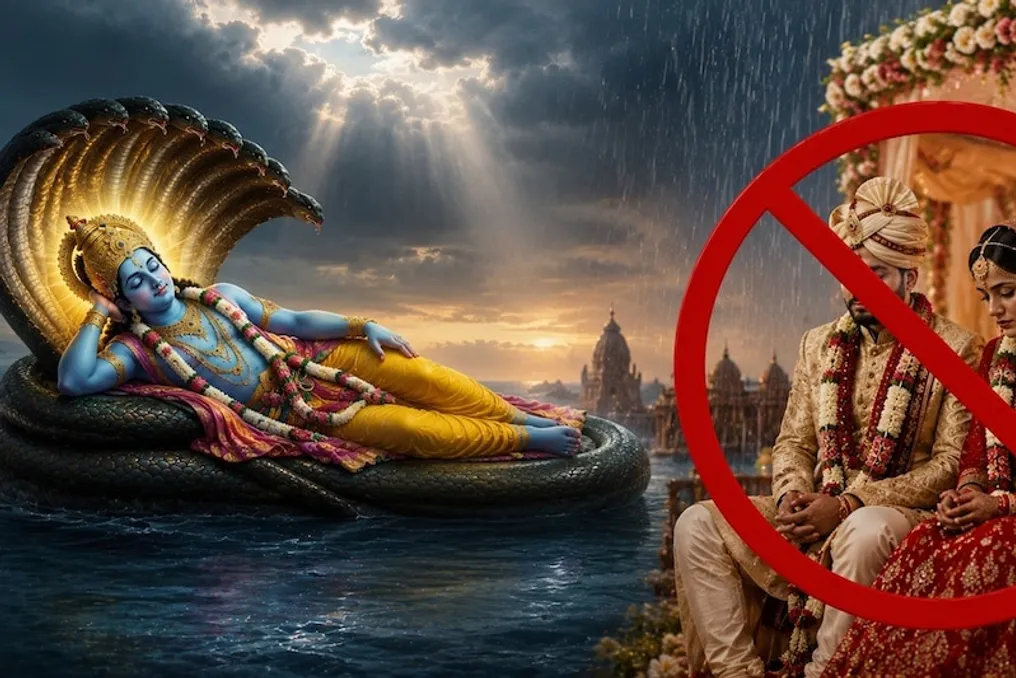
This year, Devashaini Ekadashi will be observed on July 25th, marking the beginning of Chaturmas. According to religious beliefs, during this time, Lord Vishnu enters a state of yoga-nidra for four months. During this period, rituals such as weddings, tonsure (mundan), and Janeyu ceremonies are prohibited.
Reasons for the Absence of Festivals
From a religious perspective, it is considered inauspicious to hold weddings, tonsures, Janeyu ceremonies, and other auspicious rituals while Lord Vishnu is in yoga-nidra. There is a belief that rituals performed during this time do not receive the full blessings of God. Therefore, during these four months, people focus more on spiritual practices, fasting days, worship, and self-reflection.
Scientific Explanation of the Period
The Chaturmas period coincides with the monsoon season. In ancient times, transportation and travel options were limited. Due to rain and flooded roads, movement was difficult, making the organization of large public events challenging. This is why the tradition of postponing events like weddings formed. Additionally, during this period, sadhus and saints remained in one place, engaging in singing hymns, kirtans, and spiritual practices.
When Weddings Will Resume
The auspicious period for weddings ends with Devashaini Ekadashi, which is July 25th. After this, favorable dates for marriage will not be available for the next four months. With Devutni Ekadashi, which falls on November 20th this year, rituals will resume after Lord Vishnu awakens, and favorable moments for weddings will reappear.
Significance of Tirth during Chaturmas
According to religious beliefs, during Chaturmas, one can earn the merits of all the major holy sites on Earth in Brajabhumi. Therefore, if someone wishes to undertake a pilgrimage during this period, it is believed that the journey and visit to places in the Braj region will bring special benefits. This is precisely why Chaturmas is considered an extremely auspicious time for spiritual practices and worship of God.