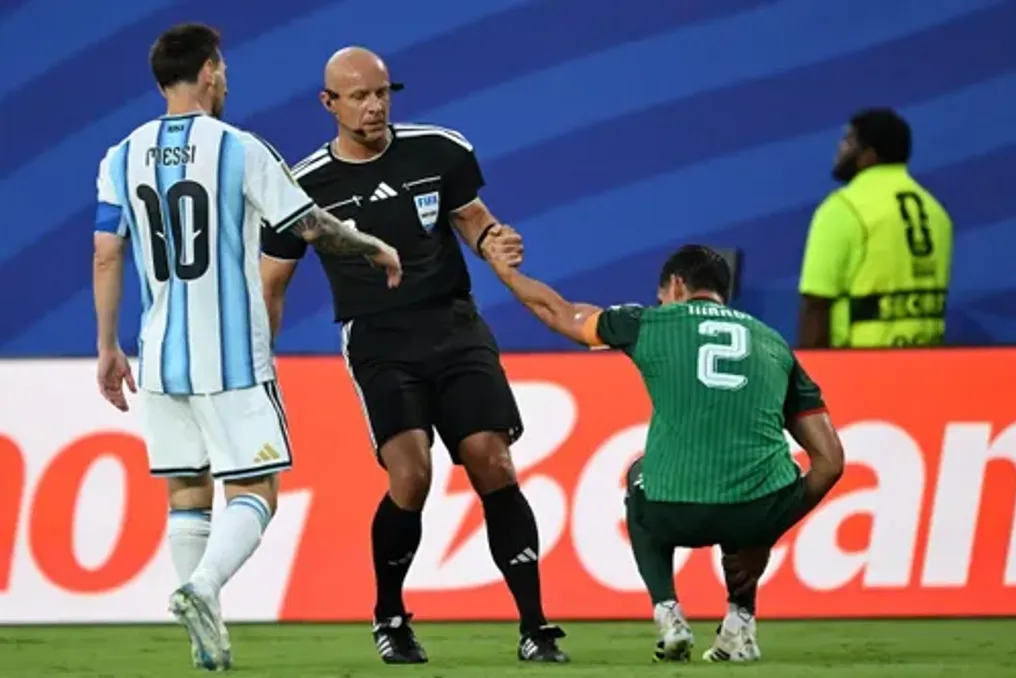
The emergence of rumors that FIFA intends to help Lionel Messi win another World Cup became one of the biggest topics surrounding the tournament. However, it is noted that this debate overlooks a more fundamental problem.
Absence of Match-Fixing Evidence
There is no evidence that FIFA is orchestrating Argentina's victory or trying to secure another major international title for Messi. The Argentine captain's place in football history was cemented long before the start of this tournament, and his achievements do not require external validation.
The Main Problem: Refereeing Standards
The real concern regarding the World Cup is not Messi, but the growing dissatisfaction with refereeing standards and how VAR decisions are interpreted. Football has always been a game where referees' decisions influence the course of matches, and that has not changed. What has changed is the expectation that technology should eliminate all disputes.
Impact of Technology and Controversial Moments
VAR was introduced to correct obvious errors and increase fairness, but this tournament showed that the technology did not eliminate discussions—it often just changed their nature. Although criticism of Argentina intensified due to close scrutiny of every decision involving Messi and the defending champions, concerns are not limited to one team.
Examples of Controversial Decisions in the Tournament
Throughout the tournament, several teams questioned key refereeing decisions. The Ghana versus England match sparked controversy because the 'Black Stars' felt they should have been awarded a penalty after a tackle in the penalty area. The decision not to award a penalty kick became a subject of widespread discussion, especially considering the potential impact of such moments in football playoffs.
A similar disappointment was experienced by Croatia versus Portugal, when a late goal was disallowed after a VAR check. This decision deprived Croatia of what seemed like a dramatic moment of comeback and once again raised questions about the consistency of offside interpretation.
Continuation of Disputes and Disciplinary Issues
Disputes continued in the Argentina versus Egypt match, where Egyptian officials and fans challenged decisions related to the disallowed goal and an incident before Argentina's winning goal. At that moment, one commentator stated: 'I don't think Egypt has any case... Honestly, I am tired of conspiracy theories.'
This was followed by the situation with the disqualification of Folarin Balogun, which added a new level of intense scrutiny after FIFA allowed the American forward to take the field despite an initial red card ban. This decision drew criticism from opponents who felt that disciplinary rules were being applied unevenly.
FIFA's Responsibility
If these incidents are viewed individually, each can be explained by the rules of the game and referee interpretation. However, when numerous controversial moments accumulate within a single tournament, frustration grows, and conspiracy theories begin to find an audience. This is where FIFA's responsibility lies. The governing body cannot simply dismiss criticism as attempts by fans to find excuses.
Football fans understand that referees make mistakes, but they also expect consistency, transparency, and clear explanations when major decisions affect match outcomes. Argentina's performance should not be reduced solely to refereeing decisions; they remain one of the strongest teams in the tournament and possess the necessary quality to fight for the title.
Conclusion on Tournament Integrity
The core issue is not whether Messi can win another World Cup. The problem is that inconsistent refereeing and unclear VAR decisions have created an environment where fans question whether every team is being judged by the same standards. The World Cup should ultimately be decided by players, tactics, and moments of genius. If FIFA wants to maintain the reputation of its biggest tournament, restoring trust in refereeing must become as important as celebrating football itself.