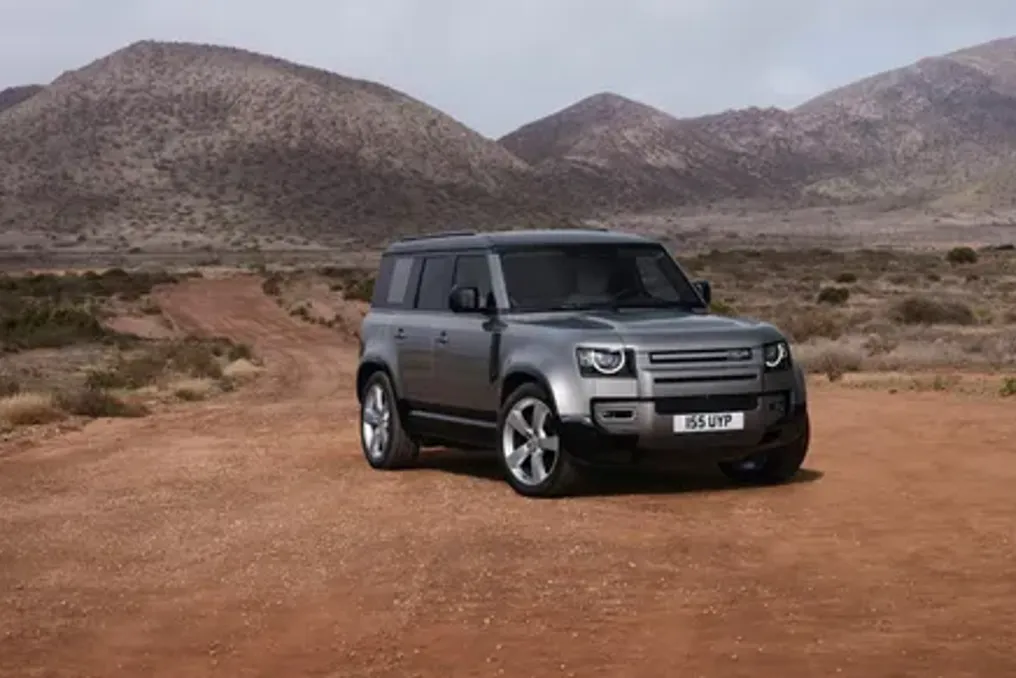
The new Land Rover Defender model features updated front and rear light signatures, along with redesigned bumpers and a grille. This vehicle, which was first presented at the Frankfurt Motor Show in 2019, became the foundation for Jaguar Land Rover.
History and Model Testing
The author recalls being present at the Frankfurt Motor Show in 2019 with global automotive journalists. Although many expressed regret over the radical change compared to the previous beloved model, the Defender is now a central element of Jaguar Land Rover. In early 2020, the author had the opportunity to test pre-production samples in Namibia before the world changed due to Covid-19. Technicians and engineers required data from these test drives to improve the vehicle at the headquarters in Solihull.
Exterior and Interior
Even after seven years, the Defender looks modern and almost timeless, retaining a recognizable silhouette that made it one of the most noticeable SUVs. Despite recent modifications, the differences are only noticeable to connoisseurs. The car retains its vertical rear door and short overhangs. It is now equipped with updated headlights and bumpers, as well as a grille featuring the signature Gloss Black Defender caps on 22-inch Diamond Turned Dark Grey alloy wheels.
The cabin maintains a clean horizontal dashboard design with visible rivets and convenient storage compartments. The Defender successfully combines durability with a high level of luxury and finish, referencing its heritage. The high driving position and large glass area provide excellent visibility both in the city and off-road.
The seats, upholstered in leather with heating and cooling, ensure high comfort for long journeys. A central feature is the 13.1-inch touchscreen running the latest Land Rover Pivi Pro infotainment system. The author considers this system one of the best due to its clear graphics, fast response, and ease of use. Wireless Android Auto and Apple CarPlay connections are supported. Unlike its Range Rover siblings, physical buttons and controls remain for managing driving modes, climate, seats, and volume. The digital instrument cluster displays key information, and the Meridian system provides high-quality sound.
Powertrain and Dynamics
The Defender lineup offers a wide range of engines: from turbo-diesels to petrol, hybrid, and powerful V8 options. The tested D350 version is fitted with a magnificent 3.0-liter six-cylinder turbocharged diesel engine, producing 257 kW of power and 700 Nm of torque, which is sent to all four wheels via an eight-speed automatic transmission.
Despite weighing 2361 kg, the vehicle demonstrates surprisingly balanced and light handling. Thanks to the well-balanced monocoque chassis, adaptive air suspension, and precisely tuned steering system, its road behavior is nearly flawless. The cabin creates a feeling of sophistication. The gearbox is perfectly tuned, providing smooth and linear acceleration. Thanks to the isolated cabin, movement in slow traffic is quiet and smooth.
Although most Defender owners do not drive far off-tarmac, it remains a classic SUV. In the D350 version, the All Terrain Progress Control function is replaced by adaptive off-road cruise control. When switched to low mode, the air suspension increases ground clearance to 290 mm, and the wading depth reaches 900 mm. The vehicle has a 38-degree approach angle and a 40-degree departure angle. The Terrain Response system manages lower gears and differential locks depending on the selected mode. The vehicle's electronics can withstand submersion for up to an hour. The author concludes that the standard factory Defender is one of the most capable 4x4s on the market.
Conclusion
The author believes that the Defender D350 comes closest to the ideal of off-road driving. Improved dynamics, a premium cabin, and technology surpass competitors. Although there are German rivals, the Defender performs best in challenging conditions such as mud and rocks.