Japanese automaker Nissan has set ambitious goals for developing its presence in the passenger vehicle (PV) market in India, aiming to transform the country into a key export hub for its global operations. The company targets a fourfold increase in domestic sales by the fiscal year 2027-2028 (FY28).
Sales and Export Targets
By FY28, Nissan plans to sell 100,000 vehicles in the Indian domestic market and export another 100,000 units from its Chennai plant. This plan represents significant growth compared to FY26, when the company realized 22,505 PVs in India, securing only a 0.48 percent market share, while 82,408 vehicles were sent to foreign markets.
Growth Strategy and New Models
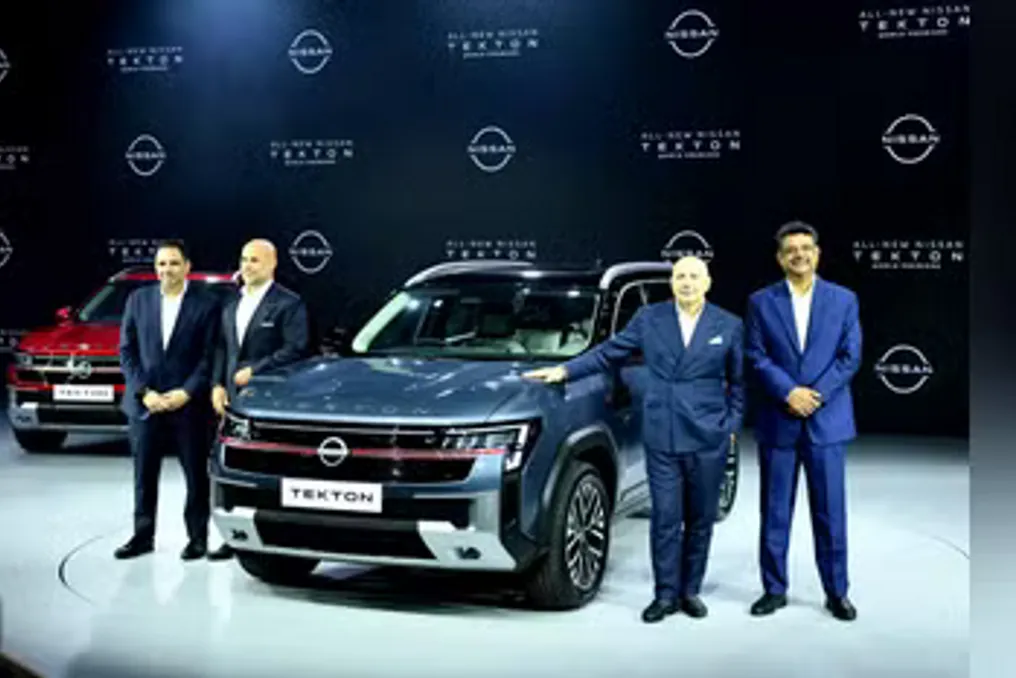
The new Tekton SUV model, starting at 10.49 lakh rupees, is expected to be the driving force behind achieving these goals. The vehicle will be manufactured in India and destined for the African, South African, and Gulf Cooperation Council (GCC) markets, thereby strengthening India's status as a production base in the Nissan network.
Saurabh Vatsa, Managing Director (MD) of Nissan Motor India, stated that the company's goal is 100,000 domestic sales and 100,000 exported units. He added that internal expectations could be even higher if the products meet the plans.
Investment and Network Development
Despite geopolitical uncertainty in the Middle East, the company's management confirmed its commitment to the export strategy. The top executive noted that although the global market is full of surprises, investments are planned for a period of four to five years, and India, Africa, and the GCC remain growing markets where the company is confident in long-term opportunities.
In addition to expanding its product range, Nissan is actively investing in its retail network. It plans to increase the number of dealerships from 135 last year to 200 by mid-August and to 250 by the end of 2026. The expansion will cover Tier I–IV cities, with new points being opened based on market potential and ensuring dealer profitability.
Digitalization and Electrification
The automaker is also enhancing its digital capabilities by implementing an AI-based vehicle configurator to improve the customer buying experience. Regarding electrification, Nissan announced that it will decide on launching an electric vehicle (EV) in the Indian market by 2028, in line with changing Corporate Average Fuel Economy (CAFE) regulations.
Although the company has access to hybrid, e-Power, and battery electric technologies globally, executives emphasized that any product strategy will be determined by consumer demand, infrastructure readiness, and regulatory clarity. Furthermore, PHEVs are not considered an immediate priority due to the high cost of the technology for the Indian market. Nissan will continue to focus on Internal Combustion Engine (ICE) vehicles, which account for over 90 percent of PV sales, while monitoring EV adoption rates. The company also specified that all its gasoline models sold in India comply with E20 fuel standards, and factory CNG kits constitute about 10 percent of sales among the relevant models.