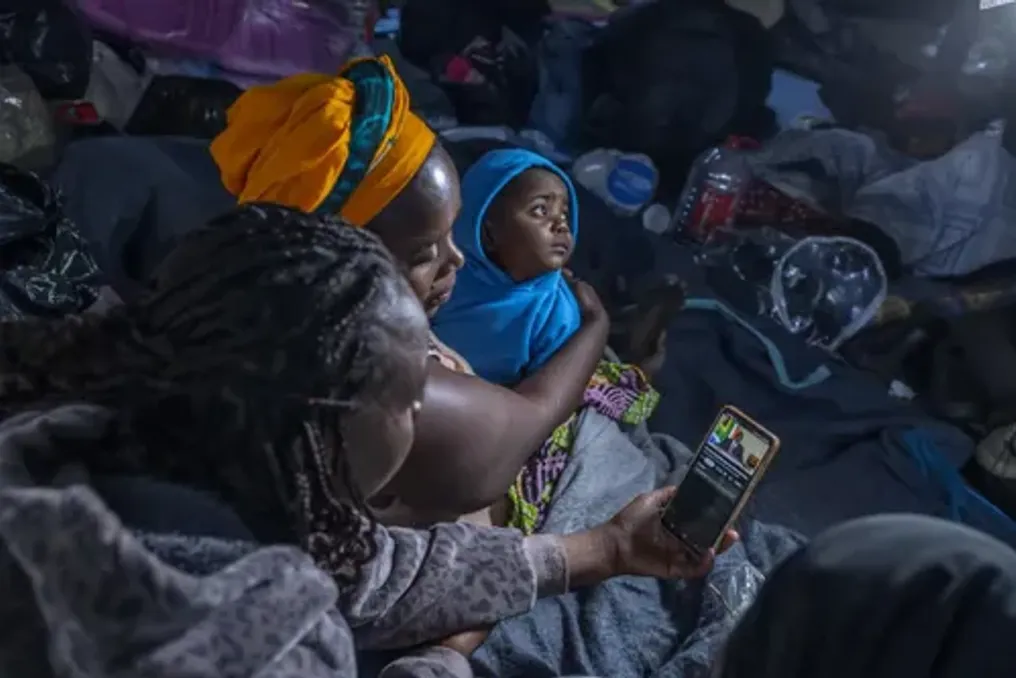
In Durban on June 7, 2026, foreign nationals gathered near the Department of Internal Affairs offices, using mobile phones to watch a statement by South African President Cyril Ramaphosa regarding the immigration crisis. The article notes that incidents against migrants exhibit signs of typical riots, including mob violence, vigilantism, loss of life, vandalism, displacement, mobilization, and the use of inflammatory rhetoric.
Similar stories
Popular
International Resonance and History
Any African country strives to avoid being listed among countries of interest to the African Commission on Human and Peoples' Rights (ACHPR). When this issue is raised at African Union meetings, some ambassadors may use the break time because they do not fear consequences. However, the situation is different for a country whose name regularly appears in ACHPR reports, creating a tense period for it. There is a fear that South Africa could be included in an ACHPR report as one of the problematic parties within the system of African Union states. Furthermore, its name will be recorded in world history as a country where mass deportations and riots comparable to events in 15th-century Spain, 17th-century France, or the pogroms of the Russian Empire occurred.
Previous Waves and Recent Events
Although South Africa has previously faced anti-immigrant waves, the 2026 incident is unique. Prior to this, there were at least three events: violence in Alexandria, Johannesburg, in 2008, which resulted in 60 deaths; a surge in 2015 affecting Durban and Johannesburg, leading to the creation of a Special Working Group on Migration and Community Integration; and a third wave between 2019 and 2021, marked by attacks and shop robberies targeting foreigners, and the rise of more organized, politically sophisticated campaigns against migrants.
The recent wave was triggered by marches in Johannesburg, Pretoria, and Durban, called by an unofficial deadline of June 30 set by certain civil groups for the departure of illegal migrants from the country. Unlike previous waves, which were mostly spontaneous, the latest anti-immigrant actions have become more organized, led by political groups and certain non-state formations.
Mass Displacement of Citizens
More than eight African countries—Nigeria, Ghana, Kenya, Mozambique, Malawi, Zimbabwe, Uganda, and Ethiopia—actively repatriated their citizens from South Africa using charter flights and buses before the June 30 deadline. This was part of a mass movement involving over 25,000 foreign nationals.
Discussions on Success and Victims' Fate
A discussion is already underway about whether June 30 was successful. Organizers consider the success to be the thousands of people who responded to their call and the geographical spread of their marches across the country. Some see the absence of expected violence as a positive sign, while others are disappointed that the day could not be used to destabilize the country. However, attention must be paid to the condition of the victims. While the marchers have faces and leaders presented in the media as celebrities, their victims are often perceived as faceless masses. They are in collection points for repatriation, with luggage piled on top of each other, and mothers carrying infants on their backs.
Nevertheless, these people have names given to them by their loved ones. They possess feelings, are capable of experiencing pain and tears, and their skin is not stone, but soft and vulnerable, like ours. The suffering of the victims began several days before June 30: first under circumstances that forced them to leave their homes, then in physical and psychological torment in the state of homelessness on the streets of South Africa, and finally in the trials they will face on the way home.
Victims' Testimonies
In a report, France24 interviewed Congolese refugee Marcelien Mabako in KwaZulu-Natal, who had legally resided in South Africa for over 22 years. Mabako recounted how protesters invaded their homes and threatened residents, forcing many to abandon their belongings and flee. He reported that people left their dwellings, and he cannot return home or to work. Mabako, a proud hairdresser, noted that protesters looted homes and workplaces, committing thefts and beatings. He added that on the day of the visit, a foreign national was beaten and injured at a local market.
BBC covered the experience of a Malawian woman: 'They came with machetes—the deadline for migrant departure from South Africa is approaching.' Esnat Joseph, 36, comforting crying triplets, stated: 'I am very scared and traumatized.' She left her home in an informal settlement in Durban, KwaZulu-Natal, and found shelter in an open field where about 7,000 foreigners, mostly Malawians, had gathered with their belongings about two weeks earlier.
She recalled: 'People came to my house and told me: 'You must leave. We don't want you here anymore. So go back to your country.' There were ten of them, armed.' She described South African men swinging machetes and whips, striking her husband's head and neck while holding him, as if intending to kill him. Fortunately, he survived by God's grace but is now in the hospital.
A story from The Guardian about Jackson Makungwa details his struggle as a Malawian in South Africa. After ten years there, he had only two small suitcases because he could not extend his work permit for two years. He expressed frustration, stating: 'I don't want to be in the country illegally, but the system doesn't allow me to be here legally.' Initially, he resisted leaving despite his mother's pleas, but after an attack on a friend, he decided to leave, fearing violence. Makungwa showed a photo of his two-month-old son, born to a South African mother, whom he could not take with him due to lack of travel documents.
Similar victim testimonies can be found in an Al Jazeera piece 'Migrants in South Africa Fear Violence Before June 30,' featuring the voice of Esnat Joseph, a Malawian immigrant in Durban: 'I am very scared and traumatized,' describing how attackers 'came to my house and told me: 'You must leave'.' These incidents against migrants show signs of a riot: mob violence, vigilantism, loss of life, vandalism, displacement, mobilization, and inflammatory rhetoric. This riot continues as of the writing of this article in July. Many internally displaced victims do not know where to go; some arrive in hundreds at embassies, which have turned into temporary refugee centers.
Consequences and Historical Parallels
The author notes that the marchers returned to the comfort of their homes, unaware of the suffering they caused others. In the future, when the situation stabilizes, damaged bilateral relations will need to be restored through diplomatic efforts by the government. The victims will be in an even worse position: in addition to the life left behind in South Africa, lost assets, fractures, and scars from fleeing to their homeland, they will have to start a new battle at home, rebuilding social ties that have been inactive for a long time. The most difficult and painful stage will be psychological adaptation to the new reality.
The events that took place in the country are reminiscent of three key historical moments. The first is March 31, 1492, in Spain, when King Ferdinand and Queen Isabella issued the infamous Bull Decree, giving Jews until July 31, 1492, the choice: accept Catholicism under pressure or face expulsion. This tragedy led to mass dispersion and diaspora, known today as Sephardim. The second moment relates to October 1685 in France, when Louis XIV issued the Edict of Fontainebleau, banning Protestantism, ordering the destruction of Huguenot churches, closing Protestant schools, and giving pastors only two weeks to convert or leave. Many victims of this persecution in 1688 arrived in South Africa as French Huguenots, settling in present-day Franschhoek and introducing viticulture.
The third example relates to colonial South Africa, specifically the consequences of the notorious Natives Land Act of 1913. This law prohibited the Black population of South Africa from buying, renting, or occupying land outside designated areas, leading to the sudden eviction of thousands of families from white farms. Sol Plaatje documented the human losses from these evictions in his 1916 book 'Native Life in South Africa,' where he stated: 'Waking up on the morning of Friday, June 20, 1913, the indigenous inhabitant of South Africa found himself not a slave, but an outcast on his own land.' Plaatje described how victims wandered on public roads with their belongings, similar to the Congolese and Malawians mentioned earlier.
It is unclear whether the Zulu word 'Abahambe' ('they must go'), which became the political slogan of this anti-immigrant campaign, rhymes with the Spanish word 'Alhambra.' Nevertheless, these human sufferings must be documented, as Plaatje did in 1913, to help our nation when the inevitable moment of self-reflection arrives.
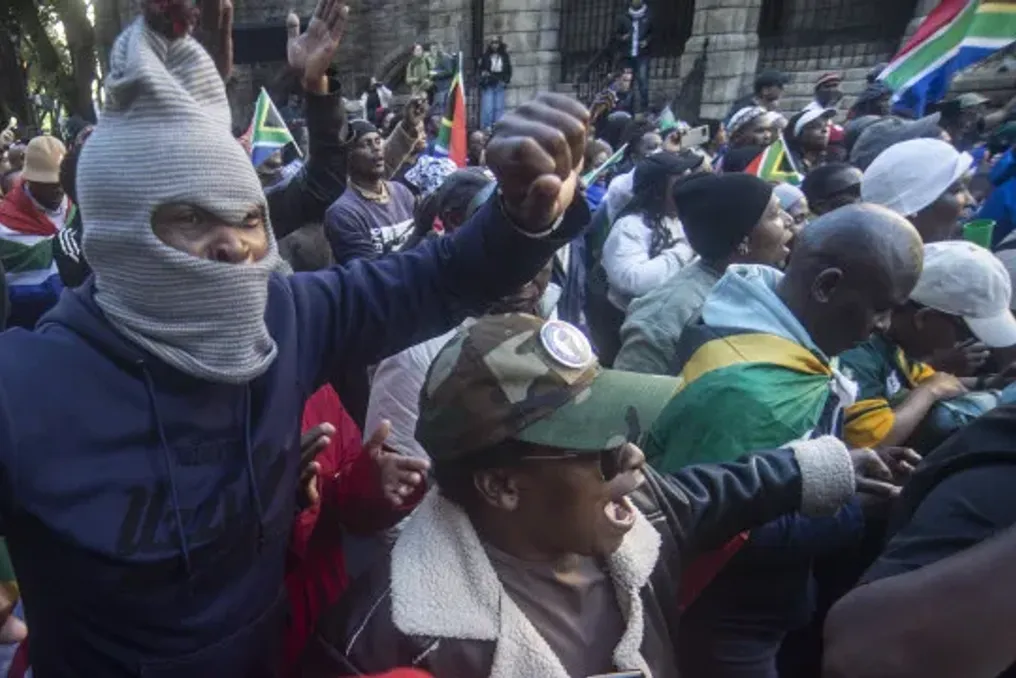
Thousands of residents took to the streets of South Africa last Tuesday as part of marches organized by anti-immigrant groups. These groups announced a deadline for undocumented citizens from other African countries. Following this event, attacks were recorded, and thousands of migrants were repatriated.
Reasons for Tensions
The main reason for these events is the accusation by anti-immigrant organizations that immigrants are responsible for many problems affecting a large part of the population. These problems include mass unemployment exceeding 32%, rising crime, drug trafficking, and overburdened healthcare systems.
Course of Protests and Government Reaction
The protests took place in several cities where a large police presence was present. Furthermore, commercial businesses remained closed on Tuesday, and public transport operated on a limited basis. At the demonstration in Durban, one of South Africa's largest cities, placards were displayed with inscriptions such as: 'Stop hiding illegal foreigners. Stop hiring and housing them.'
These unrests forced the South African authorities to announce increased measures to combat illegal immigration and warned the public against vigilantism.
Attacks and Return of Migrants
According to the Mozambican government, in the latest wave of xenophobic attacks in South Africa, at least 283 Mozambicans were attacked, their homes were burned, and property was looted. The Mozambican government is making efforts to assist and repatriate these citizens.
On Friday, the Zimbabwean government reported that over 56,000 Zimbabwean citizens residing in neighboring South Africa returned home since late May due to a wave of xenophobic violence and anti-immigrant protests in South Africa. On the same day, about 11,000 people, mainly from Malawi and Zimbabwe, were at the border town of Musina to process departure documents.
On Saturday, the Kenyan government reported the repatriation of another 60 Kenyans from South Africa out of fear of aggression, adding to the 151 people who returned on Thursday.
International Response and History of Tensions
Currently, a number of African governments, including those of Nigeria, Malawi, Ghana, Zimbabwe, and Mozambique, have organized voluntary repatriation operations, using planes and buses to transport their citizens.
Xenophobic tension is a recurring problem in South Africa. Many migrant communities have been repatriated by their own countries, such as Mozambique or Nigeria, and South Africa has faced international criticism for xenophobia. The most severe surge of xenophobia ever recorded in the country occurred in 2008, when more than 60 people died. More serious disturbances recently took place at the end of 2019, when at least 18 foreigners died.