Brazilian cities are beginning to implement radars equipped with Artificial Intelligence (AI) to monitor specific infractions, such as seatbelt usage and mobile phone use while driving, as speed limits have already been adjusted and no longer allow reductions without causing urban contradictions.
Implementation of Smart Radars in São Paulo
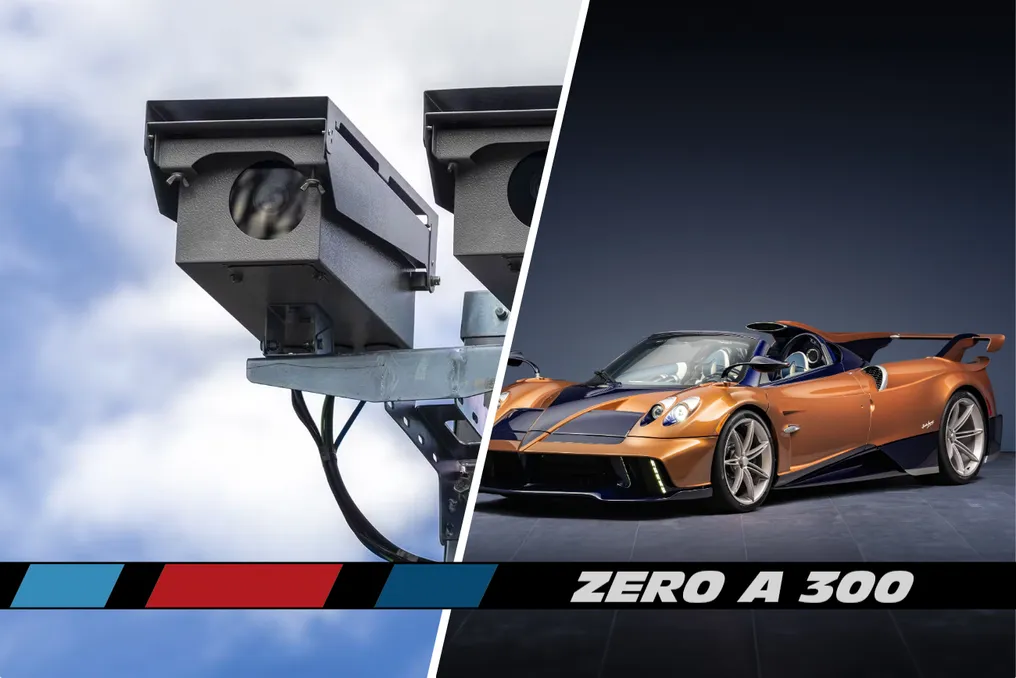
In São Paulo, this type of monitoring is already active on the South and East sections of the Mário Covas Ring Road. After a testing and calibration period lasting almost a month, the new high-definition cameras, equipped with AI and infrared sensors, ceased to be merely educational. Since the beginning of July, the images captured by the system have begun to support real fines issued by the Highway Military Police (PMRv).
During the testing phase, which took place between May 12 and June 9, the SPMAR concessionaire's algorithm registered the seriousness of the situation, totaling 4,879 infractions, representing a notable average of 168.2 daily violations. Of these, almost half (49%) was motivated by drivers failing to use seatbelts, and 30% referred to passengers without belts. Mobile phone use while driving accounted for 21% of the infractions, indicating these are the focus areas for AI radar surveillance.
Unlike conventional speed radars, which use inductive loops or lasers at fixed points, these cameras monitor traffic continuously, 24 hours a day. The algorithm scans the interior of vehicles and, upon identifying the absence of a belt or the driver holding a phone, freezes the image and triggers an alert. It is important to note that the application of the fine is not automatic; the material is sent to a shared center, where highway police officers conduct a human verification of each record, confirming whether the classification follows the criteria of the Brazilian Traffic Code (CTB) before issuing the notification.
Expansion of Monitoring Technology
The technology is not limited to the Ring Road. Since January 2026, the Anchieta-Imigrantes System has been operating with this same analytical monitoring model, supervising speed, seatbelts, and mobile phones on the descent towards the Santista Lowlands. The plan established by the concessionaires and the state government aims to progressively expand AI surveillance to the main São Paulo highways, prioritizing sections with the highest traffic volume and critical history of accidents caused by distraction.
Automotive Industry News
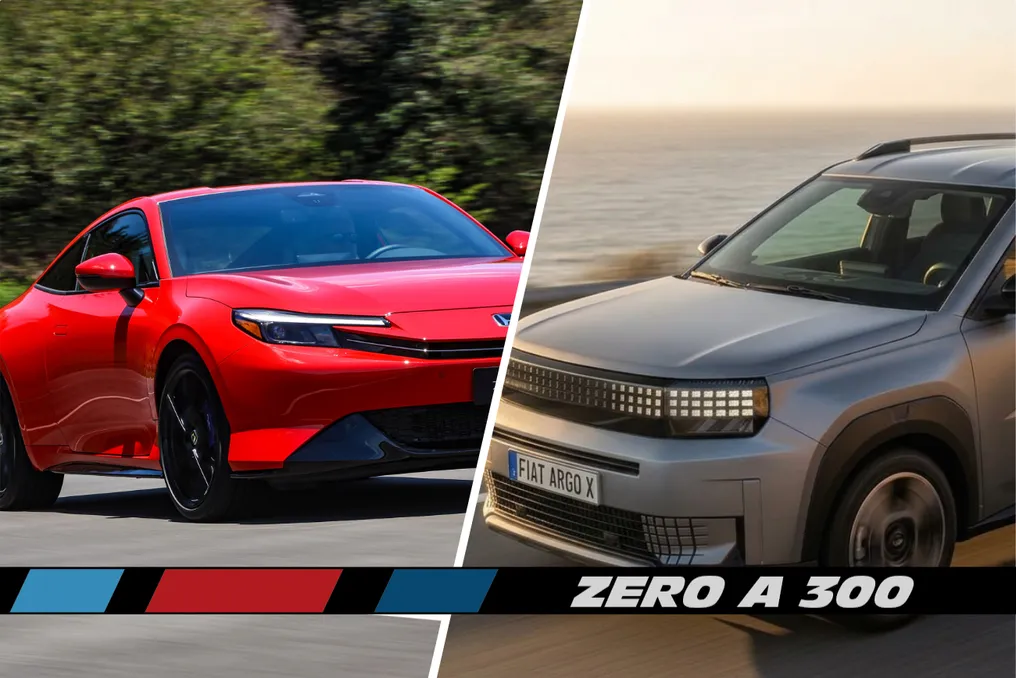
In the automotive sector, the Dacia Striker emerges as a precursor to Renault's future coupe SUV in Brazil. Given the trend of all vehicles becoming SUVs in the Brazilian market, it is expected that the next step will be the expansion of the 'coupe SUV' niche, a segment proven to be profitable for brands like Volkswagen and Fiat. Although Renault's initial project for a mid-sized SUV above the Kardian had a coupe format, it reached the market as the Boreal, with a traditional SUV silhouette. However, plans for a model with a sloping roof were resumed with the presentation of the Dacia Striker in Europe.
Built on the RGMP (Renault Group Modular Platform), which also serves as the base for the Boreal and the Niagara pickup, the Striker is the Romanian version for the C-SUV coupe segment. It has a length of 4.62 meters, making it slightly larger than the European Bigster and the national Boreal (4.57 m). This dimensional increase is concentrated in the rear section, a design necessity to maintain the visual proportion after the roof slope and ensure a trunk capacity of 600 liters.
Internally, the Striker's architecture shares the Boreal's structure, featuring a raised center console to house the electronic parking brake, driving mode selectors, and the gear lever. When the model is localized by the French brand around 2027 in Brazil, its exterior look will shift from Dacia's rectilinear aesthetic to Renault's more fluid lines, aligning with the stylistic identity of the Niagara. The mechanical engineering of the European Striker also anticipates what Renault plans for Brazil. In Europe, the top-tier all-wheel-drive version uses an e-AWD system without mechanical connection between the axles: the 1.2-liter 140 hp turbo engine drives the front wheels, while an independent 31 hp electric motor assists the rear axle on demand in low-grip conditions or maximum acceleration. For the Brazilian market, this electronic architecture will be adapted to the 1.3 TCe Flex engine, combining light 48-volt electrification in the front with the auxiliary electric motor on the rear axle to enable 4x4 traction, with a planned launch in the country in 2027.
Discontinuation of the Nissan Sentra in Brazil
The Nissan Sentra has shown very low sales recently; in the first half of 2026, only 341 units were registered in Brazil. For context, the Toyota Corolla, the absolute leader among mid-size sedans, recorded 13,021 sales, while the hybrid BYD King came in second with 8,196 units. Given this performance, it is evident that the low commercial performance influenced the manufacturer's decision to end production of the model three years after the current generation was launched.
Although the Sentra is considered an attractive, well-equipped, and competent car, it used the same engine as the previous generation: a naturally aspirated 2.0L gasoline engine with direct injection, producing 151 hp and 20 kgfm of torque, coupled with an eight-speed simulated CVT gearbox. Despite this mechanical setup seeming dated in 2026, it could be a selling point for those who prefer a more traditional style. However, the successor is already under development and represents a complete break from the past. According to Autoesporte, it is the Nissan S7, an electric vehicle developed in collaboration with the Chinese company Dongfeng, which uses an electric motor on the front axle, powered by a 73 kWh battery. With 272 hp and 30.5 kgfm of torque, it can reach 100 km/h in 7 seconds, with a maximum speed limited to 160 km/h.
Launch of the Pagani Huayra 70 Derecho
To celebrate the start of the Goodwood Festival of Speed, Pagani Automobili presented the Huayra 70 Derecho. This is the second example of a 'few-off' series (a type of limited edition with more than one unit) created by the Grandi Complicazioni division to mark the 70th anniversary of the brand's founder. Unlike the tradition of naming its cars after specific winds, the choice 'Derecho' refers directly to a severe storm system of fast and linear displacement, which Pagani compares to the constant power delivery offered by the supercar.
The 70 Derecho stands out for its high level of technical finish, which is a trademark of the company located in San Cesario sul Panaro. The body features a two-tone scheme in Pearl Orange and Inky Blue. On the underside and the central monocoque, the blue tone is completely translucent, exposing the 'fishbone' pattern of the carbon fiber weave that constitutes the structural panels. Beneath the paint, the architecture combines a central monocoque made of Carbo-Titanium HP62 G2 and Carbo-Triax HP62, with front and rear chromoly steel subframes, externally complemented by block-machined aluminum parts anodized in bright titanium, a finish replicated on the new wheels.
Under the hood is the iconic 60° Pagani V12, with 5,980 cc and two turbochargers, developed by Mercedes-AMG. In this configuration, it generates 864 hp at 6,000 rpm and 112.2 kgfm of torque, available between 2,800 and 5,900 rpm. All this power is directed exclusively to the rear wheels via a transmission with an electromechanical locking differential and managed by a seven-speed transverse manual gearbox developed by Xtrac, allowing the car to reach its maximum speed of 350 km/h (electronically limited, as is usual).
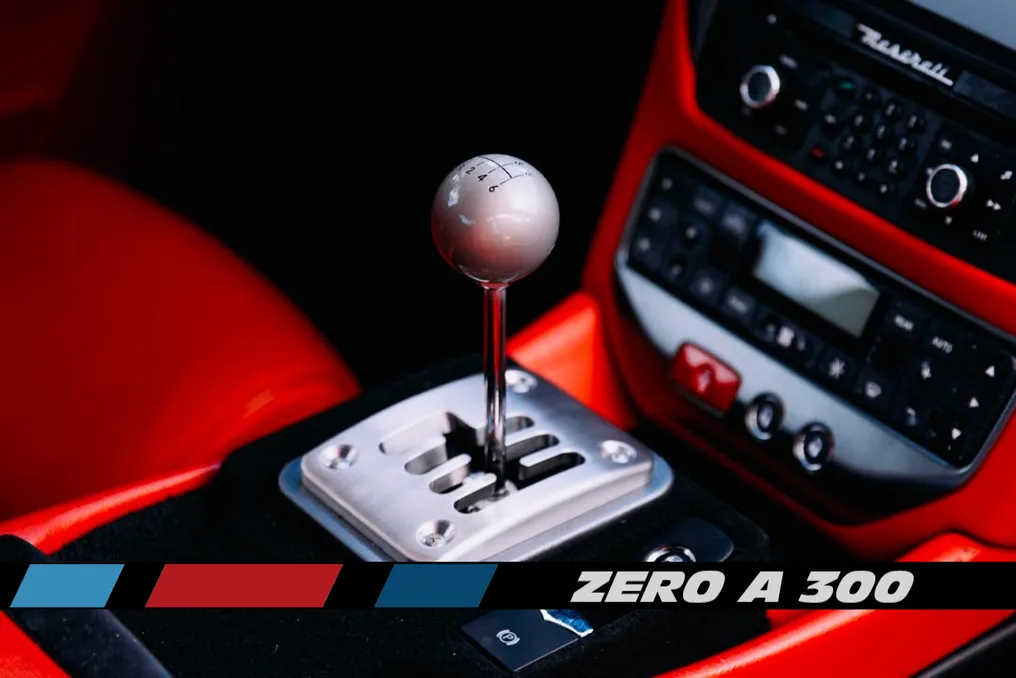
Inside, the artisanal work combines Ceramic White leather and Tricolore Blue with custom stitching. The Pearl Orange of the body appears in strategic points of interaction with the driver, such as the '12-hour' marking on the steering wheel and the gear lever. The fact that it has a lever with a grille on the center console, connected to a genuine manual transmission—and not an automatic gearbox with simulated gears—already gives the Huayra 70 Derecho a special character. The vehicle also features independent suspension using superimposed triangular arms, equipped with upper wishbones, helical springs, and adjustable and interconnected electronic dampers. Contact with the asphalt is ensured by Pirelli P Zero Trofeo R tires (265/30 R20 in the front and 355/25 R21 in the rear), while braking is handled by a Brembo CCM system with four carbon-ceramic ventilated discs, measuring 398 mm in the front and 380 mm in the rear.
The elaborate style and watchmaking precision applied to a supercar may not please everyone, but they convey an unmistakable personality. Horacio Pagani reinforced the Renaissance philosophy guiding the management of his workshop. He stated: 'Our daily commitment is to dedicate maximum attention to every detail, seeking to approach that essential harmony between form and function, intellect and craftsmanship, exactly as Leonardo da Vinci taught us. Being able to present the world premiere of the Pagani Huayra 70 Derecho at Goodwood is a privilege for us: an opportunity to share the fruits of this work with those who share our deep love for the automobile.'
Zenvo Aurora at Goodwood
Continuing the theme of V12 engines and Goodwood, the Zenvo Aurora also participated in the event. This is the latest hypercar from the Danish manufacturer, which was unveiled almost a year ago with the ambitious goal of presenting the most powerful 12-cylinder engine ever installed in a road car. Now, Goodwood served as the stage for the debut of its production version.
} , {