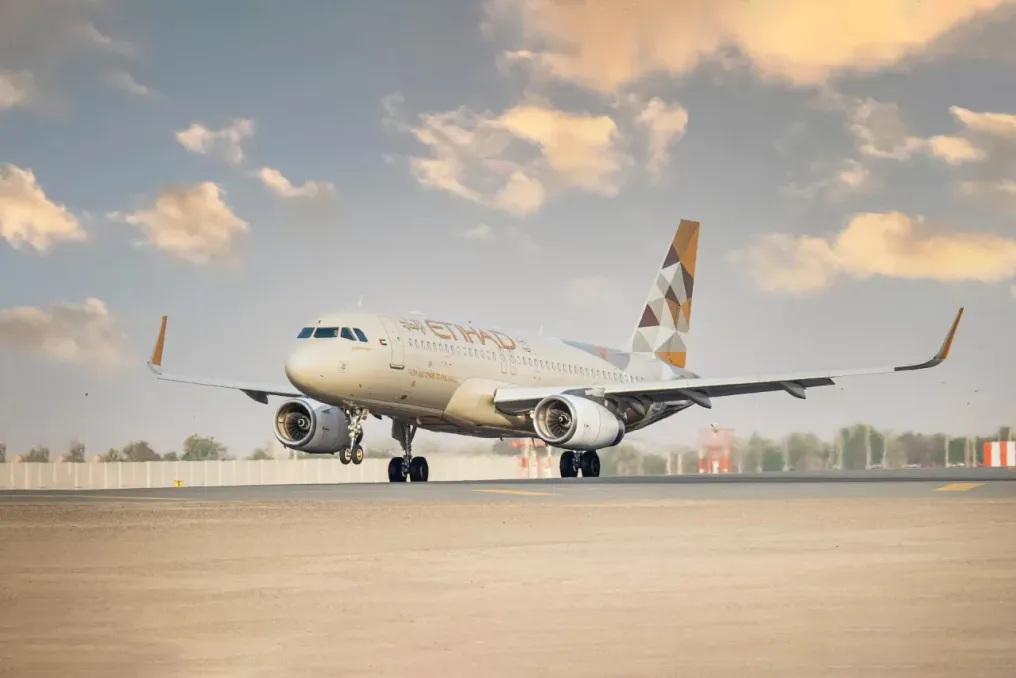
The national airline of the United Arab Emirates, Etihad Airways, plans to commence regular daily flights on the route Abu Dhabi – Tashkent – Abu Dhabi starting August 10.
The national airline of the United Arab Emirates, Etihad Airways, plans to commence regular daily flights on the route Abu Dhabi – Tashkent – Abu Dhabi starting August 10.
These flights will be operated using Airbus A320 aircraft, ensuring constant daily air connectivity between the capitals of Uzbekistan and the UAE. Etihad Airways was founded in 2003 and serves as the national carrier of the United Arab Emirates, with its headquarters located at Abu Dhabi International Airport.
The airline's entry into the Uzbek market is viewed as another progressive step in expanding the country's international transport accessibility. Etihad Airways is among the largest carriers in the Middle East, serving an extensive network of routes covering the Persian Gulf, Asia, Europe, Africa, Australia, and North America.
The launch of this new route will provide passengers from Uzbekistan with the opportunity to utilize convenient connecting flights through the international aviation hub in Abu Dhabi, granting them access to numerous destinations worldwide.
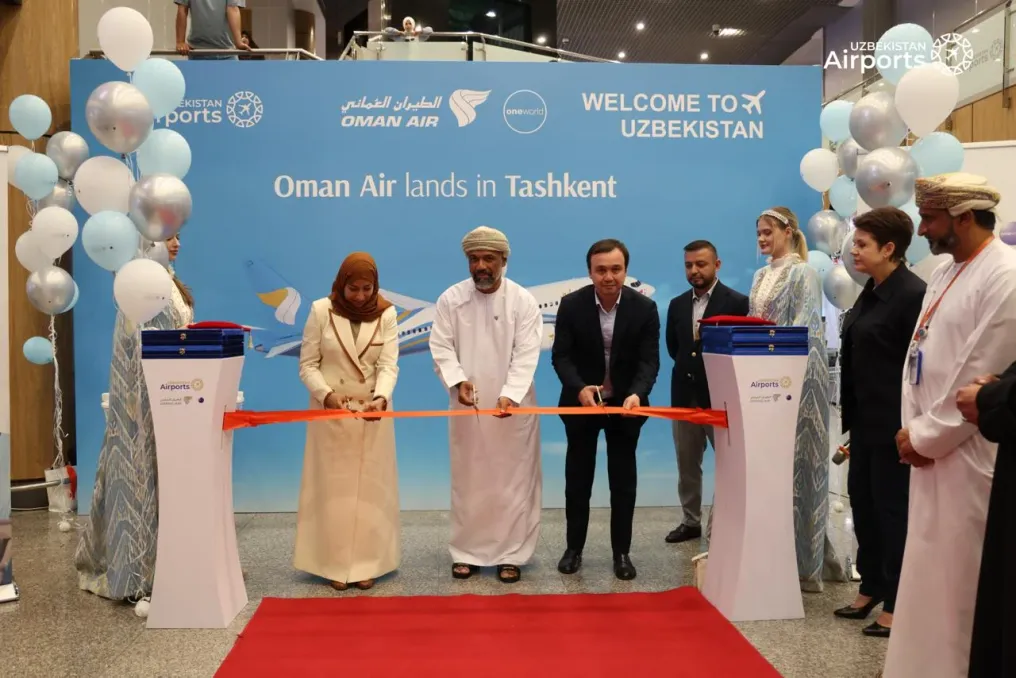
Tashkent International Airport has received the first regular flight operated by the national airline of the Sultanate of Oman—Oman Air. This flight established a direct air connection between Muscat and the capital of Uzbekistan.
The expansion of the route network opens up additional opportunities for the development of tourism, business contacts, and transit traffic between Central Asia, the Gulf countries, and other regions of the world. The first flight on the Muscat–Tashkent route arrived at 04:01 Tashkent time. In accordance with established aviation tradition, the aircraft was greeted with an arch of water, and the crew was presented with flowers.
A solemn ceremony marking the opening of the new international route took place at the airport terminal. Representatives from Uzbekistan Airports, Tashkent International Airport, Oman Air, the Embassy of the Sultanate of Oman in Uzbekistan, and the first passengers attended the event. According to the schedule, the airline will operate three direct flights per week—on Tuesdays, Fridays, and Saturdays—using Boeing 737 aircraft.
A representative of Oman Air noted that the launch of these flights reflects the high potential of the Uzbek aviation market and the growing importance of Tashkent as one of the key aviation hubs in Central Asia. The airline's representative emphasized: 'We are pleased to start direct flights to Tashkent and become part of Uzbekistan's rapidly developing aviation market. The new route will contribute to the development of tourism and business ties between Oman and Uzbekistan, and it will provide passengers with convenient access to Oman Air's international route network via Muscat.'
Timur Khalilov, Head of the Commercial Department of Uzbekistan Airports, stated that expanding the international route network improves the country's transport accessibility and strengthens its position as a regional aviation hub. He added: 'Every new international route is an investment in the development of the country's transport accessibility. Direct flights between Tashkent and Muscat open up new opportunities for the exchange of tourism and business, strengthen economic ties between Uzbekistan and the Sultanate of Oman, and integrate our country into the global route network thanks to Oman Air's extensive transit capabilities.'
The opening of direct air communication between Tashkent and Muscat is part of a broader trend of actively expanding Uzbekistan's international route network. In recent years, the republic has consistently increased the number of direct flights to countries in Asia, the Middle East, and Europe, which has contributed to the growth of tourist flows, the development of foreign trade, and the attraction of foreign investment. The launch of Oman Air flights also expands transit options for passengers. Thanks to the airline's well-developed network through Muscat International Airport, travelers from Uzbekistan gain convenient access to dozens of destinations in the Gulf countries, South and Southeast Asia, Africa, and Europe.
Experts note that the increase in the number of international carriers in the Uzbek market stimulates competition, improves passenger service quality, and enhances Tashkent's role as one of the most important aviation centers in Central Asia. Oman Air operates as the national airline of the Sultanate of Oman, is based at Muscat International Airport, and is a member of the global alliance oneworld, providing passengers with wide opportunities for international flights and travel around the world.