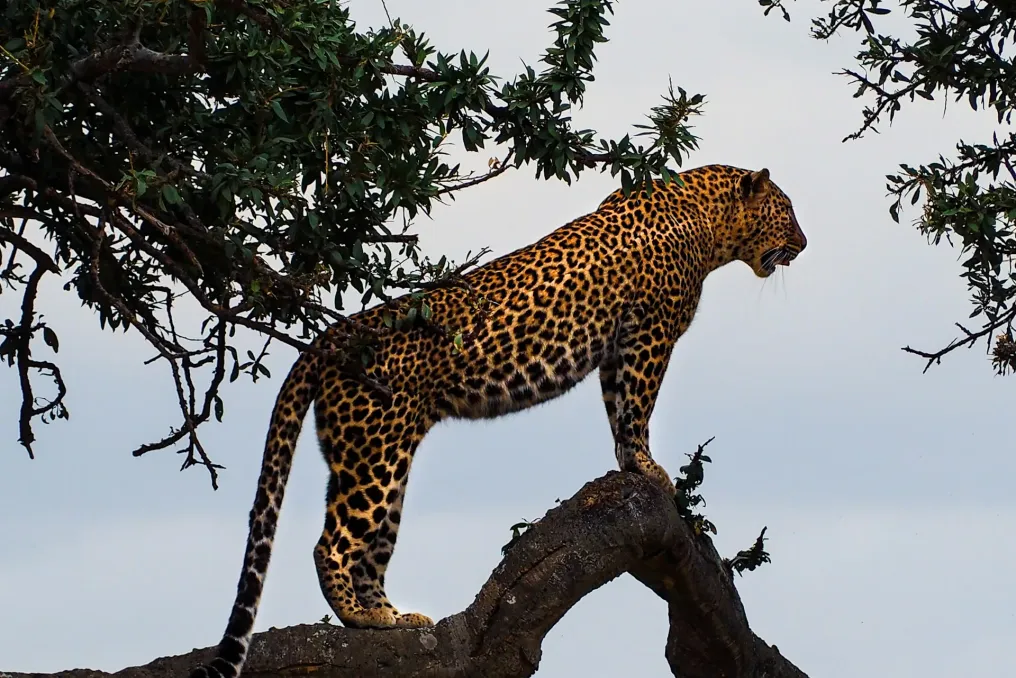
According to a new study, endangered African leopards may have a brighter future than previously thought, provided that conservation efforts are focused on protecting habitats, restoring prey populations, and reducing human-wildlife conflict.
Researchers from the University of Nottingham Trent estimated that there are between 45,000 and 143,000 leopards remaining in the wild in sub-Saharan Africa. Although this figure is lower than previous estimates, scientists believe that the continent has the potential to support up to 176,000 leopards within its historical range if appropriate conservation measures are implemented.
The results, published in the Journal of Applied Ecology, provided a roadmap for identifying areas where conservation actions would have the greatest impact. The study showed that leopard populations are significantly smaller in landscapes heavily impacted by human activity, especially where settlement expansion, agriculture, and livestock farming have reduced suitable habitats.
Conversely, leopards were found in greater numbers in areas with healthy populations of natural prey, such as wild pigs and ungulates, highlighting the importance of preserving intact ecosystems. The authors note that current estimates are not a direct population count, as most data comes from protected areas where leopard populations are generally healthier than in unprotected landscapes.
Furthermore, the study questions the sustainability of existing trophy hunting quotas. According to the research, international leopard hunting quotas exceed sustainable levels in more than half of the analyzed countries. Researchers suggest that only about 2,800–8,700 adult male leopards inhabit non-protected areas in countries where trophy hunting is permitted.
Scientists insist that hunting quotas must be urgently reviewed using current population data and supported by regular field surveys to prevent further population decline.
The study identified priority zones where conservation measures could yield the greatest benefits, including habitat protection, prey base restoration, and reducing human-wildlife conflict. Antonio Uzal, an associate professor of conservation biology at the University of Nottingham Trent, stated that reliable population estimates are necessary for effective conservation planning.
He noted: 'Our work provides practical guidance for nature conservation and clear, localized goals for leopard recovery. It shows where protection efforts will work best and can help countries focus their work both inside and outside protected areas.'
Co-author Julien Fatteber, a professor of research at Vilnius University and a researcher at Nelson Mandela University, added that current hunting quotas are based on outdated population estimates and must be revised to reflect the latest scientific evidence.
Researchers recommend expanding surveys using camera traps and restoring habitats in areas outside reserves where leopard populations remain understudied. In suitable regions, they also believe that population restoration through carefully controlled reintroduction could help.
Lead author Kalpapran Patawari emphasized that conservation efforts should prioritize regions where leopards are likely still present but have not received adequate scientific attention, particularly in parts of West Africa. Despite the complex prospects, the study suggests that with coordinated conservation efforts, these iconic African big cats still have the potential to reclaim much of their historical range.