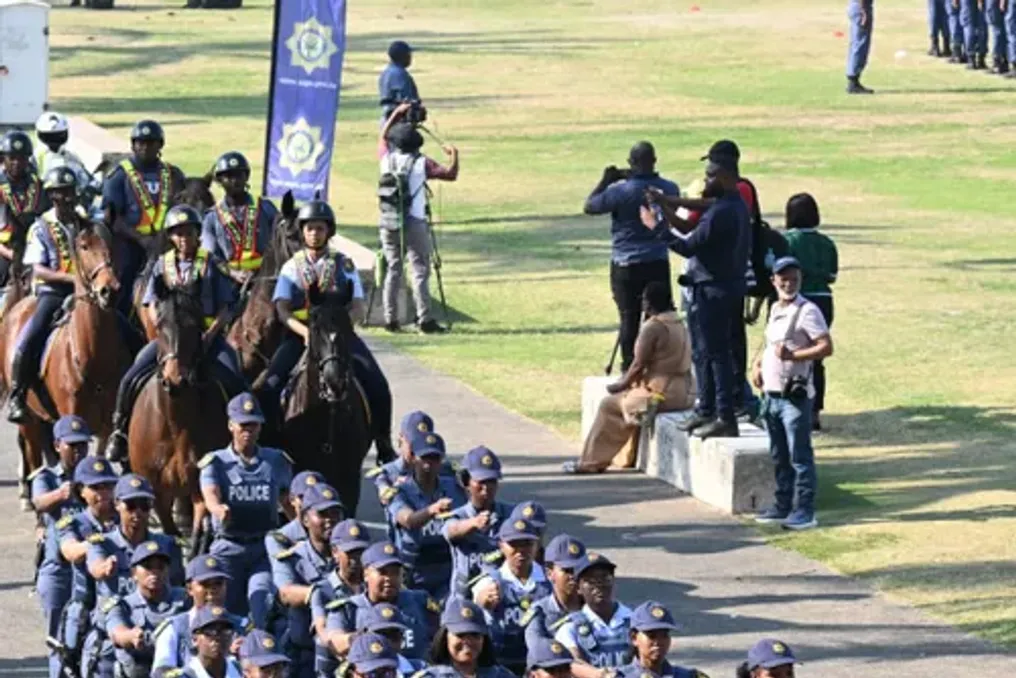
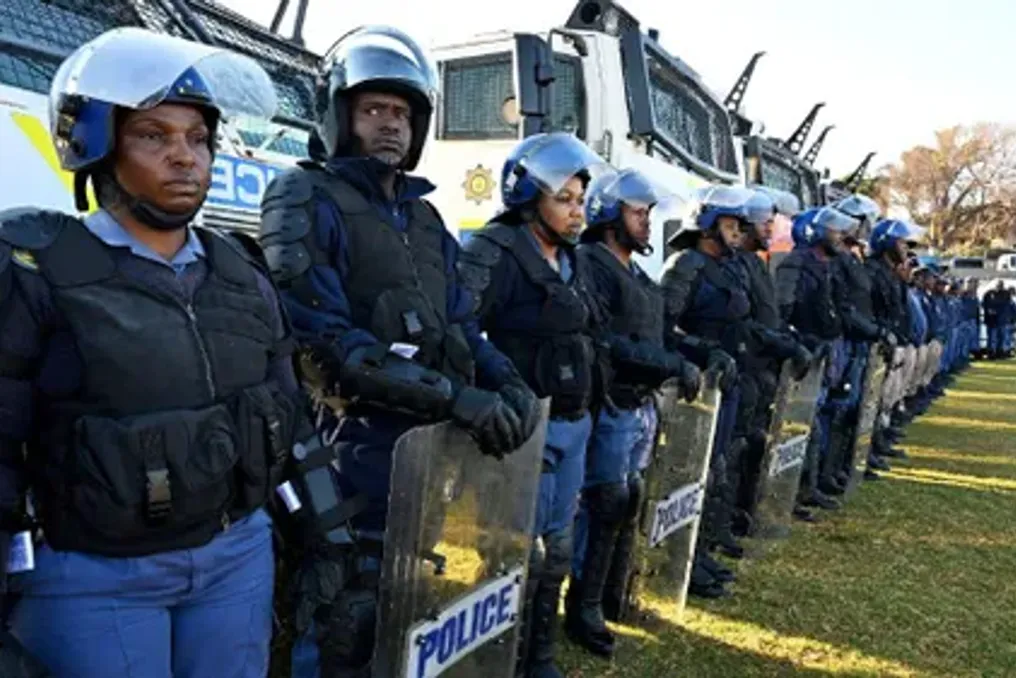
Members of the South African Police Service (SAPS) were deployed in the Gauteng province ahead of a protest against immigrants scheduled for June 30th. The article notes that increasing on-site personnel may be difficult if officers are not adequately compensated.
Constitutional Obligations and Challenges
SAPS has a constitutional obligation to protect South African citizens from harm and ensure their safety, according to Section 205(3) of the Constitution of the Republic of South Africa. This protection extends to everyone residing in the country, including both legal and illegal foreign nationals. South African citizens are forced to share limited resources such as medical services, jobs, and schools.
Furthermore, the police are obligated to provide equal protection to all while simultaneously arresting and deporting individuals present in the country illegally. However, for many years, the police have voiced concerns about insufficient resources, primarily due to budgetary constraints.
Calls and Staff Shortages
General Lieutenant Patekile, who served as the outgoing Provincial Commissioner of the Western Cape, highlighted a 'serious staff shortage, budget cuts, and poaching of trained police officers.' He strongly called for funding for SAPS to ensure a greater street presence. Nevertheless, increasing staff numbers may be impossible if officers are underpaid, as private companies such as banks, insurance firms, and security agencies attract these employees with more favorable conditions.
Violence related to gangs and the lucrative illegal drug market has long been observed in the Western Cape. Therefore, more personnel are needed to supplement the approximately 19,000 SAPS officers currently working in the Western Cape. According to General Lieutenant Patekile, this number has decreased from around 21,000 officers available ten years ago.
Structural and Operational Limitations
These officers are making every effort to ensure the safety of Western Cape residents, but circumstances make this work challenging. During the Standing Committee on Appropriations meeting on May 12, 2026, SAPS management pointed to critical structural, operational, and resource limitations. They specified a 42% staff deficit, with only 45% of officers willing to perform their duties.
Management also reported that about 7,500 police vehicles are out of order, and an additional deficit of 5.8 billion rand is required to modernize Information and Communication Technologies (ICT). SAPS modernization includes the full implementation of the Integrated Case Management System (ICDMS) across all police stations nationwide, which remains a challenge. The implementation of body-worn cameras is also an outstanding issue.
Problems in Other Structures
Not only SAPS suffers from resource shortages, particularly human ones; the Independent Police Investigative Directorate (IPID) is also struggling. IPID bears immense responsibility for investigating cases against SAPS members in accordance with its mandate (IPID Act 1 of 2011). However, their workload appears overwhelming given the amount of staff available. Around 400 officers must investigate approximately 19,728 active cases. The inability to effectively investigate these cases against SAPS could mean that victims never receive justice.
SAPS is considering strengthening cooperation with public-private partnerships to improve the effective delivery of services. The presence of various private security companies during the June 30, 2026 protests showed that these companies are better resourced than SAPS.
Funding and Protests
The allocation of 600 million rand to prevent any incidents during protests against undocumented (undocumented foreign nationals) in South Africa contradicts the cries of resource scarcity within SAPS. In fact, the funds allocated to SAPS for protests against undocumented immigrants across the country on June 30, 2026, could significantly help resolve some of SAPS's current issues, including staff shortages, detective training, and the acquisition of modern technological systems.
It is understood that this money is part of an emergency fund and was not originally budgeted into SAPS's operational budget. However, SAPS management could have declared various situations emergencies long ago. Unfortunately, SAPS management appealed to Parliament with concerns about staff shortages, lack of resources, aging infrastructure, and retaining skilled employees, but without success.
Taxpayers affected by crime are the same people paying for the police operation on June 30, 2026. It would be fair if police management organized another press briefing to provide the nation with a detailed report on expenditure. Furthermore, the protests could have been avoided if the government had shown willingness to address the issues of undocumented foreigners decades ago.
Borders and Staff Turnover
Various organizations, including political parties, have complained for years about porous borders, but no substantial measures have been taken, allowing undocumented citizens easy entry into the country. The Border Management Authority (BMA) has failed to sufficiently tighten checkpoints. The sad reality is that even officers deployed on June 30, 2026, lacked sufficient resources to perform their duties. Police visibility on the ground without necessary equipment does not guarantee crime prevention.
Incidents occur in South Africa where police are pelted with stones by enraged crowds in various communities; unfortunately, SAPS management has not learned from history. Moreover, there is a wave of officer departures from SAPS for a number of reasons, and management struggles to retain them because the retention policy has not solved most critical issues.
According to Choke (2022:271), many officers leave SAPS for the following reasons: low salaries, lack of operational advancement, poor working conditions, job dissatisfaction, low organizational motivation, unfair promotion, and seeking better earnings. These reasons can be mitigated with a strong desire from both SAPS management and the government to solve these problems. Additionally, appointing suitable SAPS leaders is a necessity.
The newspaper The Daily Sun Newspaper published an article on June 22, 2026, about Constable Lindokuhle Ngcobo, who recently obtained a PhD in Policy and Development Studies at the University of KwaZulu-Natal. Although Constable (Doctor) Ngcobo possesses other qualifications, he remains a constable. Perhaps Dr. Ngcobo has no reason to stay in SAPS longer; better opportunities call him. SAPS has many officers like Dr. Ngcobo who are overlooked for promotion while less qualified individuals receive higher positions.
If Dr. Ngcobo receives another opportunity, he may not hesitate to leave SAPS. Moreover, skill shortage allowances range from 1,000 to 1,500 rand per month, before tax. This allowance is insufficient to retain anyone with sought-after skills when others offer more lucrative packages. For example, training one Special Operations Group member costs about 1 million rand, and private security companies demand these skills and pay handsomely for them. Thus, SAPS cannot compete with the market.
Conclusion and Demands
The truth is that SAPS will continue to lose qualified and experienced staff, especially seasoned detectives and forensic investigators, unless it revises its skill retention policy. However, the 600 million rand was used for an operation that was generally peaceful. More money needs to be injected into SAPS so they can carry out their duties diligently. Recruiting new officers is welcome, but this may not be an immediate solution for upskilling detectives, forensic investigators, and other specialists. Furthermore, without necessary tools such as vehicles, a full set of riot control gear, ballistic vests (operational), and other equipment, even recruits will work in offices, negating the goal of visible patrolling and mobile crime prevention. Therefore, it is urgent to inject more funds into the SAPS budget.