A small village in the North-West province proves that meaningful work can restore much more than just a livelihood. Bhavenesh Parbhu visited Delpan, where a community agricultural project is creating jobs, developing local business, and showing that the true harvest is hope, purpose, and a sense of belonging.
South Africa's Contrasts
The author notes that South Africa is a complex place to love, as the country possesses astonishing resilience yet exhibits shocking dysfunction. Examples include world-class production alongside high unemployment. Society constantly holds onto hope but simultaneously feels persistent disappointment.
Recent events have underscored that employment has once again become a central national concern. The author suggests that there is often a misunderstanding of unemployment, reducing it to statistics, whereas the real issue is that people feel alienated.
The History of Delpan
Delpan, situated far from civilization, is four hours west of Johannesburg. Most of its approximately 5000 residents are descendants of people forcibly relocated during the apartheid era from fertile lands near the current N14 highway. In subsequent years, there has been little significant development: there are schools with broken windows, tangled streets, and rudimentary housing.
Most residents find seasonal work on surrounding farms, but this employment is inconsistent. In 2023, a partner of the Social Employment Fund (SEF), the Seriti Institute, began working in Delpan to find suitable work that would create 'common good' for the community while providing necessary skills.
Creating a Multifunctional Agro-Hub
After three years of experimentation, a complex Multifunctional Agro-Hub (MFAN) was established. This complex includes a greenhouse, a netting shed, a drying area, a borehole, and an inverter container. Initially, the project appeared well-planned, but colleagues from the Seriti Institute described a process of trial and error that led to its creation.
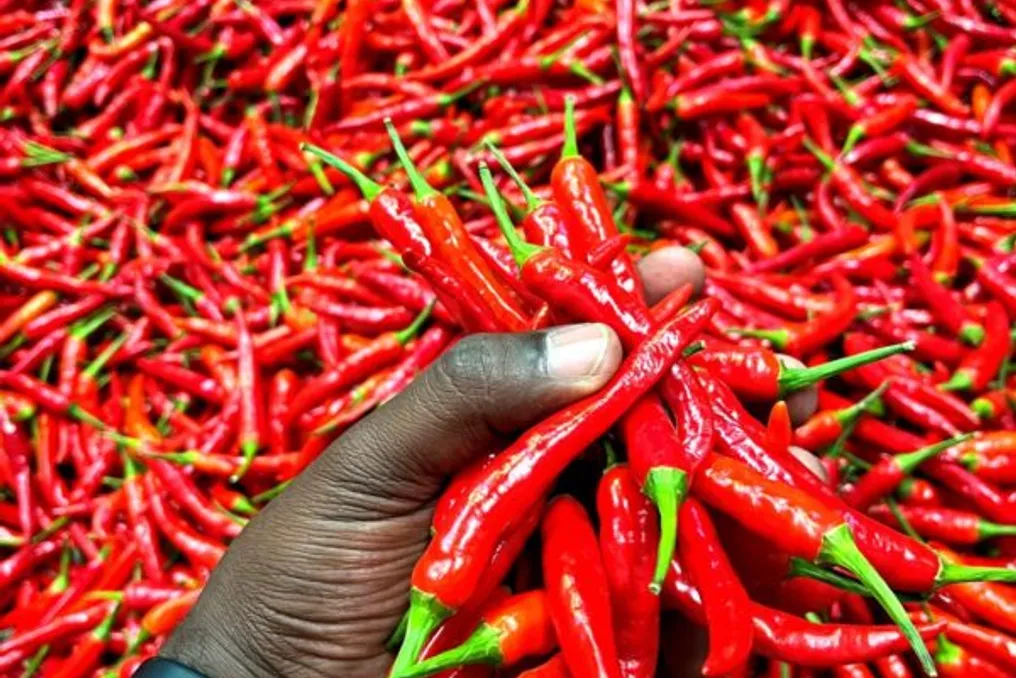
Today, MFAN, employing 150 people from the social employment fund, produces about 40 tons of produce, mainly chili, as well as spinach, onions, cabbage, and beetroot. Workers first work at MFAN and then receive training to transition to independent income sources. The high quality of the harvest secured a favorable commercial agreement with a national buyer, the profits from which are channeled back into MFAN.
Results for the Local Community
Thanks to the project, the local economy of Delpan has revived. More than a dozen shops have appeared there, including supermarkets and convenience stores. Money has begun circulating in the area, and the crime rate has significantly decreased. Moreover, at least 70% of participating households are now engaged in some form of enterprise, reducing dependence on welfare.
Transformation of People
The main product of the project is the transformation of the people themselves. Oliver Molete, the 'seedling man' of MFAN, meticulously tracks all data on investments, harvests, and sales. Before starting, he showed no interest in farming, but now his greenhouse produces 86,400 seedlings monthly, and he has found his purpose and sense of belonging.
The head of MFAN, Tiro Ramudie, experienced his family's displacement during the apartheid period. Today, he manages a 5-hectare farm with quiet authority, advising 150 workers on planting and fertilizers. He has fully 'claimed' MFAN and found his place.
The most striking example of success is Itu Itumeleng Khoza. Over two years of working at MFAN, he mastered technical skills and applied them in business. After leaving MFAN, he acquired a small plot of land where he harvested 10,500 cabbages and over 6,000 chilies. Even more impressively, Itu employs 20 local residents, becoming the second-largest employer in Delpan after MFAN.
Potential and Hope
The author concludes that people's talent was not created by MFAN, but rather the conditions for expressing existing qualities were created. Programs like the Social Employment Fund are important, but they are not a panacea, as issues of political uncertainty and funding persist. However, over four years, more than 180,000 people across the country have had the opportunity to engage in meaningful work.
Instead of asking whether such projects can solve all of South Africa's problems, one should ask if they demonstrate what is possible when people are trusted, equipped, and given meaningful work. As Alan Paton wrote, 'the tragedy is not that things are broken. The tragedy is that they are not fixed again.' In Delpan, the process of restoring what was broken is underway.