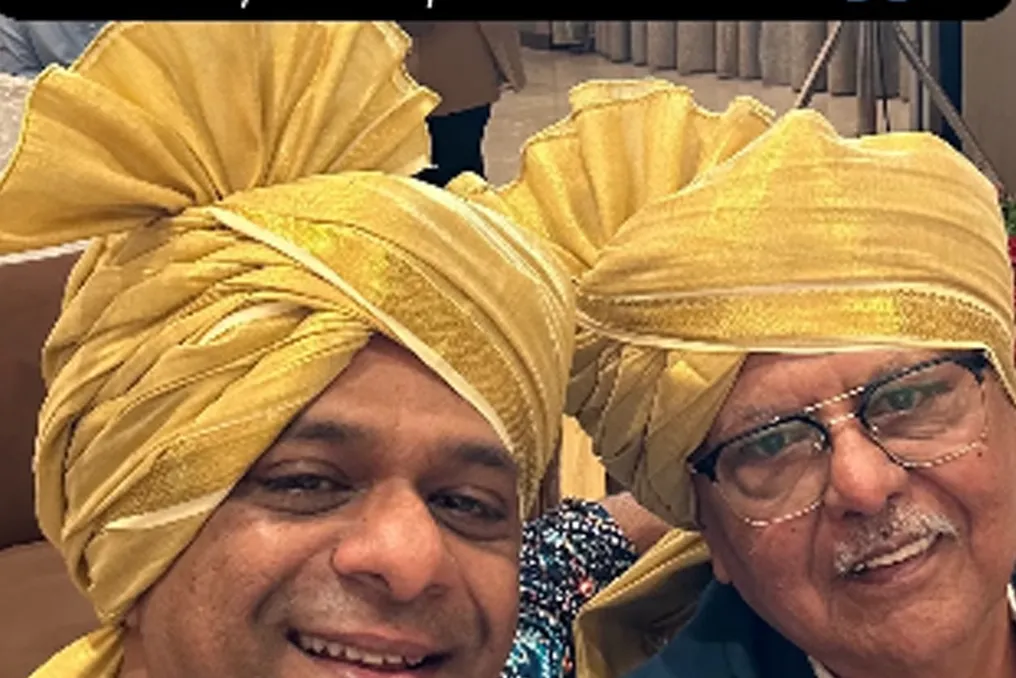
Actor and writer Prev Reddy and Darren Maul joined an excerpt from last week's POST episode in which they both participated. Reddy also presented his memoir 'Qualified Disappointment'—a narrative about growing up—at the Beverly Hills hotel, where Maul was the host.
Darren Maul's Career
Darren Maul is considered one of South Africa's most versatile artists, capable of easily moving between comedy stages, morning radio, television appearances, and hosting corporate and state events while maintaining his uniqueness.
Thanks to his natural comedic talents and legendary wit, he has been a familiar face, name, and voice since the early nineties, and it seems he has no intention of slowing down. Since 2011, Maul has been a recognizable voice for over 1.2 million regular listeners as the host of the East Coast Breakfast program on East Coast Radio (ECR).
Community Significance
Through humor, sincere conversation, and his unique ability to connect with people from different walks of life, he has become much more than just one of the longest-running hosts of commercial morning radio in South Africa; he has become part of the daily rhythm of KwaZulu-Natal.
Today (Wednesday) marks an important milestone in his life and career, as the SAFTA judge and multi-award-winning artist celebrates 15 years of continuously hosting the 'Good Maulings' show as the beloved host of the ECR Breakfast Show.
Priorities and Lessons
However, when asked what is most important to him, Maul does not start by discussing awards or length of service. Instead, he speaks warmly about his listeners, the ECR team, and his family.
Whether he ensures listeners start their day with positivity and laughter, entertains a theatrical audience, mentors emerging talent, or shares his own sobriety story in hopes of inspiring someone else, his focus has remained constant: showing up, being prepared, and always putting the audience first.
Reflecting on 15 years at one of South Africa's most demanding microphones, he discussed the lessons learned, moments he will never forget, the people who are important to him, and why.
Three Major Achievements
When asked about three major milestones this year—15 years of sobriety, 10 years as a comedy host for Kings and Queens of Comedy, and now 15 years of continuous hosting of East Coast Breakfast—he explained that they are all interconnected. He noted that achieving sobriety 15 years ago gave him the life he knows now, and everything that followed was built on that decision.
Ten years with Kings & Queens of Comedy reminded him of where he came from, as comedy is a stage that truly keeps you grounded because the audience immediately tells you if it's funny or not. He added that there is no room for hiding, and he likes that. Then came 15 years of hosting East Coast Breakfast, which has been the greatest privilege, as listeners invited him into their mornings every weekday for a decade and a half, and such trust cannot be taken for granted.
Together, these events taught him that longevity depends not only on skill and talent but also on consistency, preparation, and, most importantly, authentic presence every time.
Maintaining High Energy Levels
When asked how to maintain the same high energy, humor, and sharp mind at 6 am after 15 years of early alarms, he replied that one must first change the alarm melody frequently. He emphasized that routine is critical, but it should never turn into boredom. He loves his job and never takes it for granted, as the audience deserves the best version of him in every show, and there is no room for complacency, ego, or providing anything mediocre or insincere.
He also stated that he cannot afford to bring external worries or problems onto the airwaves, and even if he is tired, worried, sad, distracted, or feeling unwell, he just has to turn on the microphone and focus on nothing else for the three hours of his broadcast. He noted that there are many other places where a listener can be from 6 to 9 am, and he tries to acknowledge and appreciate every such appearance. Preparation also gives him energy when you know your material, your team, and have a clear idea of the next three hours; it becomes more fun.
Off-Air Routine
Describing his typical off-air routine to sustain the crazy schedule of a morning show, he said that routine is everything, and he enjoys the structure. His clothes are prepared the night before, alarms are set, and he tries to make the morning as simple as possible so as not to waste energy making decisions at 4:30 am.
After the show, the team holds a post-broadcast meeting. He may also have a one-on-one meeting with his program director or producer or brainstorm creatively with the team. This is followed by studio time for recording voiceovers or station commercials, after which there are office rounds.
He mentioned that the station has an incredible administrative machine with marketing and sales specialists, production and creative teams, without whom there would be no show for the listeners. After he leaves the building, the day is not over. The daytime can be dedicated to briefings for upcoming hosting gigs, public appearances, photoshoots, or visiting various Corporate Social Responsibility (CSR) projects he participates in.
His wife Anna knows that he cannot concentrate on anything more than the next task in front of him. He is very grateful that when he asks her, 'Where do I need to be right now and what should I do when I arrive?', the answers are always ready for him. Anna manages all his off-air work and brings a whole level of fun, joy, and efficiency to his day.
Preparation and Rest
Regarding preparation for the next day, he reported that preparation never stops, and ideas come during travel, reading, interacting with people, or watching something completely unrelated. After long hours in morning radio, you constantly notice stories that can become great conversations.
He and his co-hosts, Carmen and Sky, along with Program Director Travis Bussayn and Producer WR van der Merwe, have focused more on thorough and targeted preparation in recent years. Much of the show's success lies in the team dynamic, the safe space they have created for exchanging ideas, exploring concepts, brainstorming, and ensuring they can perform in a supportive and safe manner.
Because he has theatrical experience, trust is everything in performance. He is very grateful to his team for how they plan, prepare, and ultimately perform together. As for winding down at night, he loves nothing more than dinner with family, a long bath, and going to bed early. At 8 pm, he quietly reviews the script for the next day's show, checks the latest local and international news, and is grateful that days of late parties are behind him, as it is impossible to host this show day in and day out while being a 'party animal.'
The biggest challenge is knowing when to stop thinking, but nowadays he has gotten much better at putting away his phone, spending time with family, and allowing himself to simply be present. The calmer his mind and the safer his environment, the more creative he becomes.
Most Memorable Moments
Speaking of 15 years, he noted that emotional moments stay with him longer than funny ones. There were so many on-air moments, especially with vulnerable young adults, depressed contest winners, or recipients of a 'Big Favour,' when he felt a surge of their emotions.
Guests who are with him in the studio or near him during remote broadcasts often seek reassuring eye contact, and he carefully holds them during those vital on-air minutes. He never forgets that he is used to knowing that over a million listeners are tuning in, but for his guest, it is often a new experience. He has experienced intimacy, vulnerability, nervousness, fear, elation, and joy, and providing space for these emotions is a critical part of his job.
One memorable emotional moment was the morning he started his show announcing the death of President Nelson Mandela; he knew it was a historic event and knew he had to handle it correctly. He is often told that 'reading the room' is his skill, and it is in such moments that he is most focused on the required delivery.
Shows recorded after floods, unrest, tornadoes, and countless other traumatic events for KZN residents will stay with him forever. As for funny moments, there are too many to list. Carmen, in particular, brings out his sense of humor. Her extensive broadcasting career has brought professionalism and mastery that have significantly elevated the show's standard.
He loves absolute trust, playfulness, and her unwavering desire to put on the best show. They have wonderful exchanges where a nod, a raised eyebrow, a wave of the hand, or a simple thumbs-up allows them to synchronize and create a moment where humor can land.
He likes being able to drop a quick joke that only adults in the car will get, but he never forgets his youngest listeners, and his producer is excellent at letting him slip in a bad dad joke here and there that he knows the KZN kids love.
Responsibility to Listeners
He acknowledged that it is a responsibility, and it has become clearer to him, especially in recent years. Travis Bussayn, his program director, played a crucial role in helping him see and understand this, and he didn't grasp it naturally. He became an important mentor to him and successfully opened his eyes to the fact that he is more than just three hours of airtime. He supported him in recognizing his leadership role and feeling comfortable in a space where he is not just a comedy athlete, but a leader on and off the station.
He understands better the impact he has on people, not only through their mornings but also by inspiring them to meet the day, whatever it may be for them. People often think morning radio is just entertainment, traffic, news, and weather, but it is much more intimate. You are with people during their most personal experiences, and over time, many listeners have built a real emotional connection with him.
After 15 years in this field, he realizes how important he has become to many, and he is particularly aware that an entire generation of young people has grown up listening to his voice. He feels responsible for modeling accountability, kindness, and authenticity, and, of course, having a laugh while doing it.
Challenges of the Profession
In his opinion, most people recognize the early mornings, but perhaps the hardest part is understanding and accepting the fact that when you are entertaining over a million people, you simply cannot please everyone. Artists naturally want to excite and delight their audience, and that can be difficult. His stand-up experience helped him greatly here.
When you encounter hecklers at concerts in a comedy club, you are kind of prepared for anything. Another part of being a morning show host on a commercial station for as long as he has been is losing anonymity and giving up the chance to walk into a store without being stopped for a chat or a selfie. In fact, these are some of the most significant and important interactions he has with his listeners. It is just hard for him if he has a bad hair day or is rushing to a gig or another commitment.