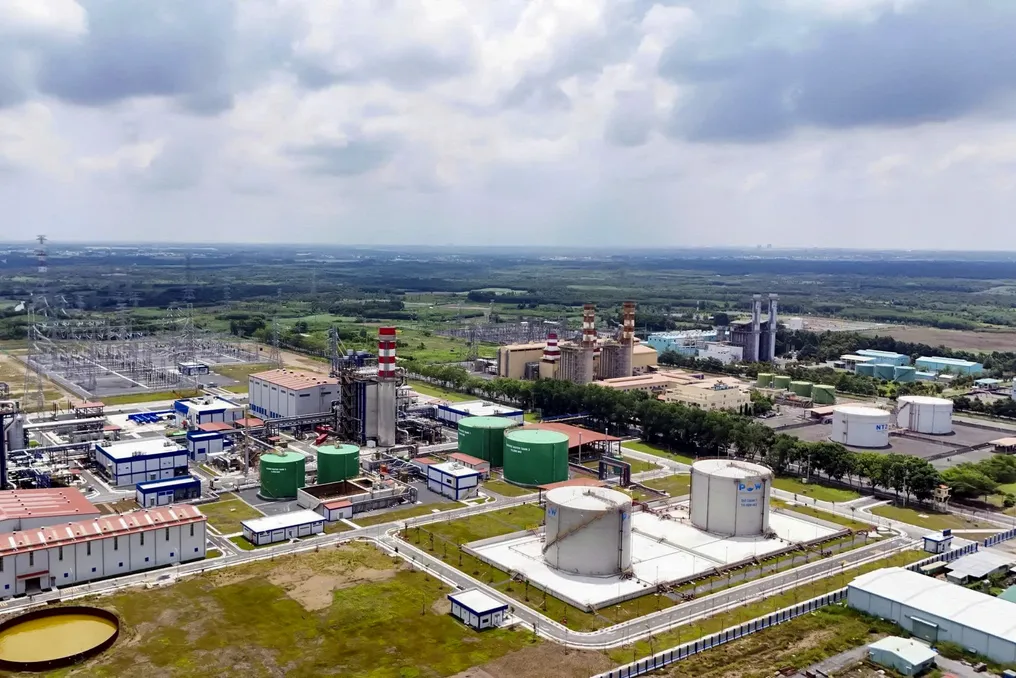
In September 2025, then-Prime Minister of Vietnam Pham Minh Chinh, along with one of the country's wealthiest citizens, Pham Nhat Vuong, participated in the groundbreaking ceremony for what was then the largest liquefied natural gas (LNG) power plant in the country. At the time of this ceremony, only one LNG energy project was operational in Vietnam.
The planned 4.8 gigawatt (GW) power plant, valued at $6.7 billion, was located in the northern industrial hub of Hai Phong and was intended to bring Vietnam closer to its ambitious goal of achieving 22.5 GW of LNG capacity by 2030.
However, just six months after construction began, developer VinGroup proposed abandoning the project. According to Reuters, the reasons cited were high fuel prices caused by the Middle East conflict, as well as foreign currency pressure related to importing approximately 5 million metric tons of LNG annually, which was estimated at $3.5–$3.8 billion in foreign currency. Instead, VinGroup proposed a hybrid renewable energy project with a battery energy storage system, which provides energy storage and discharge during peak demand periods.
This reversal served as the clearest signal of Vietnam's difficulties in the LNG sector. Developers had long attributed this situation to an inability to secure bank financing for Power Purchase Agreements (PPAs), the weak financial standing of the state electricity buyer, a global shortage of gas turbines, and price volatility driven by the Middle East conflict. Given that the new leadership shows less enthusiasm for LNG, Vietnam appears to be reorienting towards renewables and storage systems.
In 2025, Vietnam revised its national energy plan, almost a year before the global energy landscape was shaken by the Middle East conflict. Even then, the LNG target was highly ambitious. The plan stipulated that 9.5–12.3% of the country's target electrical capacity by 2030 would be supplied by LNG through projects totaling 22.5 GW, viewed as a strategic bet that this fuel would help the country transition from coal to renewables.
Le Hong Hiep, a senior researcher and coordinator of the Vietnam Study Program at ISEAS-Yusof Ishak Institute in Singapore, noted that 'LNG occupies a rare advantageous position in Vietnam's energy calculations. It is cleaner than coal, scalable enough to form the backbone of the national grid, and flexible enough to compensate for the intermittency of renewable sources.' However, four years before the set deadline, Vietnam still has only one complex of two operational LNG power plants with a total capacity of 1.62 GW, while a second project of 1.2 GW is under development. Other projects have either been suspended, postponed, or canceled.
The most frequently cited reason for delays is the inability to obtain bank financing for LNG Power Purchase Agreements (PPAs). These contracts are made between power plant developers and the sole state electricity buyer, Electricity Vietnam (EVN). Compared to similar contracts globally, these PPAs guarantee developers a significantly lower price for the energy produced.
Lam Pham, an Asia analyst at the Ember energy analysis center, stated that for large-scale LNG projects, lenders rely heavily on the project's own cash flows to repay debt. A multi-billion dollar power plant cannot attract financing without a long-term guarantee that someone will buy its electricity. Historically, international lenders required 'take-or-pay' contracts spanning 15–20 years, whereby the plant would be paid for most of the electricity it generates—usually 80–90%—regardless of whether that energy is used or not, Lam added.
Under current legislation, the state utility company EVN is obligated to purchase only 65% of the station's average annual generation volume over 10 years from the start of commercial operation. What happens afterward remains subject to future negotiations. In Lam's view, this figure is substantially below international thresholds. The Ministry, Vietnam's primary energy regulator, proposed raising the guaranteed purchase level to 75% and extending the term to 15 years. Nevertheless, a summary of feedback published by the ministry in May 2026 showed that investors found this insufficient.
Feedback from various ministries and stakeholders in the LNG supply chain—including the Japan Chamber of Commerce and Industry in Vietnam, Tokyo Gas, VinGroup, and several LNG consortia—demonstrates that investors insist on various measures. These include increasing minimum purchase obligations, payment guarantees if EVN cannot deliver sufficient electricity, risk-sharing mechanisms for rising LNG costs, exchange rate guarantees, and potential government buyouts in case of early termination of the PPA not due to the developer's fault. Although the industry ministry acknowledged the raised issues, it rejected almost all proposals.
The Ministry insisted on maintaining the guaranteed purchase cap at 75%, citing calculations from the National System Operator and Market Operations (NSMO), which show that a rate of 80% or higher would force EVN to pay for expensive LNG energy even when cheaper alternatives are available and the grid does not need them. NSMO is a state but independent system operator created from the former EVN dispatch center to manage Vietnam's energy system and electricity market. In Vietnam, the price for LNG electricity is capped at 3,327 Vietnamese dong ($0.13 USD) per kilowatt-hour, which is significantly higher than the ceiling prices for solar energy, which range from $0.03 to $0.07 USD. Currently, EVN prioritizes purchasing the cheapest available energy source, so solar, coal, and hydropower plants are usually preferred. This only exacerbates risks for LNG investors relying on stable utilization.
EVN's financial health further compounds the problem. By the end of 2024, the company had accumulated losses of about $1.7 billion, limiting its willingness and ability to assume risks on behalf of private developers. Despite a strong financial year in 2025, the company reports retaining accumulated losses of $216 million. This turnaround is linked to the change in electricity generation structure, the increased share of low-cost energy sources, and reduced dependence on more expensive ones.
Vietnam's LNG projects also face pressures that no political adjustment can eliminate. The country is directly exposed to the global shortage of gas turbines, which heavily depends on three companies: GE Vernova, Siemens Energy, and Mitsubishi Heavy Industries. Lam noted: 'These firms are overloaded with orders' and 'they are hesitant to expand their production capacity due to uncertainty about declining demand, avoiding the mistake GE made in the gas turbine market in 2018.'
According to industry experts, for Vietnam, which entered the LNG market late and has a history of political instability, this means its projects do not receive priority attention. The Middle East conflict complicates the situation. Disruptions to LNG shipping routes and rising spot prices have exposed the vulnerability of Vietnam's import-dependent strategy amid declining domestic gas supply.
Currently, Vietnam has only one long-term LNG contract with a foreign supplier, with deliveries scheduled to begin only in 2027. Meanwhile, to bypass the Middle East crisis, Vietnam has diversified its LNG supplies through expensive spot cargoes from Malaysia, Brunei, Canada, and Australia. Lam emphasized: 'Volatility of this magnitude forces lenders to factor in significantly higher risk premiums. Without a long-term, stable volume of purchases to lock in cash flow forecasts, projects struggle to achieve financial closure when financing is secured and construction begins.'
VinGroup's decision to abandon the flagship LNG project in favor of renewables and battery storage signals a change in Vietnam's energy direction for the government. Gary Ziff, an energy expert who worked in Hanoi under a US-supported technical assistance program advising the government and industry on renewables, stated: 'They [VinGroup] do not make decisions lightly.' He added that the decision to cancel 'a major project with already incurred costs was made very cautiously.'
For Ziff, VinGroup's retreat is an indicator of where the market is heading, something clean energy developers should pay attention to. Former Prime Minister Pham Minh Chinh, who advocated for Vietnam's net-zero commitment at COP26 in Glasgow and was a strong internal proponent of LNG, left office in April 2026. His successor, Le Minh Hung, a former central banker, holds a more measured view of Vietnam's energy future, according to an analyst with direct knowledge of current discussions in Hanoi.
The analyst reported that 'there are signs of a change in sentiment. After the election cycle and change in leadership, there is a noticeable shift in how [the industry ministry] talks about LNG. Enthusiasm is diminished.' According to Hiep, the problems may be more acute for the new government than those faced by its predecessor. Global LNG prices are volatile, and the Middle East conflict demonstrates how vulnerable energy-importing countries are.
Vietnam already possesses one of the most extensive renewable energy networks in Southeast Asia. The country now accounts for 41.55% of the regional renewable energy market share. From 2018 to the end of 2020, generous feed-in tariffs spurred a solar boom, increasing capacity from 86 MW to 16.5 GW—20 times more than initially projected as the incentive (850 MW). This unexpected growth severely strained EVN's financial condition. In 2018, EVN spent $4.5 billion on energy purchases, and by 2023, this amount rose to $11.5 billion, despite electricity consumption growing by only 36%, from 203.7 TWh to 277.5 TWh. By 2025, the government partially withdrew its tariff commitments, causing anger and threats of litigation from foreign investors. The government has since taken steps to resolve these disputes. Le Hong Hiep noted that the willingness to accept financial penalties instead of canceling contracts is a signal of Hanoi's desire to clear the path for new renewable energy investments.
Vietnam has also set an aggressive goal to develop battery energy storage capacity to 16.3 GW by 2030, compared to less than 100 MW in April. However, developing large-scale battery energy storage involves its own complexities, including incomplete technical and safety regulations, grid integration issues, and conflicting pricing mechanisms. Sunita Dubey, an energy transition expert from Hanoi, stated: 'When something is very new—and battery energy storage is a new topic in Vietnam—it takes time for banks and state stakeholders to understand how to finance it and how to structure the deal.'
Developing this storage capacity will also require Vietnam to become heavily dependent on foreign supply chains and technologies, particularly from China. About 70% of materials for batteries in Vietnam come from China, and the first domestic factory cell in Vietnam is a joint venture between Chinese manufacturer Gotion and VinGroup's subsidiary VinES.
Hiep noted: 'There are signs of continued commitment, although more out of necessity than enthusiasm.' More than a dozen billion-dollar projects for converting LNG to electricity and associated infrastructure remain in development. The country is also rushing to launch any energy project to support its ambitious growth targets. Le Ngoc Son, chairman of the state-owned company PetroVietnam, calculated that maintaining double-digit economic growth requires an annual increase in electricity demand of 12–15%. However, policymakers fear that without a stable baseload source, which LNG was supposed to provide, economic growth could be jeopardized.
Dubey expressed skepticism about this interpretation. She stated that the traditional concept of gas as 'baseload' or 'transitional fuel' is outdated, and Vietnam might skip this stage and move directly to renewables. Nevertheless, she added that a small share of LNG—around 10–15%—could still provide some flexibility.