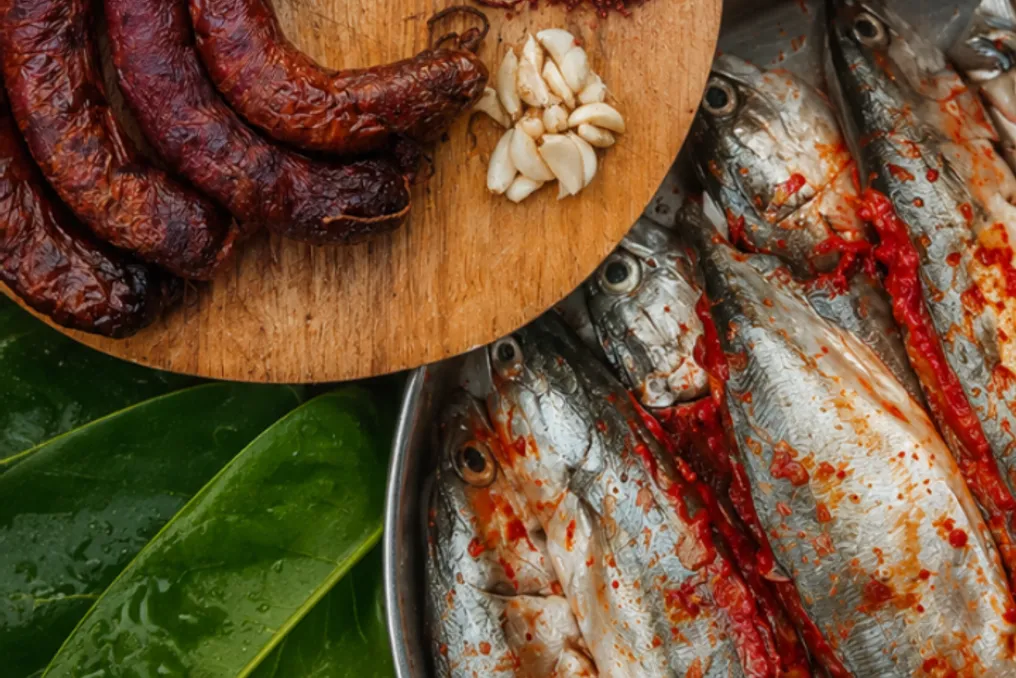

During the annual fishing ban during the monsoon, canned seafood becomes indispensable. Market stalls are filled with salted mackerel, Bombay duck, dried shrimp, shark, and anchovies.
Culinary features of the rainy season
Smoked pork sausages cured in vinegar hold a special place and are a favorite dish of the monsoon season. They are stocked up in bulk before the rains begin and become the basis for cozy curries, pulao, and home-cooked meals.
Families queue up for freshly ground masala rechado, made from Kashmiri chili pepper, pepper, cumin, cloves, cinnamon, and vinegar. It is prepared in large batches to last for months.
Iconic ingredients of Goa
Goa's signature kokum is found in various forms: dried rinds (sol), concentrated syrup (agal), and kokum oil. This GI-recognized product gives flavor to cuisines throughout the monsoon season.
GI-certified Goan cashew nuts are once again popular during the quieter tourist months, making them one of the most sought-after goods in monsoon markets.
Local produce and markets
In licensed sales points in Mapusa, Panaji, and Margao, locals stock up on Feni Goan cashews, which have a GI certificate, before the long period of bad weather begins.
The first rains bring Almi Goan mushrooms. These mushrooms are gathered from forest floors and appear only for a few weeks, often disappearing from shelves within hours.
Even more valuable is Tere—a rare seasonal variety of taro (Colocasia or elephant ears) harvested during the monsoon months.
Seasonal Kulem leaves fill baskets at the market during the rains. Traditionally, they are used to wrap steamed fish dishes and local sweets before cooking.
Seasonal harvests and stocks
Fresh turmeric leaves mark the beginning of the Patoleo season. Their aroma is essential for preparing the famous sweet Goan dish stuffed with coconut and palm sugar.
Women from villages arrive with baskets overflowing with Tambdi Bhaji, wild Colocasia shoots (Taikilo), and collected Ran Bhaji, such as Fodshi, Karmal leaves, and wild amaranth.
Tender bamboo shoots from eastern taluks of Goa and nearby Western Ghats are gathered in markets just in time for the season for seasonal curries and homemade marinades.
Even after the rambutan season ends, preserved seeds continue to appear in markets. They are valued for hearty curries in the rainy season and traditional comforting dishes.
Homemade mango marinades, made from local mangoes, mustard, chili, and coconut oil, are stored before the rains and sold at traditional Purumet markets.
Pulses and traditions
Dried shrimp, known locally as Sungta, are an essential pantry item. They add flavor to classic dishes, vegetable curries, and thick coconut sauces throughout the season.
Black palm jaggery (Madachem God) and coconut jaggery become mandatory ingredients for desserts in rainy weather, while traditional Goan red rice and Ukde rice dominate the daily diet.
Rice papads, Sandge, fryums, rice vadi, dried chilies, and homemade spice powders are prepared in the summer and then used throughout the monsoon.
Municipal markets in Mapusa, Margao, and Panaji turn into seasonal food centers, and Ravindra Bhavan, Sankhali hosts the annual Purumentacho bazaar, celebrating Goan culinary traditions before the rainy season.
From forest mushrooms that last only a few weeks to staple foods prepared over months, Goa's markets during the monsoon showcase a side of the state rarely seen by tourists.